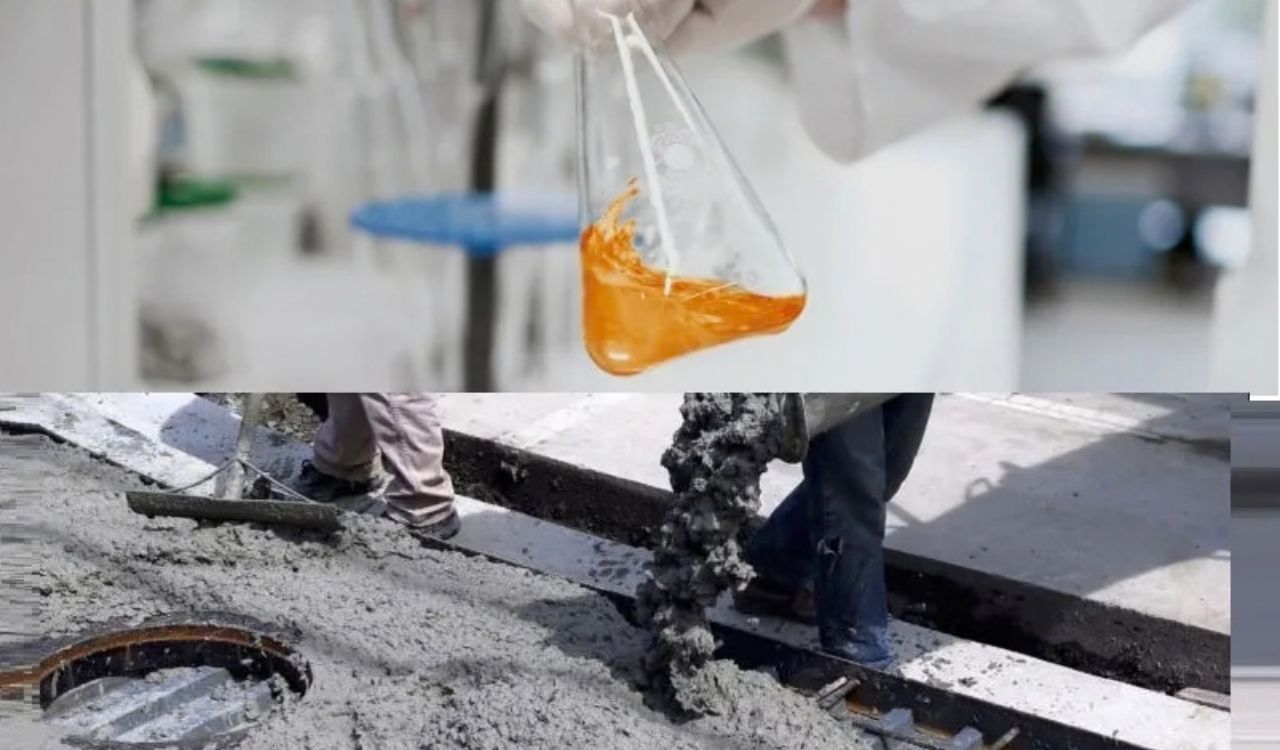
Chemical admixtures are used in concrete because cement, water, sand, and aggregate alone cannot satisfy every demand of a modern project. The mix has to be pumpable at the plant, placeable around dense rebar, and finishable before the sun stiffens the surface. Afterward it must reach its strength on schedule, resist water and chlorides, and survive decades of weather. Mix proportions rarely deliver all of that, so engineers add small doses of concrete admixtures, usually well under 2% of cement mass, to adjust specific behaviors without changing the basic recipe. That is also the reason admixtures are used in concrete on almost every serious project today.
The Core Reason: Concrete Has Competing Requirements
Most concrete problems come from a conflict between what fresh concrete needs and what hardened concrete needs. Fresh concrete wants more water for flow and easy placement. Hardened concrete wants less water for strength and low permeability.
Adding water on site solves the first problem and creates the second, because a higher water-cement ratio means more porosity, more shrinkage, and a greater risk of cracking. Admixtures break that trade-off. A water reducing admixture, for example, delivers the flow without the extra water.
Time and temperature create a similar tension. Cold weather slows hydration, heat speeds it up, and a long haul eats into the delivery window. Setting and slump-retention admixtures exist for exactly these timing problems.
7 Problems Chemical Admixtures Solve
1. High Water Demand and Low Strength
The most common reason to use an admixture is to cut mixing water while keeping the same workability. A water reducing admixture disperses cement particles so they release trapped water, which means less water is needed for a given slump. The size of the effect depends on the class, and a mid-range water reducer behaves very differently from a high-range product.
| Admixture class | Typical water reduction | Common use |
| Normal water reducer (Type A) | about 5–10% | General structural concrete |
| Mid-range water reducer | about 8–15% | Flatwork, pumping, finishing |
| High-range water reducer / superplasticizer (Type F/G) | about 12–30% | High-strength concrete, SCC, precast |
A lower w/c ratio generally means a denser paste and higher compressive strength. This is how water reducing admixtures increase concrete strength: they do not strengthen the cement, they remove the excess water that would have left voids behind. The same densification is why water-reducing agents improve the impermeability of concrete.
2. Poor Workability and Difficult Placement
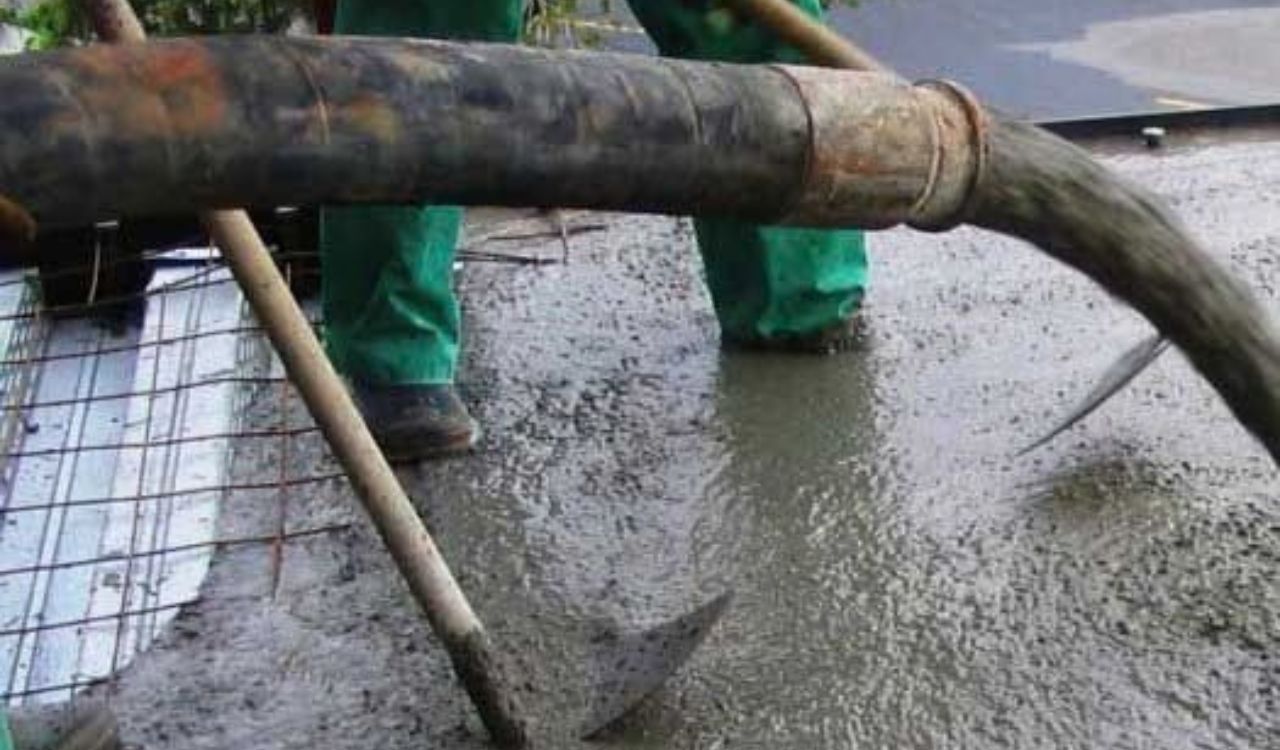
Congested reinforcement, thin walls, deep sections, and long pump lines all demand a mix that flows without separating. Polycarboxylate ether (PCE) superplasticizers deliver high flow at low water content, which is what makes self-consolidating concrete practical.
Workability is more than initial slump. Slump retention, the ability to stay workable for 60 to 120 minutes, decides whether a ready-mix load can still be placed properly after transport. When a mix is pushed too far, the usual symptoms are segregation and bleeding, and the right admixture can reduce bleeding and segregation without sacrificing flow.
3. Setting Time That Doesn’t Match Site Conditions
Hydration speed depends heavily on temperature, and admixtures let producers adjust it. Set accelerators shorten setting time and speed early strength gain in cold weather or when forms must be stripped quickly. Set retarders extend the working window in hot weather, on long hauls, and on large continuous pours, which helps avoid cold joints.
The choice comes down to site conditions. Deciding between accelerating and retarding admixtures starts with climate and placement method, and the details change again for hot weather concreting and for a cold weather concrete mix design.
4. Freeze-Thaw Damage
Water in saturated concrete expands as it freezes. Without room for that expansion, the paste cracks and scales. Air-entraining admixtures create microscopic, evenly spaced bubbles that relieve the pressure. Total air content for exposed concrete typically falls between roughly 4% and 7%, depending on aggregate size and exposure class, and the project specification governs, with ASTM C260 covering the admixture and ACI 318 covering exposure requirements. Because each percent of air also lowers strength slightly, air is dosed to a target rather than maximized.
5. Water Penetration and Leakage
Water travels through capillary pores and cracks. For basements, tanks, tunnels, and podium decks, lowering permeability is a core durability goal. A waterproofing admixture for concrete works inside the mix instead of sitting on the surface as a coating, and it does so in a few ways:
- Crystalline admixtures react with moisture and cement byproducts to form insoluble crystals in pores and fine cracks.
- Pore-blocking or hydrophobic admixtures line the pores and reduce capillary absorption.
- Water reducers indirectly improve water resistance by lowering w/c and densifying the paste.
Which mechanism suits a project depends on exposure, and the trade-offs between crystalline and pore-blocking waterproofing admixtures are worth understanding before you specify. These products show up across basements, tanks, and other waterproof concrete applications, and the same thinking applies to render and masonry, where a waterproofing additive for plaster controls absorption on walls.
6. Reinforcement Corrosion
Steel in concrete is protected by a passive film in the alkaline pore solution. Chlorides from de-icing salts or seawater can break that film down and start corrosion, which cracks and spalls the cover. Corrosion-inhibiting admixtures raise the chloride threshold needed to start the process, and they are common in bridge decks, parking structures, and marine works.
7. Cracking from Shrinkage
As concrete dries it shrinks, and restrained shrinkage cracks. A shrinkage-reducing admixture lowers the surface tension of pore water, which reduces the capillary forces behind drying shrinkage. It works best alongside good curing, joint spacing, and reinforcement detailing, and it is one of several concrete additives that help prevent cracking.
Quick Reference: Problem to Admixture
| Problem on site | Likely admixture | What it changes |
| Strength too low at required slump | Water reducer or superplasticizer | Lowers w/c ratio |
| Mix stiff, hard to pump | Mid-range or high-range water reducer | Improves flow |
| Slow gain in cold weather | Accelerator | Speeds hydration |
| Early stiffening in heat or long haul | Retarder or slump-retaining PCE | Extends working time |
| Freeze-thaw scaling | Air-entraining agent | Adds protective air voids |
| Leaks, damp walls, high absorption | Crystalline or pore-blocking admixture | Reduces permeability |
| Chloride exposure | Corrosion inhibitor | Delays corrosion initiation |
| Drying shrinkage cracks | Shrinkage-reducing admixture | Reduces capillary tension |
Benefits Beyond Performance
Admixtures also deliver commercial and environmental gains. By lowering water demand, producers can sometimes meet strength targets with less cement, which cuts cost and embodied carbon, a shift that is driving interest in admixtures for low-carbon concrete. Precast plants combine accelerators and superplasticizers to turn molds faster, as seen in precast concrete manufacturing. In ready-mix concrete, predictable workability means fewer rejected loads and less water added at the truck. Pumping and finishing also take less labor and equipment time per placement.
Important Factors Before Using an Admixture
Admixtures are not interchangeable, and results depend on the whole mix system.
- Cement chemistry. C3A content, alkali level, sulfate balance, and fineness all change admixture response, which is why cement and admixture compatibility should be checked before a product is approved.
- Supplementary cementitious materials. Fly ash, slag, and silica fume shift water demand and dosage.
- Aggregate properties. Clay, fines, and absorption can reduce PCE efficiency.
- Temperature and mixing sequence. Time of addition and mixing energy influence results.
- Dosage. Ranges are usually given as a percentage of cementitious mass, and both over- and under-dosing cause trouble, so a concrete admixture dosage guide is a useful reference when setting trial proportions.
- Standards. Look for conformity to ASTM C494, ASTM C1017, ASTM C260, ASTM C1582, or EN 934-2, depending on product and region. The classifications in ASTM C494 are a good place to start.
Limitations and Risks
- Admixtures cannot fix a poor mix design. Bad aggregate grading, excess fines, or too little cement will not be rescued by a chemical.
- Overdosing can backfire. Excess retarder can delay setting for days, excess superplasticizer can cause segregation, and excess air lowers strength.
- Incompatibility is real. Some cement and admixture pairs show rapid slump loss or odd setting behavior, which is why trial mixes matter.
- Chloride and alkali content. Chloride-bearing products may be prohibited in reinforced or prestressed concrete.
- Waterproofing admixtures do not replace good detailing. Joints, cracks, and poor compaction still leak, so pair the admixture with proper curing and waterstops.
Best Practices for Using Chemical Admixtures
- Define the problem first. State the target in measurable terms: slump at placement, strength at 1 and 28 days, permeability, or chloride exposure class.
- Run trial mixes with your actual cement, SCMs, aggregates, and site temperature range.
- Verify with testing. Check slump loss, air content, setting time, and compressive strength using a routine like the one described in admixture performance testing.
- Control dosing accuracy. Calibrated dispensers and fixed addition points matter, and plants chasing repeatability can adopt proven additive practices for consistency.
- Store properly. Protect liquids from freezing and contamination, and keep powders dry.
- Request technical documents. A reputable supplier provides technical data sheets, safety data sheets, and test reports.
- Don’t stack products blindly. When combining admixtures, confirm compatibility and test the combined effect.
Choosing the Best Admixture for Concrete
There is no single best admixture for concrete. The right choice depends on the performance target, the materials, the climate, and the budget. A residential slab, a high-rise core, and a marine pier each call for a different combination, so it helps to work through the decision in order: define the problem, shortlist by class, then confirm in trials. A structured approach to choosing the right admixture keeps that process objective, and projects chasing compressive strength can narrow the field with high-strength concrete admixtures.
Supplier quality matters as much as product selection. Consistent chemical raw materials, batch-to-batch control, and clear technical support keep field results predictable. Luke Chemicals supplies concrete admixtures and the chemical raw materials behind them, with technical data to help buyers match products to their mix designs.
Conclusion
Chemical admixtures are used in concrete because they let engineers and contractors control what mix proportions alone cannot: water demand, workability, setting time, durability, permeability, and corrosion resistance. Paired with sound mix design, compatibility testing, and accurate dosing, they improve performance and often reduce cost and waste. Without those checks, they can create new problems. Begin with the problem you need to solve, test with your own materials, and choose products that meet recognized standards.
FAQs
1. Why are chemical admixtures used in concrete?
They modify fresh and hardened concrete properties, including water demand, workability, setting time, air content, permeability, and corrosion resistance, so the concrete meets project requirements for placement, strength, and durability.
2. How do water-reducing admixtures increase concrete strength?
They disperse cement particles so less water is needed for the same workability. A lower water-cement ratio gives a denser paste with fewer pores, which generally means higher compressive strength.
3. How much admixture should I add to concrete?
Dosage depends on the product, cement type, and target performance. Most are dosed as a percentage of cementitious material mass within the manufacturer’s range, and trial mixes confirm the final figure.
4. Are chemical admixtures safe for reinforced concrete?
Products that meet applicable standards are widely used in reinforced concrete. Check chloride and alkali limits, and avoid chloride-based accelerators where corrosion is a concern.
5. Do admixtures work with every cement?
Not always. Cement composition, SCMs, and temperature all affect results, so compatibility testing with the actual materials is recommended.