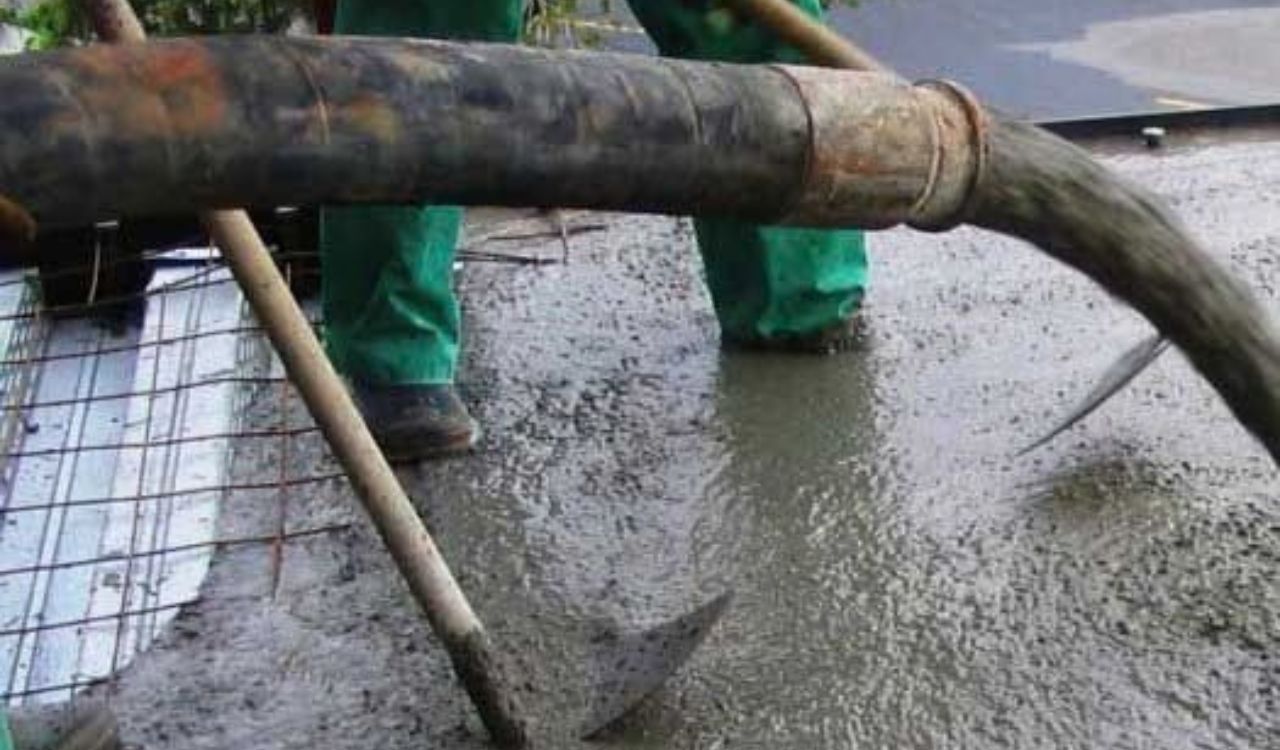
Foam concrete looks simple: cement, water, maybe sand, and a lot of air. In practice, most failed batches share one cause: the foam did not survive mixing, pumping, and the hours before set. Bubbles drain, merge, and burst; the mix settles, and the density you designed becomes a density you did not want. This guide explains why foam concrete destabilizes and how concrete admixtures, foam quality and mix design work together to keep it stable.
What Is Foam Concrete?
Foam concrete, also called foamed concrete or cellular lightweight concrete, is a cement paste or mortar into which a stable pre-formed foam is blended to create a closed-cell structure. Densities typically run from about 400 to 1,850 kg/m³, and thermal conductivity falls roughly in the range of 0.1 to 0.7 W/mK as dry density rises from 400 to 1,600 kg/m³. Unlike autoclaved aerated concrete, it needs no autoclave and can be produced on site or in a plant.
There are two main production routes:
- Pre-foaming: a foaming agent solution is turned into foam in a foam generator, then folded into the base slurry. It gives the best control of density.
- Mixed foaming: the foaming agent is added to the slurry and aerated by high-speed mixing. It is simpler but gives less consistent bubble size.
Why Foam Concrete Becomes Unstable
Foam is thermodynamically unstable. Four mechanisms drive collapse, and each points to a different fix:
| Failure mechanism | What happens | Typical symptom | Main remedy |
| Drainage | Liquid drains from bubble walls under gravity | Wet, dense bottom layer | Viscosity modifier, finer particles |
| Coalescence | Thin walls rupture and bubbles merge | Large voids, uneven pores | Better foaming agent, lower water demand |
| Ostwald ripening | Gas moves from small to large bubbles | Coarsening pore structure | Stabilizer, quick stiffening |
| Mechanical rupture | Aggregate or high shear breaks bubbles | Density higher than design | Gentler mixing, rounder fine sand |
Research on foam stability consistently shows that foam stability is the main driver of mechanical performance in foam concrete: unstable foam raises density and lowers compressive strength.
Foaming Agents: The First Stabilizer
The foaming agent sets the baseline. A good one gives fine, uniform bubbles with a long half-life and does not interfere with cement hydration.
- Protein-based (hydrolysed protein): generally strong, stable foam and good for medium densities. Can have odour and batch variability.
- Synthetic surfactants (e.g. sodium lauryl sulfate, alkyl ether sulfates): lower cost and easy to dose, but often need a stabilizer to hold up in cement paste.
- Natural surfactants and blends: increasingly studied as lower-carbon alternatives.
Pre-formed foam is commonly produced at densities around 40 to 80 kg/m³, but follow the foaming agent manufacturer’s guidance, since dilution ratio and generator pressure change the result. Foam half-life and foam drainage are the standard laboratory checks.
Admixtures That Stabilize Foam Concrete
Viscosity Modifiers and Foam Stabilizers
These act in the foam and in the paste. Thicker lamellae drain more slowly, and a more viscous paste holds bubbles in place. Laboratory studies show that carboxymethyl cellulose (CMC) lengthens foam half-life and reduces bleeding of the foam solution, improving pore structure and strength at low dosage. Other options include HPMC, xanthan gum and simple sodium salts that raise solution viscosity and foam density. Overdosing thickens the foam so much that it becomes hard to blend.
Superplasticizers and Water Reducers
A PCE superplasticizer lets you lower the water-to-cement ratio while keeping the base mix flowable, which gives a denser, stronger matrix and a more stable wet foam. The caution is that excess dispersant can thin the paste and let bubbles rise. Select a PCE that is compatible with the foaming agent and test dose in small steps.
Accelerators and Set Control
The longer the mix stays fluid, the more time bubbles have to drain and merge. Accelerators such as calcium nitrate, calcium formate or sulfoaluminate-based systems shorten the setting window and raise early strength. Studies on foamed concrete with calcium nitrate and a polycarboxylate admixture have reported higher early compressive strength than plain mixes. Demand for these products is one reason analysts follow the accelerating admixtures market as a separate segment inside the wider concrete admixtures market. Avoid chloride-based accelerators with steel reinforcement, and avoid over-acceleration that hampers pumping.
Waterproofing Admixtures for Porous Foam Concrete
Because foam concrete is porous, water absorption can reduce insulation value and durability. A hydrophobic or crystalline waterproofing admixture can cut capillary uptake, which matters for roof screeds, external panels and below-grade fill. Test it first, because some waterproofing products change fresh foam stability. The waterproofing admixtures market has grown alongside demand for durable envelopes, and foam concrete is a natural fit for these chemistries.
Fillers, SCMs and Fibres
- Fly ash, silica fume, limestone or mineral powders: improve particle packing, thicken the paste and can strengthen bubble walls. Research reports that finely ground mineral additives such as wollastonite improve the stability of the porous structure.
- Polypropylene fibres: reduce plastic shrinkage cracking in low-density mixes.
- Shrinkage-reducing admixtures: help limit drying shrinkage in thin layers.
Foam Concrete Mix Design Basics
Calculating Foam Volume
A solid-volume method works for most mixes. The foam fills whatever volume the other ingredients leave in one cubic metre:
V_foam = 1000 – (V_cement + V_sand + V_water + V_other)
With volumes in litres per m³, each ingredient’s volume is its mass divided by its relative density. Then adjust for foam losses during mixing, which is why trial batches are needed.
Indicative Starting Proportions
The ranges below are starting points for trial batches only. Actual values depend on cement type, foam, sand grading and admixtures.
| Target dry density (kg/m³) | Typical binder and sand approach | Water-to-cement ratio (indicative) | Notes |
| 400 to 600 | Neat paste or very fine filler, no coarse sand | About 0.40 to 0.50 | Needs the most stable foam and stabilizer |
| 700 to 1,000 | Cement with fine sand or fly ash, low sand ratio | About 0.40 to 0.55 | Common insulation and block range |
| 1,100 to 1,600 | Cement and sand, often around 1:1 to 1:2 | About 0.45 to 0.60 | Higher strength, easier to stabilize |
Fresh density should be measured by weighing a standard container, and the ratio of actual to design density is the most practical stability indicator.
Key Mix Factors
- Cement type and fineness: finer or blended cements change water demand and set time.
- Sand: fine, rounded sand reduces bubble rupture; coarse or angular sand breaks bubbles.
- Water temperature and ambient heat: warm water thins foam and speeds drainage.
- Mixing: use low-shear blending after foam is added, and follow the dosing instructions on product data sheets, such as adding the foaming agent only to the pre-foam stage, not directly to dry components.
- Pumping distance: longer pumping increases bubble loss, so check density at the outlet, not only at the mixer.
Stability Testing
- Foam: density, half-life and drainage time of the pre-formed foam.
- Fresh mix: fresh density versus design density, flow or spread, and visible bleeding or settlement.
- Hardened: oven-dry density, compressive strength, water absorption and, where relevant, thermal conductivity and pore structure imaging.
ASTM C796 covers foaming agents for pre-formed foam, and ASTM C869 covers foaming agents used in cellular concrete.
Applications and Benefits
| Application | Why foam concrete suits it |
| Roof and floor insulation screeds | Low density and good thermal performance |
| Void filling, trench and bridge abutment backfill | Flowable, self-levelling and light |
| Precast blocks and lightweight panels | Easy to handle and cut |
| Sound and fire-resistant layers | Cellular structure and mineral composition |
Benefits include reduced dead load, good thermal insulation, low raw-material use and ease of placement. Lightweight partitions, insulation and fill applications also explain why demand for these systems appears in discussions of the APAC concrete admixtures market and, within it, the China concrete admixtures market.
Limitations and Risks
- Lower strength than normal concrete at the same cement content.
- Greater sensitivity to water content, temperature and mixing than conventional concrete.
- Higher water absorption and shrinkage if not properly formulated.
- Admixture compatibility varies by cement and foaming agent, so a combination proven elsewhere may fail on your project.
- Field quality control is harder, especially for low-density mixes pumped over long distances.
Best Practices
- Choose the foaming agent first, then confirm foam density and half-life before mixing with cement.
- Fix the target dry density and calculate foam volume from solid volumes.
- Keep water-to-cement ratio as low as the base mix allows, using a compatible superplasticizer.
- Add a stabilizer, such as CMC or another viscosity modifier, in small steps and check pumpability.
- Use an accelerator when the mix needs to set quickly, especially in thick pours or warm weather.
- Include fine mineral fillers or fly ash for stable bubble walls.
- Blend gently after foam addition and check density at the point of placement.
- Record cement batch, dosage and conditions for each pour, and re-test whenever materials change.
Choosing Admixtures and Suppliers
The concrete admixtures additive market and the wider cement and concrete additives market offer many options, so selection should rest on trial data rather than catalogue claims. The cement additive market also includes grinding aids and performance enhancers that may affect cement behaviour in foam mixes, so tell your supplier which cement you actually use. Ask for compatibility data with your foaming agent, recommended dosage ranges and storage guidance.
Frequently Asked Questions
What stabilizes foam in foam concrete?
A good foaming agent, a viscosity modifier or stabilizer such as CMC, a low water-to-cement ratio, fine mineral fillers and a quick set all help. Gentle mixing and correct foam density protect bubbles during production.
Why does my foam concrete collapse or settle?
The usual causes are weak foam, too much water, over-dosed superplasticizer, long set time, aggressive mixing, or hot conditions that speed drainage. Check foam half-life and fresh density before changing the mix.
Can I add sand to foam concrete?
Yes, in medium and higher densities, usually using fine, well-graded, rounded sand. For very low densities, sand is often left out or replaced with fly ash or fine filler.
Do I need a superplasticizer in foam concrete?
Not always, but it is useful when you want a lower water-to-cement ratio without losing flow. Test dosage carefully, as overdose can destabilize the foam.
What density can foam concrete reach?
Common dry densities are about 400 to 1,600 kg/m³ and sometimes up to 1,850 kg/m³. Lower density means better insulation but lower strength and a greater need for stabilization.
Conclusion
To stabilize foam concrete, control the foam first, then the paste, then the setting. High-quality foam, a suitable viscosity modifier, a well-chosen superplasticizer and an accelerator when needed will keep density close to the design. Luke Chemicals supplies concrete admixtures and additives for construction, and its technical team can help match foaming agents, stabilizers and set-control products to your cement and application before you scale up a mix. The question is, can foam concrete be waterproofed? Yes. A hydrophobic or crystalline waterproofing admixture can reduce water uptake, and a protective coating can be added for exposed surfaces. Trial mixes should confirm that stability is unaffected.