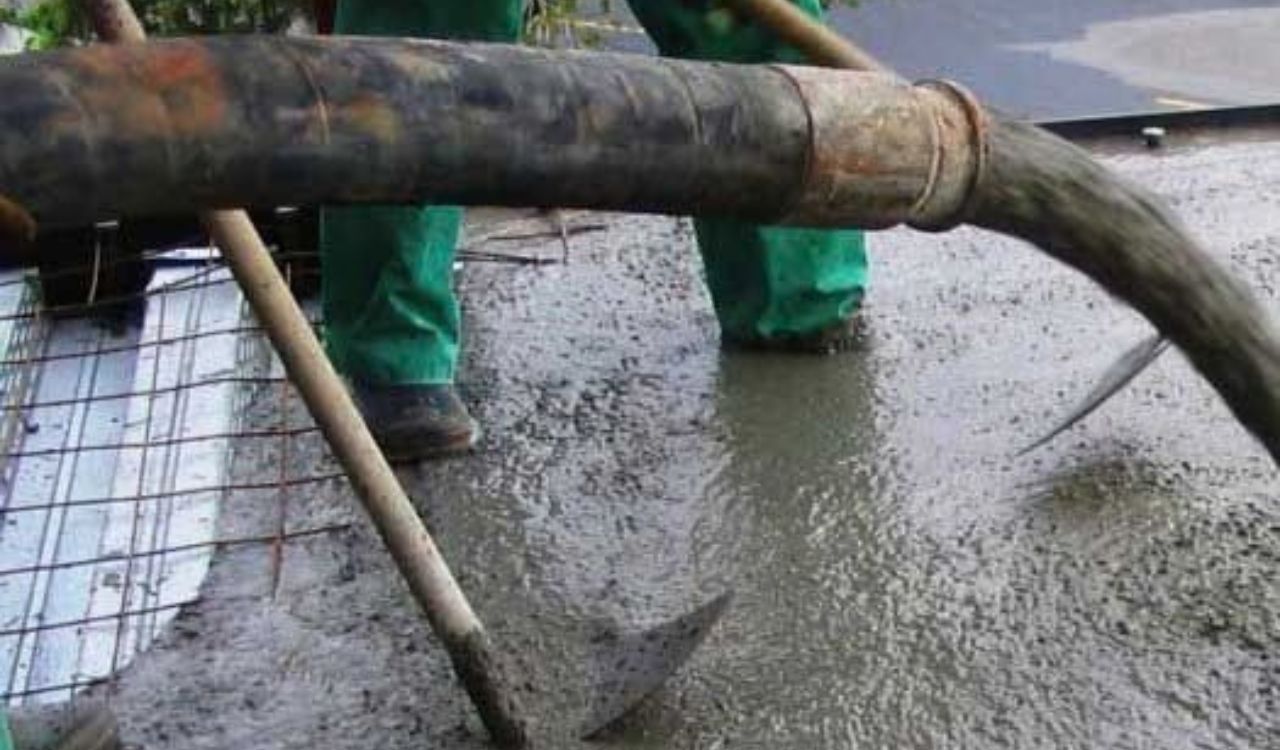
Hot weather can significantly change the behavior of fresh concrete. Higher concrete temperatures can increase water demand, accelerate cement hydration, shorten setting time, and cause concrete to lose slump more quickly during transportation and placement.
These conditions can make it difficult to maintain the required workability while also achieving the desired strength, durability, and finishing characteristics.
Concrete admixtures can help manage some of these challenges when they are selected and dosed according to the concrete mixture and environmental conditions. Water-reducing admixtures, high-range water reducers, set-retarding admixtures, and workability-retaining technologies can all play different roles in hot-weather concrete.
However, admixtures should not be viewed as a substitute for proper temperature control, mix design, transportation planning, and curing. The best results come from combining admixture technology with appropriate hot-weather concrete practices.
What Is Hot Weather Concrete?
Hot weather concrete refers to concrete placed under environmental conditions that can accelerate the loss of moisture and the rate of setting and hydration.
The actual effect depends on more than air temperature. Concrete temperature, humidity, wind speed, solar radiation, aggregate temperature, cement characteristics, transportation time, and placement conditions can all influence concrete behavior.
In hot conditions, concrete may experience:
- Faster slump loss
- Increased water demand
- Shorter setting time
- Faster moisture evaporation
- Increased risk of plastic shrinkage
- Greater difficulty during finishing
- Reduced time available for transportation and placement
- Changes in admixture performance
Because these factors can interact, hot-weather concrete usually requires more careful mix control than concrete placed under moderate conditions.
Why Does Hot Weather Increase Concrete Water Demand?
Temperature affects the fresh-concrete system in several ways.
Warmer aggregates and mixing water can increase the initial concrete temperature. Higher temperatures and environmental evaporation can also accelerate moisture loss.
If additional water is added at the jobsite to restore workability, the water-to-cementitious-material ratio can increase beyond the designed level.
This may negatively affect strength and durability.
Instead of relying on additional water, concrete producers can evaluate admixture technologies that provide the required workability with controlled water content.
How Hot Weather Affects Concrete Setting
One of the major challenges of hot-weather placement is accelerated setting.
As temperature increases, cement hydration generally progresses more rapidly. This can reduce the available time for transportation, placement, consolidation, and finishing.
Rapid setting can become especially challenging for:
- Large slabs
- High-volume placements
- Long-distance transportation
- Congested reinforcement
- Complex formwork
- Large commercial projects
- Concrete requiring extensive finishing
A suitable set-controlling admixture can help extend working time when the mixture and environmental conditions require it.
Water-Reducing Admixtures for Hot Weather Concrete
Water-reducing admixtures can be useful in hot-weather concrete because they can help achieve the required workability without relying on unnecessary additional water.
By reducing water demand, these admixtures can help maintain the designed water-to-cementitious-material ratio while providing the required slump.
Their performance depends on cement chemistry, dosage, aggregate characteristics, temperature, and other mixture components.
For this reason, the selected dosage should be established through testing rather than simply increasing the amount of admixture when temperatures rise.
High-Range Water Reducers and Hot Weather
High-range water reducers can provide high workability and substantial water reduction.
They can be particularly useful for concrete mixtures that require high flow while maintaining a relatively low water-to-cementitious-material ratio.
Polycarboxylate ether (PCE) technologies are widely used in modern high-performance concrete because they can provide significant dispersion of cement particles.
In hot weather, however, maintaining workability can be more complicated. A mixture may initially achieve the desired slump but lose workability rapidly as temperature and transportation time increase.
Therefore, the selection process should consider both initial flow and slump retention.
Retarding Admixtures for Hot Weather
Set-retarding admixtures are commonly considered when high temperatures cause concrete to set too quickly.
Their primary purpose is to delay the setting process, providing additional time for transportation, placement, consolidation, and finishing.
The appropriate dosage depends on factors such as:
- Concrete temperature
- Cement type
- Cementitious material content
- Required setting time
- Transportation duration
- Ambient conditions
- Other admixtures in the mixture
Over-retardation can create its own problems, so the goal is not to delay setting as much as possible. The objective is to obtain a predictable setting profile appropriate for the project.
Workability Retention Is Critical
Initial slump is only one part of hot-weather concrete performance.
A concrete mixture may leave the batching plant with an acceptable slump but become difficult to place after transportation.
This makes workability retention particularly important for projects involving longer haul distances or extended placement periods.
Depending on the formulation, workability-retaining admixture technologies can help maintain the desired fresh-concrete characteristics over a longer period.
Concrete producers should evaluate slump at different stages, such as:
- Immediately after batching
- After simulated transportation
- Before placement
- During extended placement
This provides a better understanding of actual performance than measuring only the initial slump.
How to Select Admixtures for Hot Weather
Admixture selection should begin with the specific problem that needs to be controlled.
If Water Demand Is the Main Problem
A water-reducing admixture may help achieve the required workability with less mixing water.
If High Flow Is Required
A high-range water reducer may be appropriate for achieving high workability while maintaining controlled water content.
If Setting Is Too Fast
A set-retarding technology may help provide additional working time.
If Slump Is Lost During Transportation
A workability-retaining admixture system may be evaluated.
If Multiple Problems Occur
Some projects may require a combination of technologies. However, combined admixtures should be tested for compatibility because one admixture can influence the performance of another.
Admixture Compatibility Becomes More Important in Hot Weather
Temperature can change the behavior of cement and admixtures.
A product that performs well at moderate temperatures may behave differently when concrete temperature increases significantly.
Compatibility testing should therefore be performed under conditions that represent the expected project environment.
Important parameters include:
- Initial slump
- Slump retention
- Setting time
- Air content
- Bleeding
- Temperature
- Early strength
- Later-age strength
- Surface finish
- Workability
When possible, testing should use the actual cement, supplementary cementitious materials, aggregates, water, and admixtures planned for production.
Concrete Temperature and Admixture Performance
Admixtures cannot completely compensate for excessively high concrete temperatures.
Temperature control should therefore remain part of the overall hot-weather strategy.
Potential measures include:
- Cooling mixing water
- Shading aggregates
- Scheduling concrete placement during cooler periods
- Reducing transportation time
- Protecting fresh concrete from excessive wind and sunlight
- Using appropriate curing methods
- Monitoring concrete temperature
The admixture system should work together with these measures rather than being expected to solve every temperature-related problem.
Hot Weather and Plastic Shrinkage
Rapid moisture loss from the concrete surface can increase the risk of plastic shrinkage cracking.
This can occur when surface evaporation is faster than the rate at which water can move through the fresh concrete to replace the moisture being lost.
Hot, dry, windy conditions can increase this risk.
Admixtures may influence workability and water demand, but preventing plastic shrinkage also requires appropriate construction practices.
Depending on the project, contractors may need to consider:
- Wind protection
- Sun protection
- Timely finishing
- Evaporation control
- Proper curing
- Appropriate placement scheduling
Hot Weather Admixtures for Ready-Mix Concrete
Ready-mix producers face particular challenges because concrete may spend considerable time in transit before placement.
During transportation, concrete temperature can change and slump can decrease.
A suitable admixture system can help maintain workability while controlling water demand and setting characteristics.
Mix testing should reflect actual delivery conditions whenever possible. For example, a producer supplying concrete to a project several hours away should evaluate the mixture over a comparable time period rather than relying only on a short laboratory test.
Hot Weather Admixtures for Precast Concrete
Precast production also requires careful control of temperature and admixture performance.
Although precast plants generally have greater control over batching and production than many field applications, elevated temperatures can still influence setting, workability, demolding schedules, and curing.
The admixture system should support the production requirements without creating excessive setting delays or unpredictable strength development.
This is particularly important when the manufacturing process depends on consistent production cycles and rapid formwork turnover.
Common Mistakes in Hot Weather Admixture Selection
Adding Extra Water to Restore Slump
This can increase the water-to-cementitious-material ratio and change the intended concrete performance.
Selecting an Admixture Based Only on Product Category
Two products belonging to the same admixture category may behave differently with a particular cementitious system.
Ignoring Concrete Temperature
Ambient air temperature alone does not describe the complete thermal condition of fresh concrete.
Testing Only at Moderate Temperatures
A mixture should be tested under conditions representative of its intended application.
Using Excessive Retarder Dosage
More retarding action is not necessarily better. Excessive retardation can interfere with the desired production and finishing schedule.
Focusing Only on Initial Slump
Hot-weather performance should also consider slump retention, setting time, and workability throughout the placement period.
A Practical Hot Weather Admixture Evaluation Process
A structured testing process can help producers select an appropriate system.
Step 1: Identify the environmental conditions
Record expected concrete temperature, ambient temperature, humidity, wind, and transportation conditions.
Step 2: Define performance requirements
Determine the required slump, flow, setting window, strength, and finishing time.
Step 3: Review the existing mix
Evaluate water content, cementitious materials, aggregate grading, and other mix proportions.
Step 4: Select candidate admixture technologies
Consider water reducers, high-range water reducers, retarders, and workability-retaining technologies according to the identified requirements.
Step 5: Conduct laboratory trials
Evaluate fresh and hardened properties at representative temperatures and time intervals.
Step 6: Conduct field trials
Confirm performance using actual batching, transportation, placement, and finishing conditions.
Step 7: Monitor production
Continue checking temperature, slump, setting behavior, and other important parameters during production.
The Role of Quality Control
Consistent quality control is especially important during hot-weather production because conditions can change quickly.
Concrete producers should monitor:
- Aggregate moisture
- Concrete temperature
- Admixture dosage
- Water addition
- Slump or flow
- Setting behavior
- Air content
- Strength development
- Transportation time
Changes in aggregate moisture or temperature can alter water demand, while changes in cementitious materials can affect admixture response.
Maintaining consistent batching and testing procedures helps identify these changes before they become larger production problems.
Conclusion
Hot weather can create several challenges for concrete producers and contractors, including increased water demand, rapid slump loss, accelerated setting, and faster moisture evaporation.
Concrete admixtures for hot weather can help manage these challenges when they are selected according to the specific requirements of the concrete system. Water-reducing admixtures can help control water demand, high-range water reducers can provide high workability, and set-retarding or workability-retaining technologies can help extend the useful placement window.
However, successful hot-weather concrete depends on more than admixture selection. Concrete temperature control, mix proportions, transportation, placement, finishing, and curing must all work together.
For companies evaluating concrete admixture technologies, including Luke Chemicals, the most reliable approach is to test candidate formulations under representative materials, temperatures, and project conditions. This helps establish predictable performance rather than relying on a generic dosage or product category.
FAQs
Which admixture is commonly used for hot weather concrete?
Water-reducing, high-range water-reducing, set-retarding, and workability-retaining admixtures may be used depending on the specific hot-weather challenge.
Why does concrete lose slump faster in hot weather?
Higher temperatures can accelerate cement hydration and increase moisture-related effects, causing concrete to lose workability more rapidly.
Can a retarding admixture prevent concrete from setting too quickly?
A suitable retarding admixture can delay setting and provide additional working time, but the dosage must be established through testing.
Should water be added to concrete when slump is lost in hot weather?
Adding uncontrolled water is generally undesirable because it can increase the water-to-cementitious-material ratio. An appropriate admixture strategy may provide a better way to manage workability.
Are PCE superplasticizers suitable for hot weather?
PCE-based high-range water reducers can be used in hot-weather concrete, but their performance depends on the cementitious system, temperature, dosage, and required slump retention.
How should hot-weather admixtures be tested?
Testing should evaluate initial and retained slump or flow, setting time, air content, bleeding, temperature, and strength using materials and conditions representative of the intended application.
Can admixtures alone solve hot-weather concrete problems?
No. Admixtures are one part of a broader strategy that should also address concrete temperature, transportation, placement, evaporation, finishing, and curing.