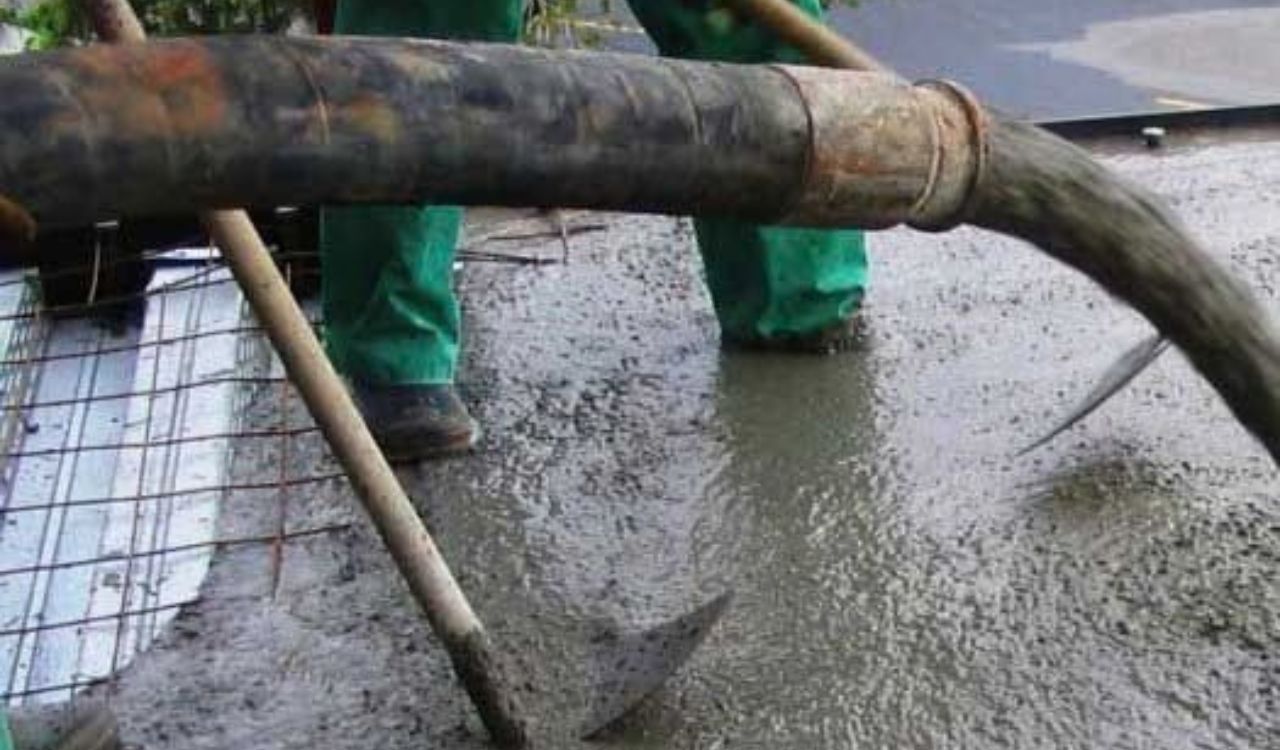
Precast concrete manufacturing requires a level of consistency and production control that is difficult to achieve through conventional mix design alone. Concrete must be batched consistently, placed efficiently, consolidated properly, and developed to the required strength within a controlled production schedule.
In many precast plants, the concrete mix must satisfy several requirements at the same time. It may need sufficient workability for placing around reinforcement, controlled rheology for proper consolidation, rapid early-age strength for demolding, and predictable strength development after curing. Surface appearance and dimensional stability can also be important for architectural and structural products.
This is where concrete admixtures for precast concrete become valuable. Properly selected admixture systems can modify specific fresh or hardened concrete properties while allowing producers to maintain the required mix proportions and manufacturing process.
Why Are Admixtures Important in Precast Concrete Manufacturing?
Precast production differs from conventional cast-in-place construction because concrete is manufactured under controlled factory conditions and is often produced repeatedly using the same forms and production equipment.
Production efficiency therefore becomes an important consideration.
A precast manufacturer may want to:
- Reduce water demand while maintaining workability
- Achieve early strength more quickly
- Remove forms sooner
- Improve concrete flow around reinforcement
- Maintain consistent workability during production
- Improve surface appearance
- Reduce defects caused by poor consolidation
- Optimize curing requirements
- Maintain consistent strength between batches
- Increase formwork utilization
Industry research on precast and prestressed concrete identifies production speed, resource efficiency, workability retention, rheology, and admixture technology as important considerations in modern precast mixtures.
The objective is not simply to add chemicals to concrete. Instead, an admixture should be selected to solve a specific production or performance requirement.
Key Requirements of a Precast Concrete Mix
Before selecting an admixture for precast concrete, manufacturers should establish the performance requirements of the mix.
Workability
Concrete must be workable enough to fill forms and surround reinforcement without excessive vibration or segregation.
The required workability depends on:
- Form geometry
- Reinforcement density
- Placement equipment
- Consolidation method
- Aggregate characteristics
- Concrete temperature
- Production cycle
A mix that is too stiff can create voids, honeycombing, and incomplete filling. A mix that is excessively fluid or unstable may create segregation or other defects.
Early-Age Strength
Early strength is particularly important when precast products must be demolded, moved, stored, or transported soon after casting.
Higher early-age strength can potentially shorten the time between casting and demolding, allowing forms to return to production sooner.
However, faster strength development must still be compatible with the required final performance. Accelerating the early hydration process does not automatically mean that every other concrete property will improve.
Surface Finish
Precast products are often manufactured with controlled molds and exposed surfaces that make finishing quality highly visible.
Poor workability, inadequate consolidation, excessive air, segregation, or inappropriate water content can contribute to surface defects.
Admixture selection can therefore form part of a broader strategy for controlling fresh-concrete behavior and achieving a consistent finished surface.
Production Consistency
A precast plant may produce hundreds or thousands of similar elements. Small variations in concrete behavior can therefore become significant when repeated across a large production volume.
Consistent admixture dosing, material storage, batching, mixing, and quality control are essential for maintaining repeatable results.
Main Admixture Technologies Used in Precast Concrete
Different precast concrete admixtures serve different functions. The appropriate choice depends on the mix design and production objective.
High-Range Water-Reducing Admixtures
High-range water reducers, commonly known as superplasticizers, can provide high workability while reducing the amount of mixing water needed for a target consistency.
This is particularly useful when a precast mix requires:
- High flow
- Low water-cementitious materials ratio
- High strength
- Good reinforcement penetration
- Improved pumpability
- Consistent workability
Polycarboxylate ether, or PCE, is one important chemistry used in modern high-range water-reducing admixtures.
In precast production, the benefit is not simply higher slump. The objective is to obtain the required rheological behavior while maintaining the designed water content and overall mix performance.
Accelerating Admixtures
An accelerating admixture may be considered when faster setting or early strength development is required.
This can be useful for production processes where:
- Formwork must be released quickly
- Products need to be moved shortly after casting
- Production cycles are tightly scheduled
- Early handling strength is important
- Cold conditions slow strength development
The exact effect depends on the cementitious system, temperature, admixture chemistry, dosage, curing method, and other mixture components.
Accelerators should therefore be evaluated through trials rather than selected solely on the assumption that faster setting will always produce a better production cycle.
Water-Reducing Admixtures
Water reducers can improve workability while helping the producer control mixing-water content.
In precast concrete, this can support efficient mix designs where the manufacturer needs a balance between workability, strength, durability, and material cost.
The effectiveness of a water reducer depends on cement chemistry, aggregate characteristics, temperature, dosage, and compatibility with other admixtures.
Air-Entraining Admixtures
Air-entraining admixtures create a controlled air-void system within concrete. Their use is particularly relevant when precast products require resistance to freezing and thawing.
However, air content must be controlled carefully because excessive air can affect strength and other properties.
The required air content should therefore be established according to the exposure environment and applicable project specifications.
Specialty Admixtures
Some precast applications require more specialized performance.
Depending on the product and formulation, specialty admixtures may be used to influence:
- Rheology
- Viscosity
- Permeability
- Corrosion resistance
- Shrinkage
- Water absorption
- Surface characteristics
The selection should be driven by a clearly defined performance requirement rather than by the number of functions advertised for a particular product.
How Admixtures Can Improve Precast Production Efficiency
One of the major advantages of using admixture technology in a factory environment is the possibility of optimizing several stages of production.
Faster Formwork Turnover
If the concrete reaches the required demolding strength earlier, forms may become available for another production cycle sooner.
This can increase equipment utilization without necessarily increasing the number of forms.
However, the required release strength should be established by the product specification and structural requirements rather than by an arbitrary target time.
Better Concrete Flow
High-range water reducers can provide the flow needed to fill complex forms and surround reinforcement while maintaining a controlled water-cementitious materials ratio.
This can be especially useful for heavily reinforced precast elements.
Reduced Water Demand
Reducing unnecessary mixing water can support a lower water-cementitious materials ratio.
Lower water demand may contribute to improved strength and durability when the overall mix and curing conditions are appropriately controlled.
More Predictable Production
A properly optimized admixture system can help producers establish predictable fresh-concrete behavior and strength development.
For a high-volume precast operation, predictability can be as important as achieving a high result in a single laboratory batch.
Admixtures and Precast Concrete Surface Quality
Surface quality is an important consideration in many precast applications, particularly architectural elements and products where the concrete surface remains visible.
Surface defects can result from several factors, including:
- Poor formwork
- Inadequate consolidation
- Excessive air
- Segregation
- Inappropriate workability
- Aggregate distribution
- Improper release-agent application
- Mix instability
Admixtures can influence the rheology and workability of concrete, but they should not be treated as a solution for every surface defect.
The complete manufacturing process must be controlled.
A well-designed mix should work together with suitable formwork, mixing, placement, vibration, curing, and quality-control procedures.
Role of Curing in Precast Concrete Production
Admixtures do not replace proper curing.
Precast plants often use controlled curing conditions to manage strength development and production schedules. Depending on the manufacturing process, curing may involve ambient conditions or accelerated methods such as heat or steam curing.
The interaction between admixture chemistry and curing conditions should be evaluated carefully.
A product that performs well under one curing regime may behave differently under another because temperature influences cement hydration and admixture performance.
For this reason, trial batches should reflect the actual production conditions as closely as possible.
How to Select an Admixture for Precast Concrete
The best admixture for precast concrete depends on the specific manufacturing objective.
A practical selection process can begin with the following questions:
1. What Is the Primary Production Requirement?
Is the main objective:
- Faster demolding?
- Higher early strength?
- Better workability?
- Lower water demand?
- Improved surface finish?
- Better rheology?
- Greater durability?
- More consistent production?
Defining the primary objective prevents unnecessary use of an admixture that does not address the actual problem.
2. What Cementitious Materials Are Being Used?
Cement type, supplementary cementitious materials, fineness, and chemical composition can influence admixture performance.
The same admixture may not produce identical results across different cement systems.
3. What Is the Required Water-Cementitious Materials Ratio?
If strength and durability requirements are demanding, water reduction may be an important part of the mix strategy.
High-range water reducers can be evaluated when significant water reduction and high workability are required.
4. What Is the Required Demolding Time?
If formwork turnover is a major production constraint, early-age strength development becomes an important selection criterion.
An accelerating technology may be considered, but the actual required strength and curing conditions should determine the selection.
5. How Will the Concrete Be Placed?
Pumped concrete, conventional placement, vibration-assisted placement, and highly flowable concrete can have different rheological requirements.
The admixture system should match the placement method.
Compatibility Testing Is Essential
A concrete admixture should not be selected independently from the other materials in the mix.
Compatibility can be influenced by:
- Cement chemistry
- Supplementary cementitious materials
- Aggregate characteristics
- Water quality
- Other admixtures
- Temperature
- Mixing sequence
- Dosage
For precast manufacturers, laboratory trial batches and production-scale testing can help establish whether the selected system delivers the required workability, setting behavior, strength development, and surface quality.
This is particularly important when changing cement sources, raw materials, admixture formulations, or production conditions.
Quality Control for Precast Concrete Admixtures
Consistent admixture performance requires consistent handling.
Manufacturers should establish procedures for:
- Correct admixture identification
- Storage
- Temperature control where required
- Accurate dosing
- Batch verification
- Mixing sequence
- Material traceability
- Routine concrete testing
- Monitoring changes in raw materials
Important concrete properties may include:
- Slump or flow
- Air content
- Concrete temperature
- Setting time
- Early-age strength
- Compressive strength
- Density
- Surface quality
- Workability retention
The specific testing program should be established according to the product type, application, applicable standards, and project requirements.
Common Mistakes in Precast Admixture Selection
Selecting an Admixture Only for Its Claimed Strength Benefit
Strength is only one part of precast production. Workability, setting, rheology, surface quality, and production timing may be equally important.
Using Excessive Dosage
Higher dosage does not automatically provide better performance. Excessive dosage can alter setting, workability, air content, or other properties.
Ignoring Production Temperature
Concrete temperature can change setting and workability behavior. Factory conditions should therefore be considered during testing.
Changing Materials Without Rechecking the Mix
A new cement source or supplementary cementitious material can change the response of the concrete to an admixture.
Assuming Laboratory Results Will Always Match Production
Actual mixing equipment, batch size, mixing time, aggregate moisture, temperature, and transportation conditions can affect performance.
Production trials are particularly valuable when the concrete is used in a high-volume manufacturing environment.
Precast Concrete Admixtures and Modern Manufacturing
Modern precast production increasingly emphasizes efficient use of materials, controlled production cycles, high-performance concrete, and consistent product quality.
Admixture technologies can support these objectives by modifying workability, water demand, rheology, setting, and early-age performance. Industry sources also identify high-range water reducers, strength-enhancing technologies, accelerators, air entrainers, corrosion inhibitors, and waterproofing technologies among the admixture solutions used for precast applications.
However, admixtures should be viewed as one component of an integrated production system. Mix design, aggregate quality, batching accuracy, mixing, placement, consolidation, curing, and quality control remain essential.
How Luke Chemicals Can Support Concrete Admixture Requirements
For manufacturers and industrial buyers, selecting concrete admixtures for precast concrete involves evaluating chemistry, technical performance, consistency, compatibility, and supply requirements together.
Luke Chemicals provides concrete-related chemical solutions and admixture raw materials for applications where formulation and performance requirements need to be considered alongside manufacturing conditions.
For a precast producer, the most effective approach is to identify the production bottleneck first and then evaluate an admixture system against the actual concrete materials and manufacturing process.
Frequently Asked Questions
What admixtures are commonly used in precast concrete?
Common categories include water reducers, high-range water reducers, accelerating admixtures, air-entraining admixtures, and specialty admixtures for properties such as rheology, permeability, corrosion protection, or shrinkage control.
Which admixture is best for faster demolding?
An accelerating admixture may be considered when faster setting or early-age strength development is required. High-range water reducers can also support strength development by enabling lower water content while maintaining workability. The appropriate system depends on the concrete mix and curing conditions.
Can superplasticizers be used in precast concrete?
Yes. Superplasticizers are widely used where precast concrete requires high workability, water reduction, or high strength. PCE-based technologies are particularly important in many modern high-performance mixtures.
How do admixtures improve precast concrete production?
Depending on their function, admixtures can help control water demand, workability, rheology, setting, early strength, and other concrete properties. These effects can support more efficient production cycles and more consistent finished products.
Are admixtures necessary for all precast concrete?
No. The need for an admixture depends on the required performance, mix design, materials, manufacturing process, and specifications. Some precast products can meet their requirements without chemical admixtures, while demanding applications may benefit substantially from them.
How should a precast manufacturer test a new admixture?
The admixture should be tested with the actual cementitious materials, aggregates, water, and other admixtures intended for production whenever practical. Testing should evaluate the properties relevant to the manufacturing process, including workability, setting, early strength, final strength, air content, and surface quality.
Can multiple admixtures be used in precast concrete?
Yes. Multiple admixtures may be used when different performance requirements need to be addressed. Compatibility and dosage should be evaluated through trial batches before full-scale production.