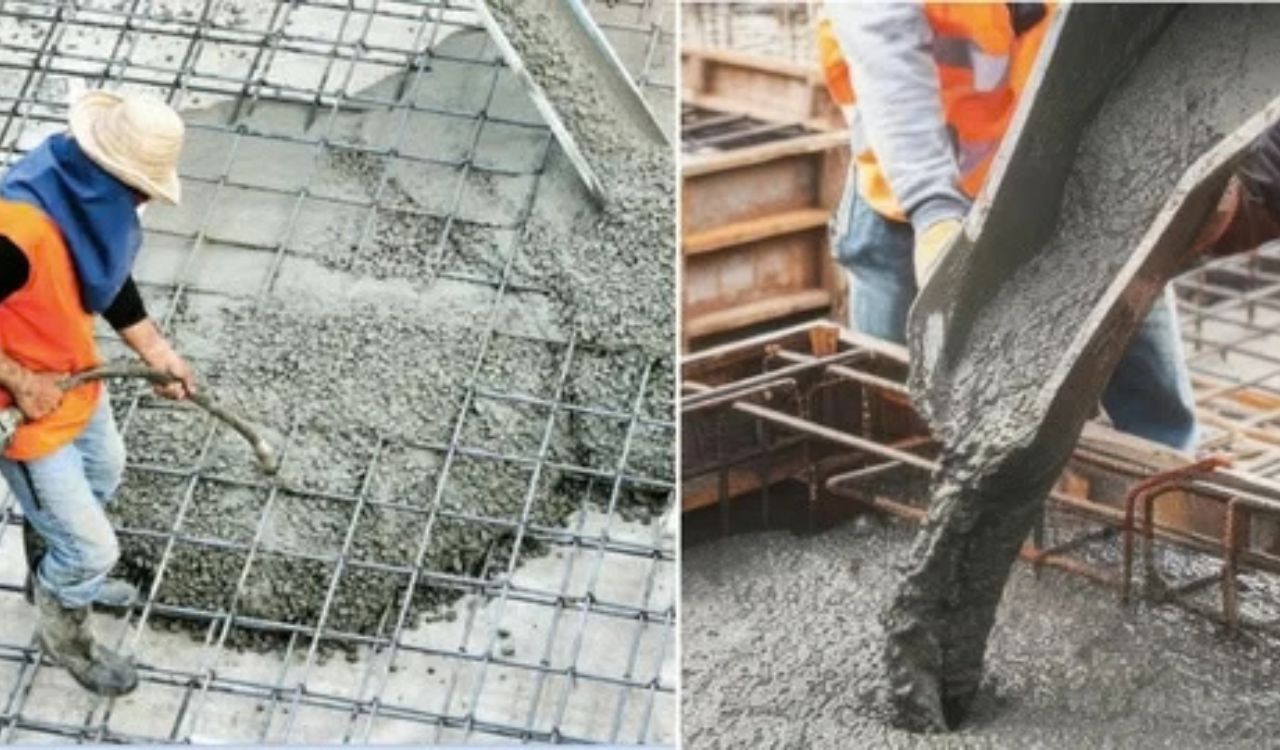
Concrete naturally shrinks as it dries, and when that shrinkage is restrained, it can lead to cracking in slabs, pavements, walls, and other structural elements. Reinforcement, proper curing, and joint design can help control these cracks, but they do not directly reduce the shrinkage that causes them. This is where shrinkage-reducing admixtures become important. As one of the specialized types of admixtures in concrete, shrinkage reducing admixtures work at the chemical level to reduce the volume change that occurs as concrete loses moisture.
By addressing shrinkage closer to its source, they can help improve dimensional stability and long-term durability. In this article, we’ll explore what shrinkage-reducing admixtures are, how they work, the different types available, their benefits and applications, and the practical factors to consider when using them in concrete.
What Is a Shrinkage Reducing Admixture?
A shrinkage-reducing admixture, commonly abbreviated as SRA, is a liquid chemical admixture added to a concrete mix to reduce the drying shrinkage that occurs as water evaporates from the capillary pore structure of hardened concrete.
Unlike reinforcement or joint spacing, which manage shrinkage after it happens, an SRA addresses the cause by reducing the internal forces that pull the concrete matrix inward as it dries. This makes it a chemical solution to a physical problem, and it is increasingly specified in projects where crack control is a critical performance requirement, such as slabs on grade, bridge decks, and repair overlays.
How Shrinkage Reducing Admixtures Work
Drying shrinkage occurs as water evaporates from the fine capillary pores of concrete, creating capillary tension that pulls the concrete matrix inward. Shrinkage reducing admixtures (SRAs) lower the surface tension of the pore solution, reducing these capillary forces and limiting drying shrinkage. Most SRAs use glycol ethers or propylene glycol derivatives.
As specialized products within the concrete admixtures market, SRAs provide a different approach from shrinkage-compensating admixtures, which rely on controlled expansion to offset shrinkage.
Types of Shrinkage-Related Admixtures
It is useful to distinguish between the different categories of admixtures used to manage shrinkage and cracking, as they are sometimes confused with one another despite working through different mechanisms.
| Type | Mechanism | Typical Reduction/Effect |
| Shrinkage reducing admixture (SRA) | Lowers pore fluid surface tension | Reduces drying shrinkage by 30–50% |
| Shrinkage-compensating admixture (expansive additive) | Induces controlled expansion during hydration | Offsets shrinkage through pre-expansion |
| Fiber reinforcement (synthetic/steel) | Bridges microcracks mechanically | Controls crack width, not shrinkage magnitude |
| Internal curing agents (e.g., lightweight aggregate) | Supplies internal water for continued hydration | Reduces autogenous shrinkage specifically |
SRAs are most closely associated with reducing drying shrinkage, which occurs over weeks and months as concrete dries in service. They can also have a measurable effect on autogenous shrinkage, which occurs in low water-cement ratio mixes due to self-desiccation during hydration, though internal curing agents are typically the primary tool for that specific mechanism.
Plastic shrinkage, which occurs in the first few hours after placement due to rapid surface moisture loss, is generally addressed through curing practices and evaporation retarders rather than SRAs, though maintaining proper curing remains important even when an SRA is used.
Benefits of Using Shrinkage Reducing Admixtures
The primary benefit of an SRA is a measurable reduction in drying shrinkage, typically in the range of 30 to 50 percent compared to a plain mix, which translates directly into a reduced risk and width of shrinkage cracking.
Because cracking is often the entry point for water and chlorides into concrete, controlling shrinkage also has a secondary benefit for long-term durability, helping maintain the impermeability of concrete and protecting embedded reinforcement from corrosion. Reduced cracking also lowers the frequency and cost of repair and maintenance over the service life of a structure.
In slabs on grade and floor systems, SRAs help reduce curling, which is the upward warping of slab edges caused by differential shrinkage between the top and bottom surfaces, improving flatness and reducing joint stress. For projects with demanding aesthetic or serviceability requirements, such as exposed architectural concrete or industrial floors, this level of crack control can be a decisive factor in specification.
Applications
Shrinkage reducing admixtures are specified in a range of applications where crack control is a priority beyond what reinforcement alone can achieve. They are commonly used in slabs on grade and industrial floors, where large surface areas and restrained shrinkage make cracking a persistent challenge.
Bridge decks and parking structures, which are exposed to deicing salts and require low permeability to protect reinforcement, also benefit from the reduced cracking SRAs provide. They are used in repair and overlay work, where differential shrinkage between new and existing concrete is a common cause of debonding and cracking at the interface.
High-performance and architectural concrete, where surface appearance and crack-free finishes matter, is another common application, as is precast concrete production, where early and predictable shrinkage behavior supports tighter dimensional tolerances.
Important Factors to Consider
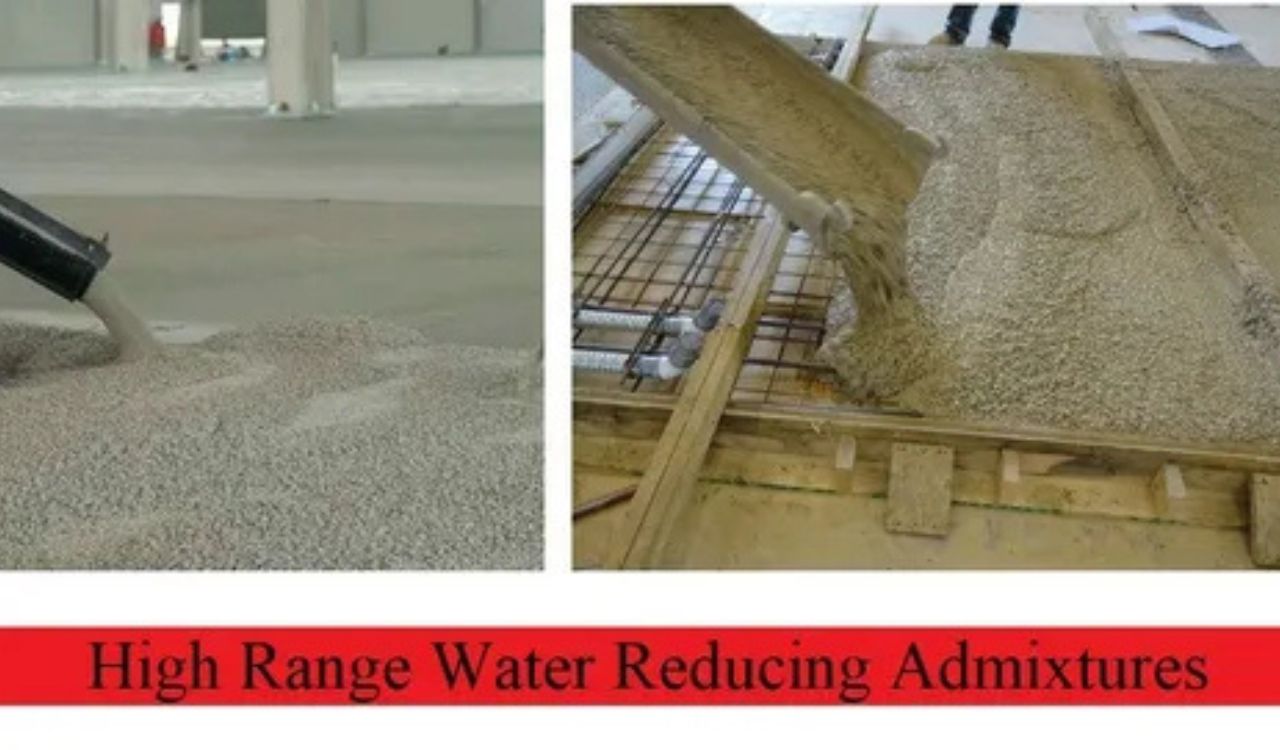
Several factors influence how effectively an SRA performs on a given project. Dosage is critical, as SRAs are typically added at rates specified by the manufacturer, and deviation from recommended dosage can reduce effectiveness or interact unfavorably with other admixtures in the mix. Compatibility with other admixtures, particularly air-entraining agents and high-range water reducers (HRWR), should be verified through trial batching, since some SRAs can interact with air-void systems and slightly reduce entrained air content, which needs to be compensated for in mix design.
The water-cement ratio of the base mix also matters, as SRAs are generally most effective in mixes where drying shrinkage, rather than autogenous shrinkage, is the dominant mechanism. Curing practices remain important even with an SRA in the mix, since proper curing controls the rate of early moisture loss and complements the admixture’s effect rather than replacing it. Testing shrinkage performance using a standard method such as ASTM C157 during trial mixes is good practice for projects where shrinkage limits are part of the specification.
Limitations
SRAs are effective at reducing shrinkage magnitude, but they do not eliminate shrinkage entirely, and proper joint design, reinforcement, and curing remain necessary complements rather than being replaced by the admixture.
Some SRA formulations can cause a slight reduction in early-age compressive strength, which should be evaluated against project requirements through trial testing. Interaction with air-entraining admixtures requires attention, as SRAs can sometimes reduce the stability of the air-void system, which is particularly important in mixes exposed to freeze-thaw cycling.
Cost is also a practical consideration, as SRAs generally add to the overall admixture cost of a mix, which needs to be weighed against the value of reduced cracking and lower long-term maintenance for the specific project.
Best Practices
Trial batching with project-specific materials is essential before specifying an SRA at full scale, particularly to confirm compatibility with other admixtures already used in the mix, such as water reducers or air-entraining agents. Dosage should follow manufacturer guidance closely, and any adjustment should be validated through shrinkage testing rather than adjusted on assumption. Curing should not be relaxed simply because an SRA is present in the mix, as the two work together rather than as substitutes for one another.
For projects with strict crack-control requirements, specifying shrinkage limits based on ASTM C157 testing during the mix design phase provides a measurable basis for admixture selection and dosage confirmation.
Conclusion
Shrinkage-reducing admixtures offer a direct, chemistry-based approach to one of the most common causes of concrete cracking, reducing the capillary forces responsible for drying shrinkage rather than only managing its effects after the fact. While they do not remove the need for good curing practices, proper joint layout, and adequate reinforcement, they provide a measurable and reliable reduction in shrinkage that translates into fewer cracks, improved durability, and lower long-term maintenance costs.
For projects where crack control is a critical performance requirement, from industrial floors to bridge decks, SRAs are a practical tool worth evaluating alongside other admixtures during mix design.
FAQs
What does a shrinkage reducing admixture do in concrete?
It lowers the surface tension of water within the concrete’s capillary pores, reducing the internal forces that cause drying shrinkage and the cracking associated with it.
How much can an SRA reduce concrete shrinkage?
Typical reductions range from 30 to 50 percent compared to a plain mix, though the exact figure depends on dosage, mix design, and curing conditions.
Is a shrinkage reducing admixture the same as a shrinkage-compensating admixture?
No. An SRA reduces the shrinkage force itself by lowering pore fluid surface tension, while a shrinkage-compensating admixture induces controlled expansion during hydration to offset later shrinkage.
Does using an SRA eliminate the need for curing or joints?
No. SRAs reduce shrinkage magnitude but do not replace proper curing, joint spacing, or reinforcement, all of which remain necessary for effective crack control.
Can SRAs be used with air-entrained concrete?
Yes, but compatibility should be verified through trial batching, as some SRAs can affect the stability of the air-void system and may require dosage adjustment.
What types of projects benefit most from shrinkage reducing admixtures?
Slabs on grade, industrial floors, bridge decks, parking structures, and repair overlays benefit most, as these applications are particularly prone to restrained shrinkage cracking.
Does an SRA affect the compressive strength of concrete?
Some formulations can cause a slight reduction in early-age strength, so trial testing is recommended to confirm strength development meets project requirements.