Introduction
You’re halfway through a construction project when temperatures suddenly begin to drop. The deadline is approaching, but winter weather has arrived. Should you continue pouring concrete or wait until spring?
The good news is that cold weather concrete placement is absolutely possible when proper precautions are taken. In fact, a well-designed cold weather concrete mix can produce durable, high-quality concrete even in freezing conditions.
However, winter concreting comes with real risks. If fresh concrete freezes before gaining sufficient strength, it can suffer internal cracking, permanent damage, and compressive strength losses of up to 50%. Without proper protection, freeze-thaw cycles can also reduce long-term durability.
In this guide, you’ll learn how cold weather affects concrete, what admixtures and additives can prevent freezing, how to design a winter concrete mix, and the best methods for protecting fresh concrete during curing.
Why Cold Weather Is a Problem for Concrete
Concrete gains strength through a chemical reaction called hydration.
Hydration occurs when cement reacts with water, forming strong cementitious bonds that harden the concrete over time.
When temperatures drop below 40°F (4°C), hydration slows dramatically.
As temperatures continue to decrease:
- Setting times increase
- Strength development slows
- Finishing becomes more difficult
- Freeze damage becomes more likely
What Happens If Concrete Freezes Too Early?
If water inside fresh concrete freezes before the concrete develops adequate strength:
- Ice crystals expand within the pores
- Internal cracking occurs
- Cement hydration is interrupted
- Long-term durability decreases
- Compressive strength may be reduced by up to 50%
Even if the concrete appears acceptable on the surface, hidden structural damage may already exist.
Temperature vs. Setting Time
According to Fritz-Pak Corporation:
For every 10°F drop in temperature, concrete setting times increase by approximately 45 minutes.
| Concrete Temperature | Approximate Set Time Impact |
|---|---|
| 70°F | Normal |
| 60°F | +45 Minutes |
| 50°F | +90 Minutes |
| 40°F | +135 Minutes |
| Below 40°F | Hydration Severely Slows |
Suggested Graphic: Temperature vs. Concrete Setting Time Chart
What Can You Add to Concrete to Prevent Freezing?
Several admixtures are specifically designed to improve concrete performance during winter conditions.
The three primary categories include:
- Accelerating admixtures
- Air-entraining admixtures
- Antifreeze agents
Accelerating Admixtures
Accelerators speed up cement hydration and help concrete gain strength faster.
Calcium Chloride Accelerators
Calcium chloride is one of the most widely used concrete accelerators.
Benefits include:
- Faster setting times
- Improved early strength
- Reduced freeze risk
- Lower project delays
Limitations
Calcium chloride can accelerate corrosion of embedded steel reinforcement.
Because of this, its use is often restricted in:
- Reinforced concrete
- Prestressed concrete
- Bridge structures
Non-Chloride Accelerators
Many contractors now prefer non-chloride accelerating admixtures.
Benefits include:
- Faster strength gain
- No reinforcement corrosion risk
- Better long-term durability
Products such as Fritz-Pak NCA are commonly used when reinforced concrete protection is required.
Air-Entraining Admixtures
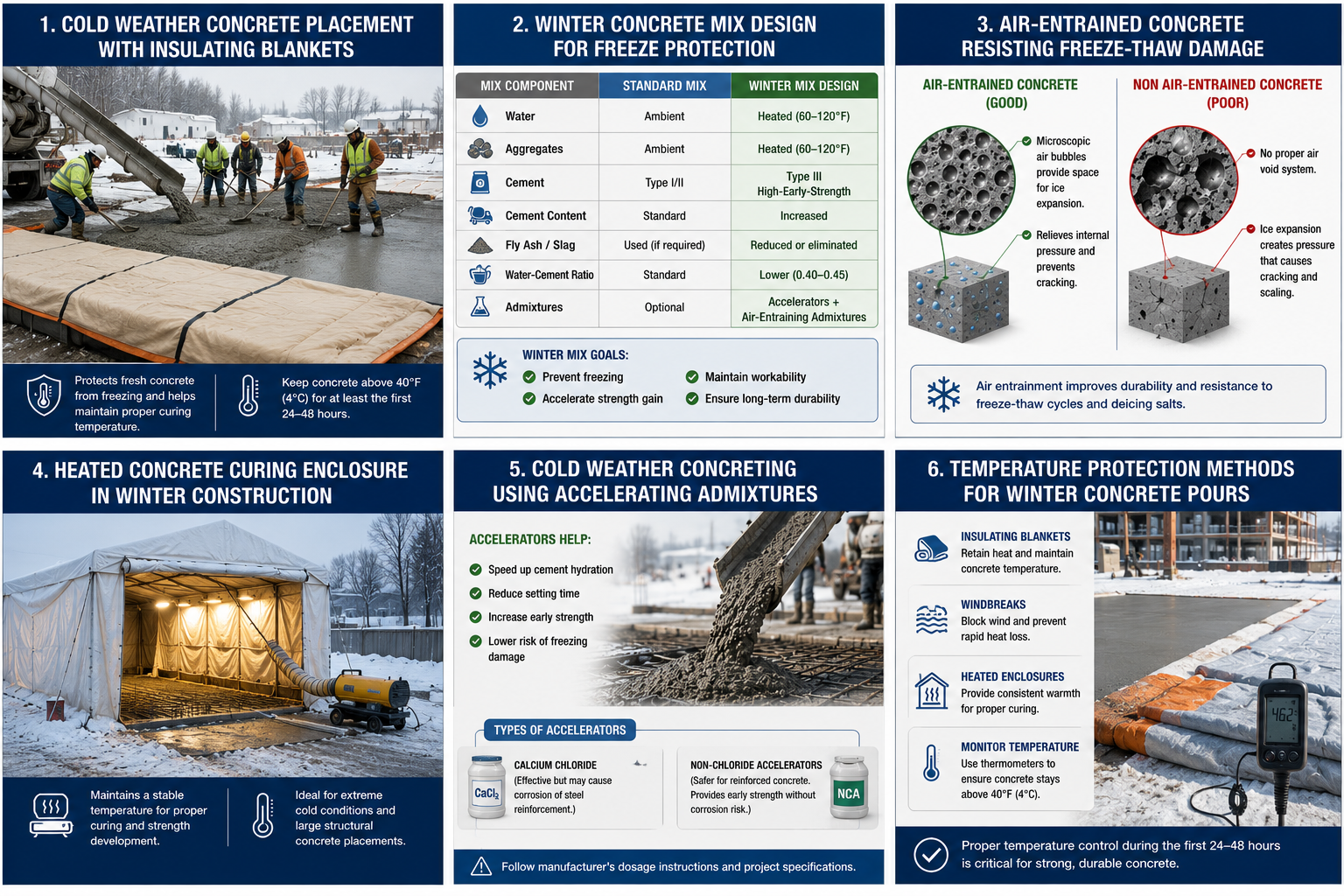
Air-entraining admixtures introduce millions of microscopic air bubbles throughout the concrete matrix.
These bubbles provide space for freezing water to expand without damaging the concrete.
Benefits
- Improved freeze-thaw durability
- Increased resistance to deicing salts
- Better workability
- Reduced bleeding
- Reduced segregation
Air entrainment is one of the most effective methods for improving long-term winter concrete durability.
Antifreeze Admixtures
Many people confuse antifreeze admixtures with accelerators.
The difference is important.
Accelerators
Accelerators speed hydration but do not prevent freezing.
Antifreeze Agents
Antifreeze admixtures lower the freezing point of water within the concrete mix.
This allows concrete placement in temperatures below freezing while reducing the risk of ice formation.
Important Industry Guidance
Accelerating admixtures do not prevent concrete from freezing, so their use does not preclude the requirements for appropriate curing and protection.
— National Ready Mixed Concrete Association (NRMCA)
Even when accelerators are used, concrete still requires proper winter protection.
What Is a Winter Concrete Mix?
A winter concrete mix is specifically designed to:
- Prevent early-age freezing
- Accelerate strength development
- Maintain long-term durability
- Improve cold-weather workability
Several modifications are commonly made to standard concrete mixtures during winter.
Use Heated Water and Aggregates
Concrete producers often heat mixing water and aggregates before batching.
Benefits include:
- Higher initial concrete temperature
- Faster hydration
- Reduced freeze risk
The goal is to ensure concrete arrives on site warm enough to continue curing.
Increase Cement Content
Additional cement generates more heat during hydration.
More hydration heat helps concrete maintain temperature during the critical early curing period.
Use Type III High-Early-Strength Cement
Type III cement develops strength significantly faster than standard Portland cement.
Benefits include:
- Faster setting
- Earlier form removal
- Reduced freeze vulnerability
Reduce Fly Ash and Slag Content
Supplementary cementitious materials such as:
- Fly ash
- Ground granulated blast furnace slag
often slow early-age strength development.
Winter mixes commonly reduce or eliminate these materials to maximize heat generation.
Lower the Water-Cement Ratio
Reducing the water-cement ratio offers several advantages:
- Less free water available to freeze
- Higher strength
- Improved durability
- Better freeze-thaw resistance
Most cold weather concrete mixes target lower water-cement ratios whenever practical.
Winter Mix vs Standard Mix
| Mix Component | Standard Mix | Winter Mix |
|---|---|---|
| Water Temperature | Ambient | Heated |
| Aggregate Temperature | Ambient | Heated |
| Cement Content | Standard | Increased |
| Cement Type | Type I/II | Type III |
| Fly Ash/Slag | Common | Reduced |
| Water-Cement Ratio | Standard | Lower |
| Accelerators | Optional | Often Used |
| Air Entraining | Exposure Dependent | Recommended |
How to Place and Protect Cold Weather Concrete
Even the best winter concrete mix can fail if curing conditions are not controlled.
Protection begins before the concrete is poured.
Check the Subgrade Temperature
A frozen subgrade can rapidly draw heat from fresh concrete.
This slows hydration and increases freezing risk.
Before pouring:
- Verify ground temperatures
- Remove frozen material
- Prevent snow and ice accumulation
Preheat the Ground
When necessary, contractors use:
- Portable heaters
- Hydronic heating systems
- Thermal blankets
to warm the subgrade before placement.
Protect the First 24–48 Hours
The first two days after placement are critical.
Concrete should remain above 40°F (4°C) during this period.
Failure to maintain temperature can lead to permanent damage.
Use Insulating Blankets
Concrete curing blankets help:
- Retain hydration heat
- Reduce heat loss
- Protect against overnight temperature drops
They are among the most economical cold-weather protection methods.
Install Windbreaks
Cold winds accelerate heat loss from concrete surfaces.
Temporary wind barriers help:
- Reduce cooling
- Prevent rapid moisture loss
- Improve curing conditions
Use Heated Enclosures
For extreme winter conditions, contractors often build temporary heated enclosures around the work area.
These structures maintain safe curing temperatures until sufficient strength develops.
Will Concrete Set Properly in Cold Weather?
The short answer is:
Yes—if managed correctly.
Concrete can cure successfully in winter when:
- Proper mix designs are used
- Accelerators are incorporated
- Fresh concrete is protected from freezing
- Adequate curing temperatures are maintained
In many cases, cold-weather concrete develops:
- Higher ultimate strength
- Lower thermal cracking potential
- Better long-term durability
ACI Guidance
“Concrete placed during cold weather, protected against freezing, and properly cured for a sufficient length of time has the potential to develop higher ultimate strength and greater durability than concrete placed at higher temperatures.”
Common Questions
When Can Formwork Be Removed?
Form removal depends on:
- Temperature
- Mix design
- Strength gain
Always verify strength requirements before stripping forms.
Signs of Freeze Damage
Potential warning signs include:
- Surface scaling
- Cracking
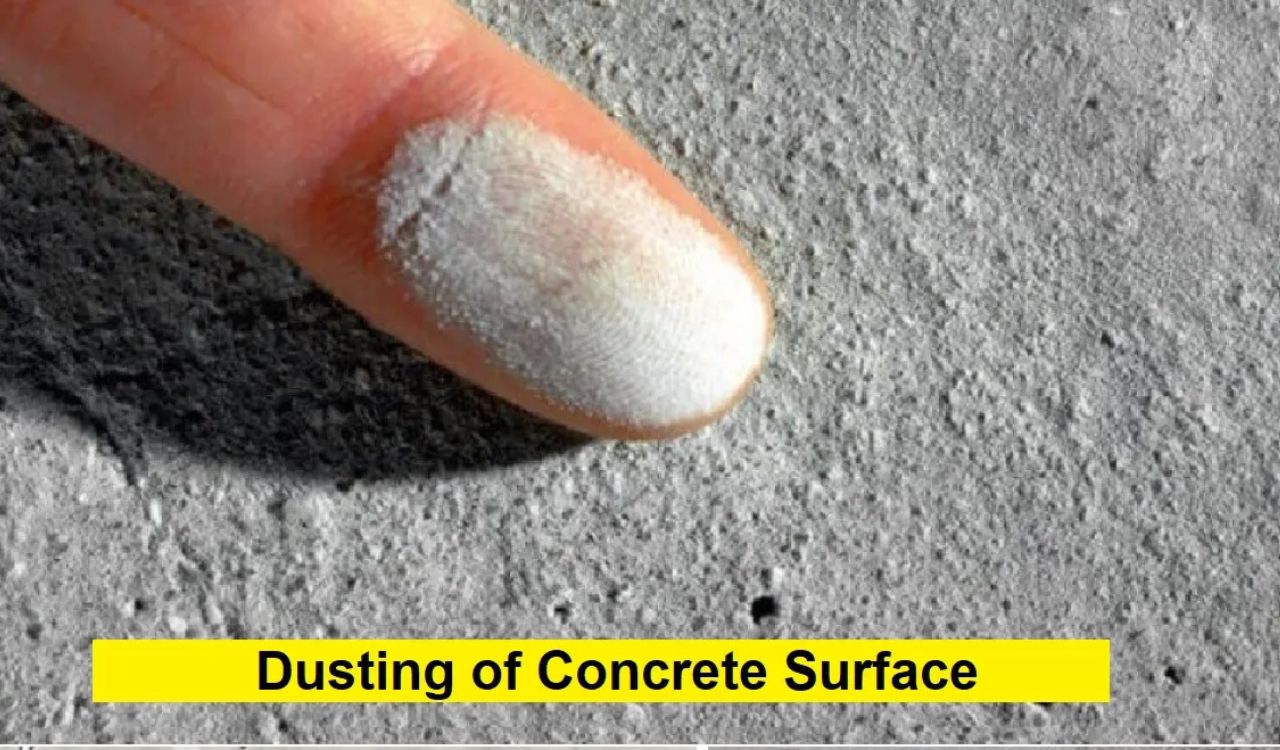
- Dusting
- Delayed strength development
If significant damage is suspected, consult a concrete professional.
When Should You Call an Expert?
Professional assistance is recommended when:
- Temperatures remain below freezing for extended periods
- Structural concrete is involved
- Large pours are planned
- Specialized admixtures are required
Cold Weather Concrete Checklist
Before Pouring:
✔ Remove snow and ice
✔ Verify subgrade temperature
✔ Preheat ground if necessary
✔ Use a winter concrete mix
✔ Incorporate accelerators when needed
✔ Maintain a low water-cement ratio
After Pouring:
✔ Cover with insulating blankets
✔ Install windbreaks
✔ Maintain concrete above 40°F
✔ Monitor temperatures for 24–48 hours
✔ Delay form removal until adequate strength develops
Conclusion
Cold weather concrete placement presents challenges, but it doesn’t have to stop construction projects. With the right winter concrete mix, proper admixtures, and effective curing protection, concrete can achieve excellent strength, durability, and long-term performance even in harsh winter conditions.
Remember the key principles:
- Use accelerators and air-entraining admixtures
- Heat materials when necessary
- Reduce the water-cement ratio
- Protect fresh concrete from freezing
- Maintain curing temperatures above 40°F
For more detailed guidance, consult the American Concrete Institute’s Guide to Cold Weather Concreting and work closely with your concrete supplier to develop a mix design suited to local weather conditions.
Ready to pour concrete this winter? Explore concrete admixture solutions and connect with experienced local contractors to ensure your next cold-weather project is a success.