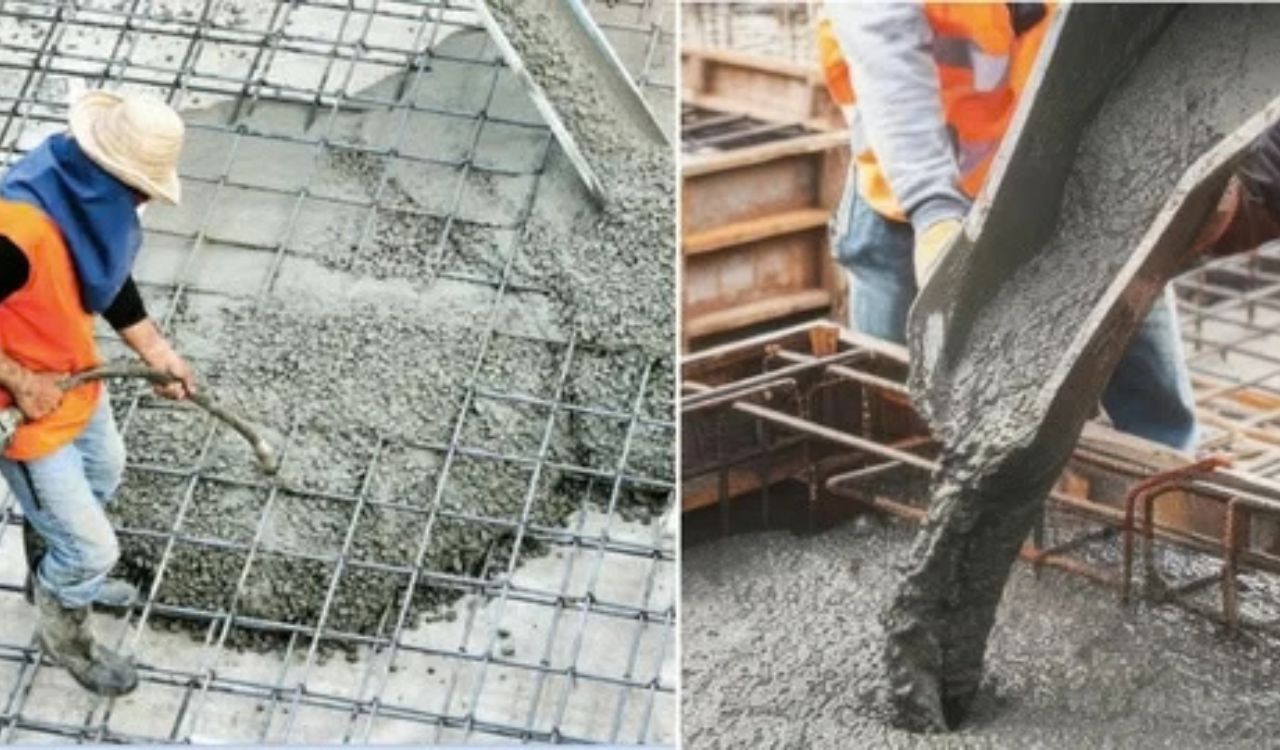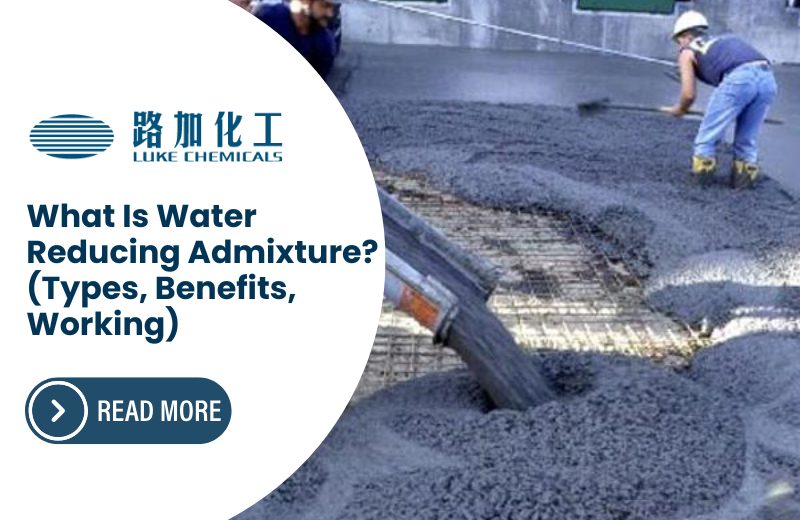
A water-reducing admixture is a chemical additive mixed into concrete to lower the amount of water needed to achieve a required workability. Concrete needs water to hydrate cement and to make the mix workable enough to place and finish. But extra water beyond what hydration actually needs weakens the final structure. Water-reducing admixtures solve this problem. They let engineers cut mixing water while keeping the same slump, or they let the mix keep the same water content while increasing flowability.
This single function affects almost every property that matters in concrete. Strength, permeability, durability, and long-term performance all trace back to how much water sits in the mix relative to cement. That relationship is called the water-cement ratio, and it is the main reason water reducers exist.
How Water Reducing Admixtures Work?
Cement particles in fresh concrete carry an electrical charge on their surface. This charge causes them to clump together, which traps water inside the clumps and makes the mix stiff even when there is technically enough water present. A water reducing admixture is designed to break up this clumping.
Most modern water reducers work through two mechanisms. The first is electrostatic repulsion, where the admixture molecules adsorb onto the cement particles and give them a similar charge, so the particles push each other apart instead of clumping. The second is steric hindrance, where long polymer side chains on the admixture physically keep particles separated. Polycarboxylate-based admixtures use both mechanisms together, which is part of why they outperform older chemistries at lower dosages.
Once the cement particles are dispersed, the water that was previously trapped inside clumps becomes available to lubricate the mix. That is why a dispersed mix flows better with less total water, or flows much better with the same water.
Types of Water Reducing Admixtures
Water reducing admixture types are generally grouped by chemistry and by performance level.
By chemistry, there are four common families:
Lignosulfonate-based admixtures. These are byproducts of the paper industry and were among the first water reducers used in concrete. They are inexpensive and typically reduce water by 5 to 10 percent, but they can slightly delay setting time.
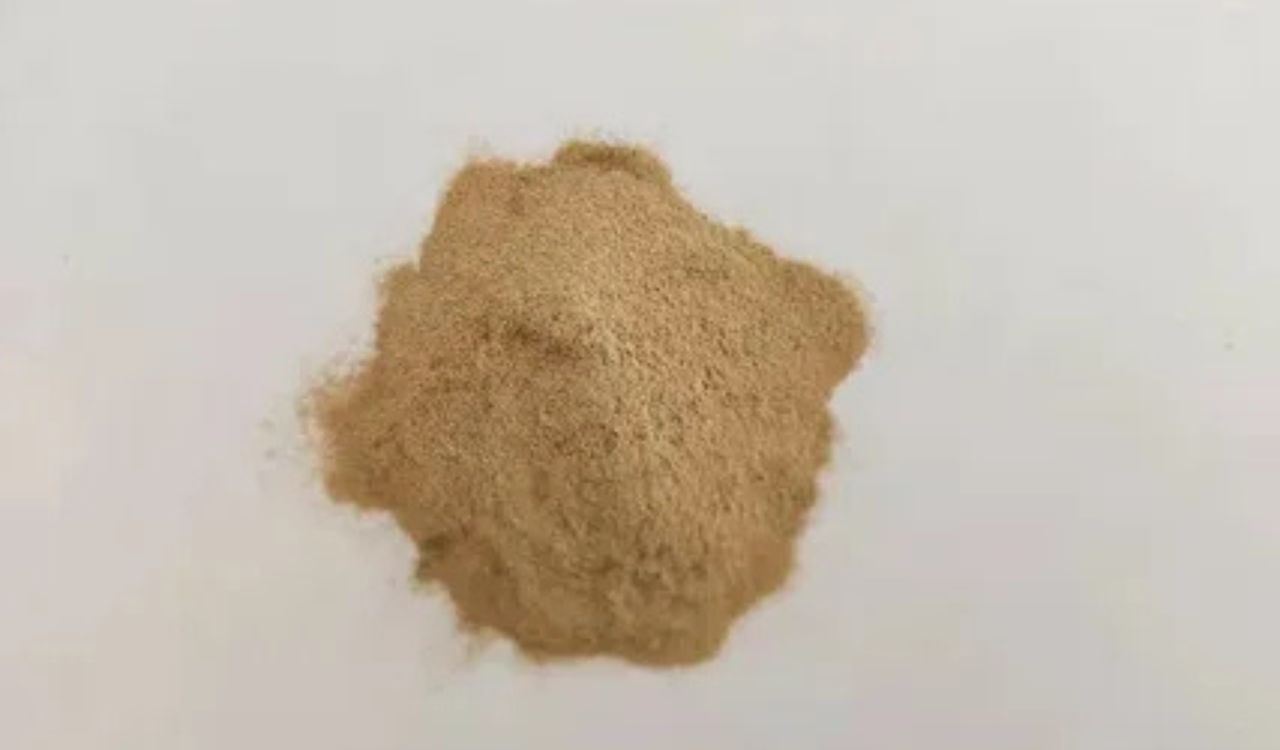
Naphthalene-based admixtures. These are sulfonated naphthalene formaldehyde polymers, often called PNS. They give stronger water reduction than lignosulfonates, work well in ready-mix and precast production, and are widely used because of their reliable performance and cost. Luke Chemicals produces a naphthalene-based water reducer, JF-2, used by manufacturers who need dependable slump and strength gains at a practical cost.
Melamine-based admixtures. These offer good water reduction with minimal color effect on the finished concrete, which matters for architectural and precast work, though they have become less common as polycarboxylates gained ground.
Polycarboxylate ether admixtures, or PCE. These are the newest generation and the current standard for high-performance concrete. They can reduce water by 20 to 40 percent, hold slump longer, and are the base chemistry behind most superplasticizers used in self-consolidating concrete today.
By performance level, ASTM C494 classifies water reducing admixtures into distinct types:
Type A is a normal water reducer, reducing water by at least 5 percent without changing set time significantly.
Type D combines water reduction with set retardation, useful in hot weather or long haul concrete.
Type E combines water reduction with set acceleration, useful in cold weather or fast turnaround projects.
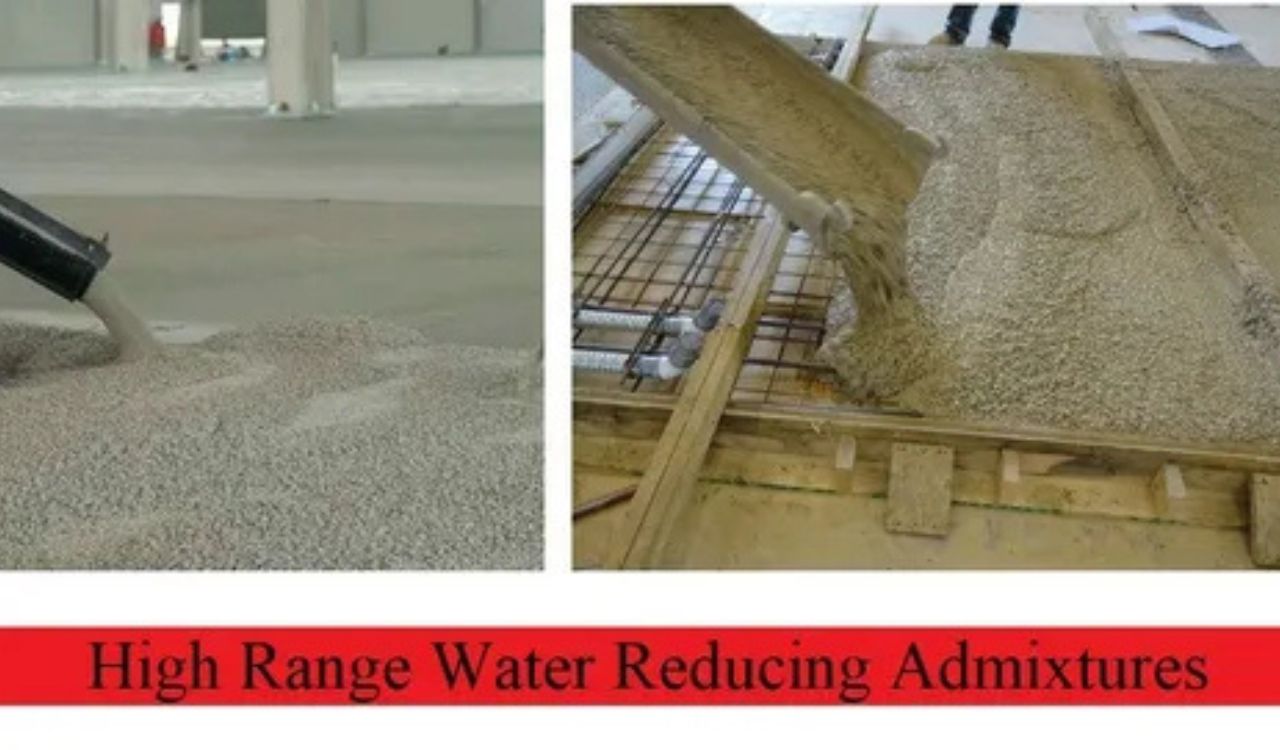
Type F is a high-range water reducer, also called a superplasticizer, reducing water by at least 12 percent.
Type G combines high-range water reduction with retardation.
Many countries have their own equivalent standards. In China, GB8076-2008 governs concrete admixtures and sets similar performance benchmarks. In Europe, EN 934-2 covers the same category. Manufacturers exporting to multiple regions usually test and certify products against more than one of these standards.
Water Reducers vs Superplasticizers
The terms often get used interchangeably, but there is a practical difference. A standard water reducer, like a lignosulfonate or basic naphthalene product, typically achieves 5 to 12 percent water reduction. A superplasticizer, or high-range water reducer, achieves 12 to 40 percent water reduction and produces much higher flowability. Superplasticizers are what make self-consolidating concrete possible, since that concrete needs to flow into formwork without vibration while still holding its strength.
Choosing between the two depends on the project. A standard road slab or footing rarely needs the cost of a high-range admixture. A congested rebar section, a tall architectural pour, or a precast element with tight tolerances usually does.
Benefits of Using a Water Reducing Admixture
Lower water content directly improves compressive strength, since less water means fewer capillary pores once the concrete cures. Reduced porosity also lowers permeability, which slows the entry of chlorides, sulfates, and moisture that cause reinforcement corrosion and long-term deterioration.
Water reducers also improve workability without adding water, which means crews get easier placement and finishing without sacrificing final strength. This is particularly useful in dense reinforcement, deep sections, or when concrete has to travel a long distance before placement. In many projects, water reducers also allow a reduction in total cementitious material for the same strength target, which lowers material cost and reduces the carbon footprint of the mix.
Factors That Affect Dosage and Performance
Dosage is usually given as a percentage of cement weight, and it depends on several variables rather than a fixed number. Cement type and fineness change how much admixture is needed, since finer cements have more surface area to disperse. Ambient temperature matters too, since hot weather accelerates hydration and can shorten the working time gained from the admixture. The presence of supplementary cementitious materials like fly ash or silica fume also changes dosage requirements, since these materials interact differently with dispersing agents.
Compatibility testing matters as much as dosage. Not every admixture behaves the same way with every cement source, and incompatibility can show up as slump loss, delayed setting, or air content problems. This is why manufacturers recommend trial batching before full-scale use, especially when switching cement suppliers or admixture brands.
Common Applications of Water Reducing Admixtures
Ready-mix concrete producers use water reducers as a baseline admixture in most standard mixes to control cost and improve consistency across batches. Precast concrete manufacturers rely more heavily on high-range types since they need fast strength gain and tight quality control. Infrastructure projects such as bridges, tunnels, and marine structures often specify water reducers alongside corrosion inhibitors to meet durability requirements over a design life of 50 years or more. High-performance and self-consolidating concrete mixes depend almost entirely on polycarboxylate superplasticizers to achieve the flow and strength targets required.
How to Choose the Right Water Reducing Admixture
Start with the performance requirement, not the chemistry. Decide whether the project needs standard water reduction or high-range flow. Then check the ambient temperature and schedule, since this determines whether a retarding or accelerating variant is more appropriate. Confirm the applicable standard for the project, whether that is ASTM C494, GB8076, or EN 934-2, since specifications often call out a specific type.
Finally, run a trial batch with the actual project materials before committing to full-scale use, since local cement and aggregate can shift real-world performance from published data sheets.
Frequently Asked Questions
Does a water-reducing admixture affect setting time?
A basic water reducer has little effect on setting time. Types combined with a retarder or accelerator, such as Type D or Type E under ASTM C494, are specifically designed to shift setting time in one direction.
Can water reducers be combined with other admixtures?
Yes, in most cases. Water reducers are commonly used alongside air-entraining agents, corrosion inhibitors, and accelerators, though compatibility should always be confirmed through trial mixing.
Is a superplasticizer the same as a water reducer?
A superplasticizer is a type of water reducer, specifically the high-range category. All superplasticizers are water reducers, but not all water reducers qualify as superplasticizers.
Do water reducers reduce concrete cost?
Often yes, since they can allow a lower cement content for the same strength target, which offsets the cost of the admixture itself.