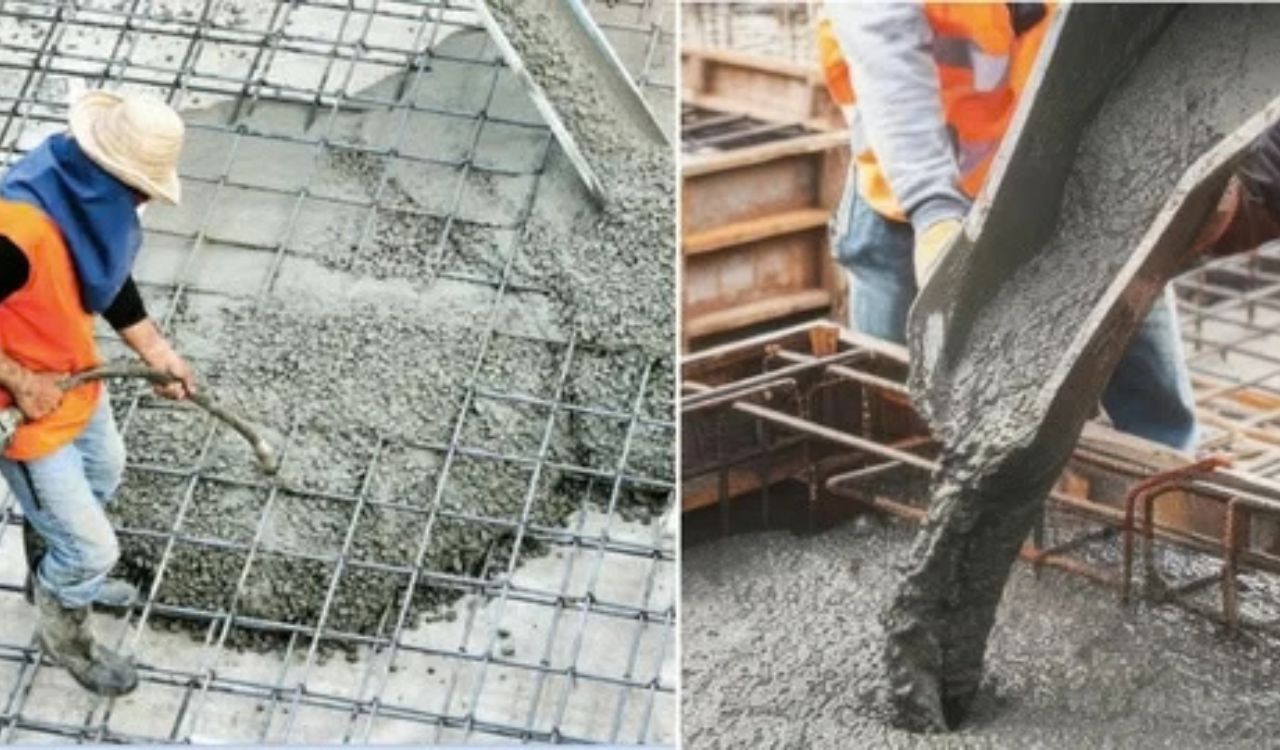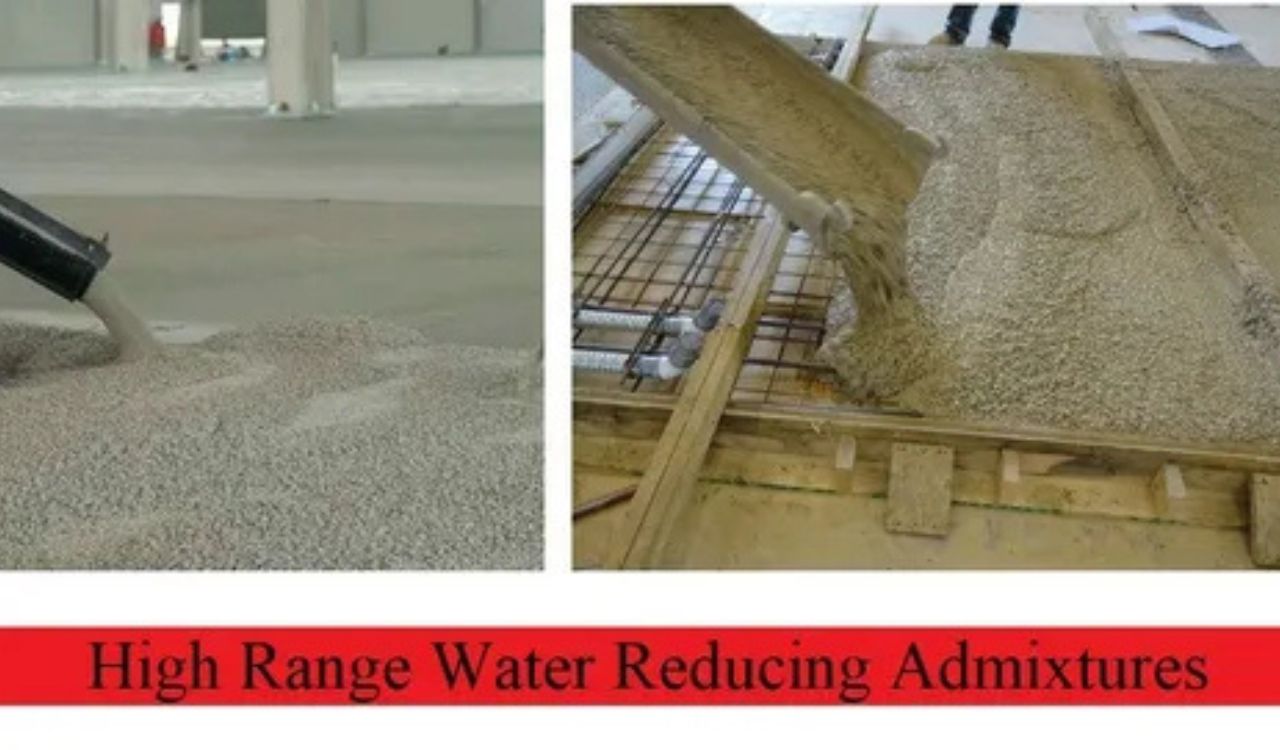
Lignosulfonate is one of the oldest and most widely used water-reducing agents in the concrete industry, valued for its natural origin, cost-effectiveness, and reliable performance in general-purpose concrete.
While newer generations of admixtures, such as polycarboxylate ethers, offer higher levels of water reduction, lignosulfonate remains a practical and economical choice for many ready-mix and precast applications. As one of the established types of admixtures in concrete, lignosulfonate is mainly used to improve workability while reducing the amount of mixing water required.
Understanding where it fits among different admixture categories can help engineers and contractors select the right solution for specific concrete requirements. This article explains what a lignosulfonate concrete admixture is, its chemical properties, how it functions in a concrete mix, its benefits and limitations, and where it is best applied.
What Is Lignosulfonate Concrete Admixture?
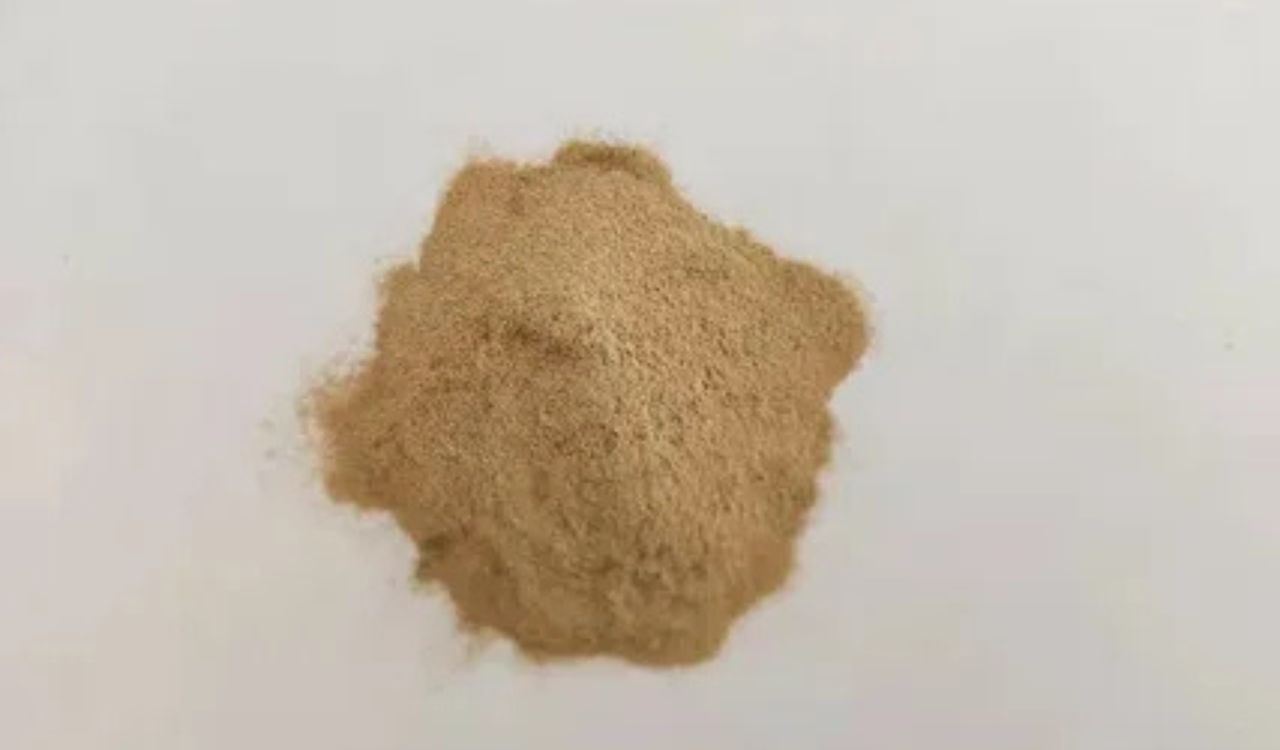
Lignosulfonate is a naturally derived polymer obtained as a byproduct of the sulfite pulping process in the paper and pulp industry. Once processed and purified, it is used in concrete as a normal-range water-reducing admixture, typically classified under ASTM C494 as a Type A water reducer or Type D water reducer and retarder.
It is commonly available in forms such as calcium lignosulfonate and sodium lignosulfonate, with each offering slightly different performance characteristics depending on the mix design and application. By improving workability and allowing part of the mixing water to be reduced, lignosulfonate can contribute indirectly to stronger, denser concrete when the mix is properly proportioned and cured.
This makes it relevant when comparing different concrete additives for strength, although lignosulfonate is primarily a water-reducing admixture rather than a direct strength-enhancing material. Because it is derived from an industrial byproduct rather than being purely synthetic, lignosulfonate is also generally more cost-effective than higher-performance synthetic superplasticizers, which is one reason it remains widely used in general construction ap
Properties of Lignosulfonate Admixture
Lignosulfonate admixtures have several defining properties that determine how they behave in a concrete mix. They are anionic surfactants, meaning they carry a negative charge that allows them to adsorb onto the surface of cement particles.
This adsorption creates electrostatic repulsion between particles, which is the primary mechanism behind their water-reducing effect. Lignosulfonates are typically effective at relatively low dosages, usually in the range of 0.2 to 0.5 percent by weight of cement, and they tend to introduce a mild air-entraining effect as a secondary characteristic, which needs to be accounted for during mix design.
Depending on the exact formulation and dosage, lignosulfonate can also produce a mild to moderate retarding effect on setting time, which is useful in some applications but must be controlled carefully in others, particularly in cold weather or when rapid strength gain is required.
How Lignosulfonate Works in Concrete
When added to a concrete mix, lignosulfonate molecules adsorb onto the surface of cement particles almost immediately after contact with water. This adsorption gives the particles a negative surface charge, causing them to repel one another rather than clump together in agglomerated clusters. In an unmodified mix, water becomes trapped within these clusters and is unavailable to lubricate the mix, which is why more water is typically needed to achieve workable consistency.
By dispersing the cement particles, lignosulfonate releases this trapped water, allowing the same workability to be achieved with a lower overall water content. This directly lowers the water-cement ratio, which in turn improves the density of the hydrated cement paste and contributes to higher compressive strength and improved durability, following the same underlying principle as other water-reducing admixtures, though generally to a more moderate degree than high-range synthetic superplasticizers.
Benefits of Lignosulfonate Concrete Admixture
Lignosulfonate offers a combination of practical and economic benefits that keep it in wide use despite the availability of higher-performance alternatives. It reduces water demand for a given workability, which improves compressive strength and reduces permeability without requiring a change in cement content. Its natural origin and lower cost compared to synthetic superplasticizers make it an economical choice for large-volume or budget-sensitive projects. The mild retarding effect it introduces can be beneficial in hot weather concreting or during long hauls to a job site, as it helps maintain workability for a longer period before initial set.
It also generally improves the cohesiveness and finishability of a mix, reducing the risk of segregation during placement, and its long track record in the industry means its performance characteristics are well understood and predictable across a wide range of standard applications.
Applications of Lignosulfonate Admixture
Lignosulfonate is used across a broad range of general-purpose concrete applications rather than specialized high-performance work. It is common in ready-mix concrete production, where consistent workability and moderate cost are priorities, and in mass concrete applications such as dams and large foundations, where its mild retarding effect helps control the heat of hydration and reduce thermal cracking risk.
It is also used in precast concrete production, general reinforced concrete work such as slabs, footings, and columns, and in situations where a cost-effective, reliable water reducer is preferred over a higher-performance but more expensive superplasticizer. In hot climates, its retarding characteristic is often specifically utilized to counteract the accelerated setting that high ambient temperatures cause.
Limitations of Lignosulfonate Admixture
Lignosulfonate is not without its constraints, and understanding these is important for correct specification. Its water-reducing capability is generally limited to around 5 to 10 percent, which is significantly lower than the 15 to 30 percent reduction achievable with high-range superplasticizers such as polycarboxylate ethers, making it unsuitable for high-strength or self-compacting concrete applications.
The air-entraining side effect, while sometimes beneficial, can be undesirable in mixes where a specific air content is targeted for other reasons, and this needs to be monitored and adjusted for during mix design. Overdosing can lead to excessive retardation of setting time, which can delay formwork removal and affect project schedules, particularly in cooler weather. Because it is a natural byproduct, there can also be some batch-to-batch variability depending on the source and processing of the raw material, which is less common with fully synthetic admixtures.
Dosage and Best Practices
Lignosulfonate is typically dosed between 0.2 and 0.5 percent by weight of cement, though the exact rate should always be confirmed against the manufacturer’s technical data sheet and verified through trial mixes with the actual site materials being used. It is generally most effective when added to the mix water or introduced after initial contact between cement and water, rather than being added to dry cement directly.
Given its retarding tendency, dosage should be adjusted based on ambient temperature, with lower dosages generally preferred in cold weather to avoid excessive delays in setting. As with any admixture, compatibility testing with the specific cement type and other admixtures being used in the mix, such as accelerators or air-entraining agents, should be carried out before full-scale application to avoid unexpected interactions.
Conclusion
Lignosulfonate concrete admixture remains a proven and economical solution for general-purpose water reduction in concrete, offering a reliable balance of workability improvement, cost efficiency, and moderate set control. While it does not match the water-reduction performance of modern synthetic superplasticizers, its long history of use, predictable behavior, and lower cost make it a practical choice for ready-mix, mass concrete, and general reinforced concrete applications where extreme strength or flow characteristics are not the primary requirement. As with any admixture, correct dosage, compatibility testing, and adherence to relevant standards remain essential to achieving consistent results on site.
FAQs
What is lignosulfonate used for in concrete?
It is used primarily as a normal-range water-reducing admixture that lowers mixing water requirements while maintaining workability, and it can also provide a mild set-retarding effect.
Is lignosulfonate a natural or synthetic admixture?
Lignosulfonate is naturally derived, obtained as a byproduct of the sulfite pulping process used in paper and pulp manufacturing, then processed for use in concrete.
What is the typical dosage of lignosulfonate in concrete?
Dosage generally ranges from 0.2 to 0.5 percent by weight of cement, though this should be confirmed with trial mixes and manufacturer guidance for the specific project.
Does lignosulfonate affect the setting time of concrete?
Yes, it typically introduces a mild to moderate retarding effect on setting time, which can be beneficial in hot weather but requires careful dosage control in cold conditions.
How does lignosulfonate compare to superplasticizers?
Lignosulfonate provides a more moderate water reduction, generally 5 to 10 percent, compared to 15 to 30 percent achievable with high-range synthetic superplasticizers, but it is typically more cost-effective.
Can lignosulfonate cause air entrainment in concrete?
Yes, it has a mild natural air-entraining effect as a secondary characteristic, which should be accounted for during mix design if a specific air content is required.