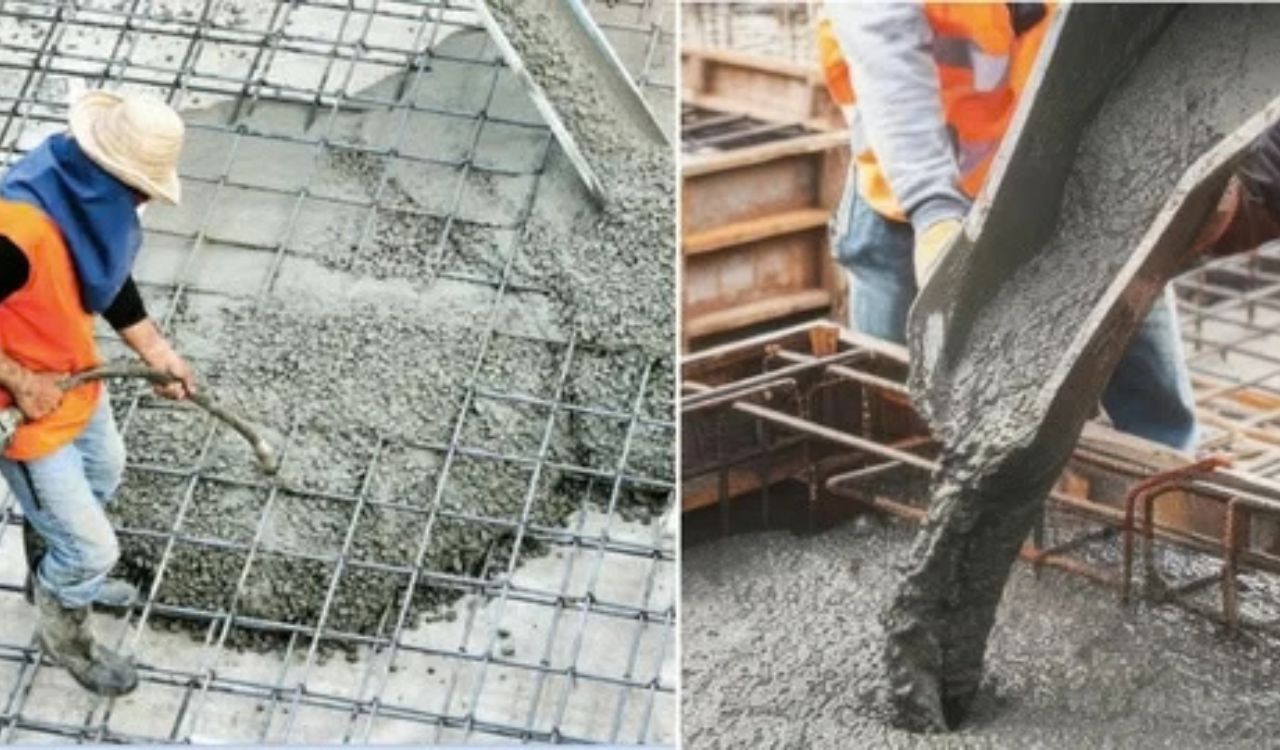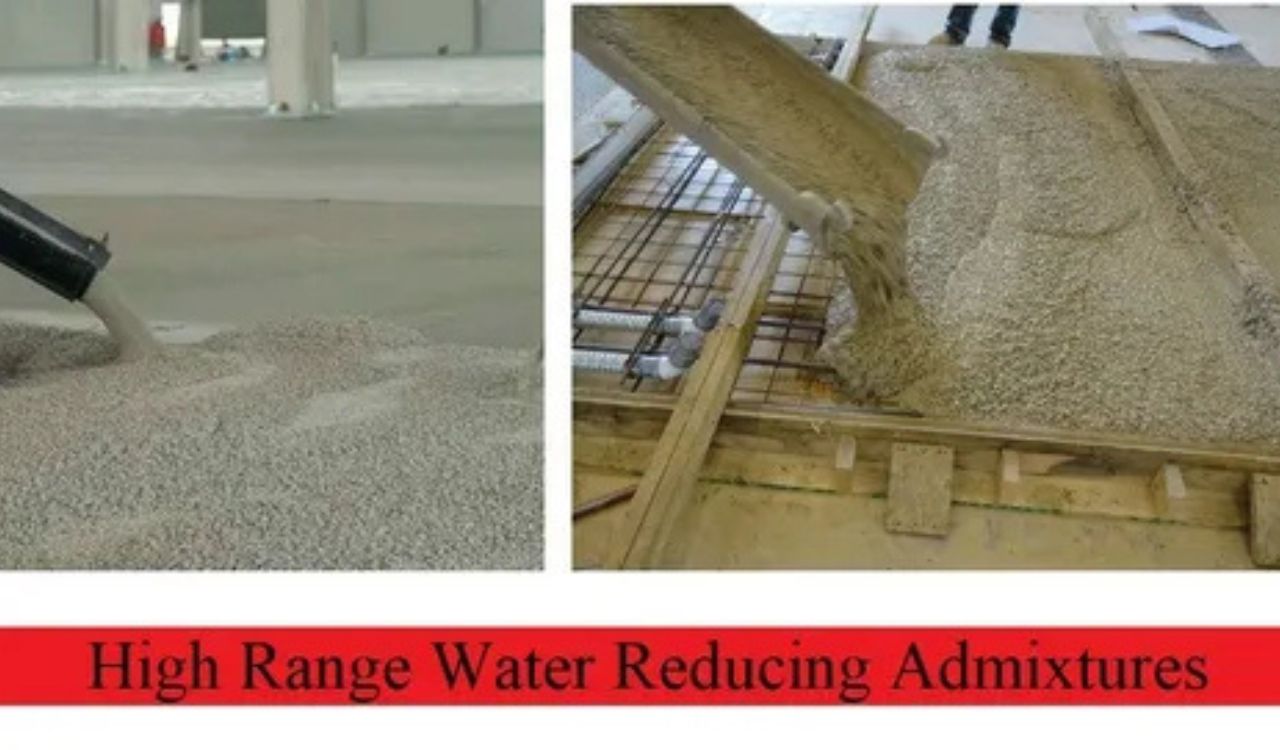
Water-reducing admixtures are chemical additives mixed into concrete to lower the amount of water needed to achieve a workable mix, without sacrificing strength or slump. They work by dispersing cement particles that would otherwise clump together, freeing up water that was trapped between the particles and making it available to lubricate the mix instead. The result is concrete that flows better at a lower water-to-cement ratio, which directly improves compressive strength, durability and resistance to cracking.
For anyone specifying admixtures, whether a ready mix producer, a precast manufacturer or a formulator building a custom blend, the terminology can get confusing fast. Products get labeled by chemistry, by performance class, or by trade name, and the same admixture can sometimes fall into more than one category. This guide breaks down water-reducing admixtures from both angles, chemical composition and performance classification, so you can match the right product to the right application.
About Water Reducing Admixtures
Cement particles carry a natural electrostatic charge that causes them to attract each other and form clumps, called flocculation, when mixed with water. This flocculation traps water inside the clumps, leaving less water free to lubricate the paste. The Water-reducing admixtures interrupt this process. Older generation products rely on electrostatic repulsion to push cement particles apart. Newer polymer-based products add steric hindrance, physically holding particles apart with long polymer side chains, which is why they achieve much higher water reduction at lower dosages.
The practical effect is measured as water reduction rate, the percentage decrease in mixing water required to hit a target slump. This single number is what separates the different performance tiers of water reducers from each other.
Classification by Chemical Composition
The most common way the industry groups these admixtures is by the base chemical used to make them. Each family has a distinct molecular structure, a different water reduction ceiling, and different side effects on setting time and strength development.
Lignosulfonate Based Water Reducers
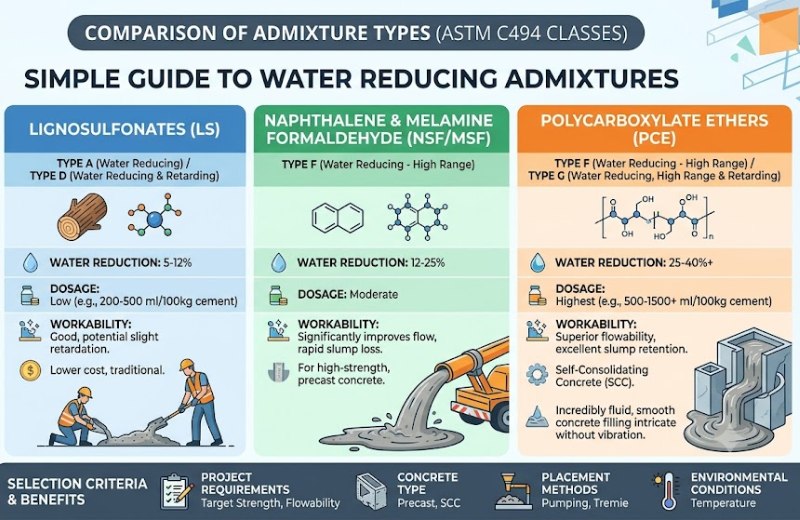
Lignosulfonates are byproducts of the wood pulping industry and are the oldest and most widely used water-reducing chemistry, in use since the 1930s. Calcium and sodium lignosulfonate are the common forms. They typically deliver a water reduction rate of around 8 to 10 percent, placing them in the normal range water reducer category. Lignosulfonates tend to retard setting time, an effect that becomes more pronounced at higher dosage or in cold weather, and can slightly reduce ultimate strength if overdosed. They remain popular because they are inexpensive and effective for general-purpose concrete, large pours, slipform work and pumped concrete, though they are usually avoided in steam cured or prestressed applications without careful dosage control.
Naphthalene Sulfonate Formaldehyde (SNF) Superplasticizers
Sulfonated naphthalene formaldehyde condensates, often called PNS or SNF, were among the first synthetic superplasticizers and are still heavily used, particularly in markets producing precast and high-strength concrete. Their dispersing action is stronger than lignosulfonate, giving water reduction rates typically in the 14 to 25 percent range. SNF-based admixtures generally have a more neutral effect on setting time compared to lignosulfonate and are compatible with a wide range of cement types, which is part of why they remain a workhorse chemistry across many export markets.
Melamine Sulfonate Formaldehyde (SMF) Superplasticizers
Sulfonated melamine formaldehyde condensates perform similarly to naphthalene-based products but offer slightly better water reduction and support faster early strength gain. Because they are colorless in solution, SMF admixtures are favored in architectural and white or light colored concrete where naphthalene’s characteristic brown tint would be a problem. They cost more to produce than SNF, which is the main reason SNF remains more common in general construction.
Polycarboxylate Ether (PCE) Superplasticizers
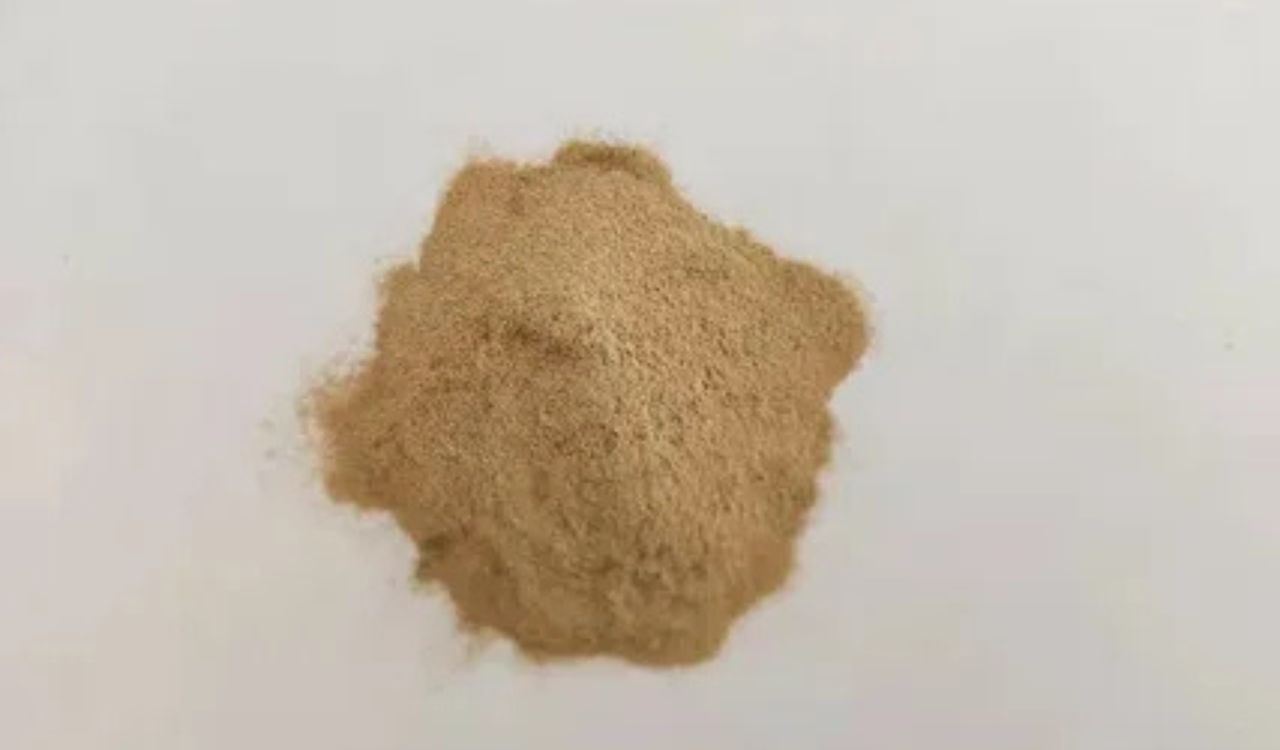
Polycarboxylate ether admixtures represent the current generation of high-performance water reducers. Instead of relying purely on electrostatic dispersion, PCE molecules use a comb-like structure with long side chains that physically separate cement particles through steric hindrance. This allows PCE products to achieve water reduction rates of 25 percent and above at relatively low dosages, along with much better slump retention over time. PCE chemistry can be engineered for different behaviors- early strength, standard, or retarded, by adjusting the side chain length and grafting density, which is why formulators favor it for high-performance concrete, self-compacting concrete, and ready mix operations that need long haul slump life.
Other Chemistries
Sulfamate-based and fatty acid- or aliphatic-based superplasticizers also exist and are used in specific regional markets or niche applications. Polycarboxylate remains the dominant chemistry for new product development globally because of its tunability and superior performance per unit dose.
Classification by Performance Under ASTM C494
While chemical composition tells you what an admixture is made of, ASTM C494 classifies water reducers by what they do to fresh concrete. This standard is the reference point most specifiers in North America and many export markets work from, and understanding it helps when comparing products across different regional standards like EN 934-2 or GB8076.
Type A, water-reducing admixtures, must reduce mixing water by at least 5 percent without significantly changing setting time.
Type B, retarding admixtures, extend setting time without necessarily providing a water reduction benefit, and are often used for long hauls, hot weather placements or large mass pours.
Type C, accelerating admixtures, speed up setting and early strength gain, useful in cold weather or when formwork needs to be stripped quickly.
Type D, water reducing and retarding admixtures, combine the water reduction of Type A with a delayed set, useful when both benefits are needed in one product.
Type E, water reducing and accelerating admixtures, combine water reduction with faster setting.
Type F, high range water reducing admixtures, must achieve at least 12 percent water reduction, and this is where true superplasticizers like SNF, SMF and PCE products generally fall.
Type G, high range water reducing and retarding admixtures, combine the high range water reduction of Type F with an extended set time, common in hot weather placements needing both flowability and workable time.
A Type S category also exists for specific performance admixtures ☺️ but do not fit neatly into the categories above, covering things like corrosion inhibitors, shrinkage reducers and viscosity modifiers.
Outside North America, EN 934-2 governs classification across the European market, while standards such as GB8076-2008 apply in China. The performance thresholds and test methods differ slightly between standards, so a product tested and rated under one system should not be assumed to automatically meet the requirements of another without verification.
Normal Range, Mid Range and High Range Water Reducers
Another practical way the industry talks about these products is by water reduction band rather than chemistry or ASTM letter.
Normal-range water reducers, with water reduction below about 12 percent, are typically lignosulfonate-based and suit general-purpose concrete where cost matters more than achieving very low water-to-cement ratios.
Mid-range water reducers sit between normal-range and high-range products, often blends or modified lignosulfonate formulations, offering better slump life and reduced air entrainment side effects than basic lignosulfonate products, useful for concrete that needs to be pumped or placed at moderate slump for longer periods.
High-range water reducers, or superplasticizers, with water reduction of 12 percent and above, cover the naphthalene, melamine, and polycarboxylate families and are used wherever high strength, low permeability, or flowable, self-consolidating concrete is required.
Don’t be confused between so many types?
Selecting the right water reducer comes down to matching chemistry and performance class to the job requirements. A few practical factors matter most.
Target water-to-cement ratio and required strength usually dictate whether a normal range or high range product is needed. Higher strength targets almost always push the choice toward PCE.
Ambient temperature and haul distance affect whether a retarding or accelerating variant is more appropriate, since hot weather accelerates hydration and cold weather slows it.
Aesthetic requirements, particularly for architectural or white concrete, may rule out naphthalene-based products in favor of melamine or PCE due to color.
Compatibility with cement source and supplementary cementitious materials should always be verified through trial batching, since the same admixture can behave differently depending on cement fineness, alkali content, and the presence of fly ash or slag.
Dosage sensitivity varies by chemistry. Lignosulfonate has a narrower window before retardation or strength loss becomes an issue, while PCE tends to offer a wider working range, though overdosing any superplasticizer can cause excessive bleeding or segregation.
At Luke Chemicals, we manufacture and supply a range of water-reducing admixtures, including our VF160 polycarboxylate water-reducing flake and JF-2 naphthalene-based water reducer, formulated to meet different project budgets and performance needs across export markets.