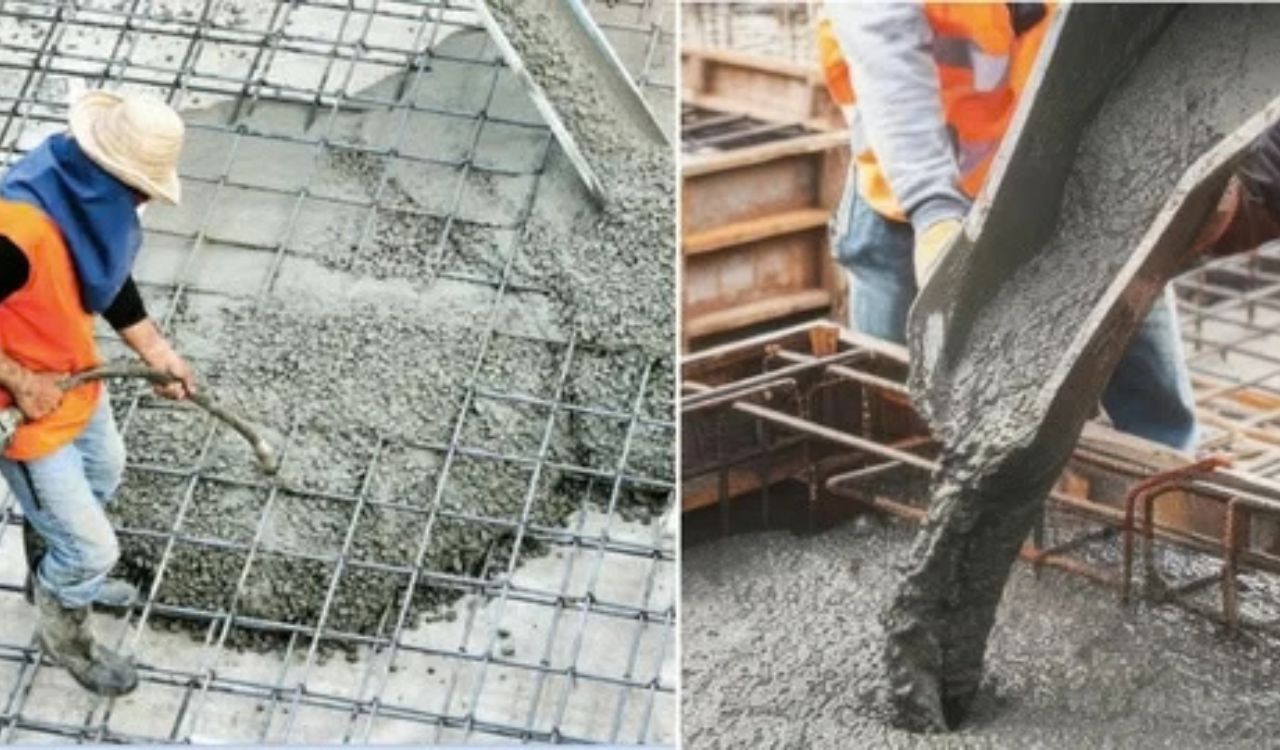
Concrete performance depends on more than just the right mix proportions. Even a well-designed concrete mix can face on-site problems when water content, workability, setting time, hydration, or surface bonding aren’t properly controlled.
That is why understanding the types of admixtures in concrete matters for engineers, contractors, and construction professionals. A concrete primer and admixture system such as Prime iT can help address practical challenges associated with fresh and hardening concrete, including poor workability, rapid slump loss, weak surface bonding, excess water, permeability, and long-term durability concerns.
From water-reducing and accelerating admixtures to air-entraining, waterproofing, and bonding solutions, different admixture types are designed to modify specific concrete properties. This article explains what concrete primers and admixtures are, how they work, the main types available, and how to select and use them correctly for different project requirements.
What Is a Concrete Primer & Admixture?
A concrete admixture is a chemical additive introduced into the concrete mix, either during batching or just before placement, to modify one or more properties of the fresh or hardened concrete without significantly changing the basic cement-aggregate-water proportions.
A concrete primer, by contrast, is typically applied to a substrate surface before placing new concrete, mortar, or a coating, in order to improve adhesion between the old and new layers. Prime functions as a combined solution in this sense, acting as a primer for surface preparation and bonding while also serving as an admixture that improves the workability, cohesion, and durability of the concrete itself.
In practice, this means a single product can help reduce the water demand of a mix while maintaining workability, improve bond strength between old and new concrete surfaces, reduce permeability and water ingress, and support more consistent hydration and strength development.
How Concrete Admixtures Work
Ordinary Portland cement requires water for hydration, but the amount of water needed for full workability during placement is usually far more than what is chemically required for hydration. This excess water is what later evaporates, leaving capillary pores that reduce strength and increase permeability.
Admixtures such as water reducing agents work by:
- Dispersing cement particles — Water-reducing agents carry a negative surface charge that causes cement particles to repel one another (electrostatic or steric dispersion), releasing water trapped between agglomerated particles.
- Improving flow at lower water content — Because particles are better dispersed, the same workability can be achieved with less mixing water.
- Controlling hydration rate — Some admixtures (retarders, accelerators) interact directly with the cement hydration reaction, slowing or speeding the formation of calcium-silicate-hydrate (C-S-H) gel.
- Blocking capillary pathways — Waterproofing and hydrophobic admixtures introduce water-repelling compounds or fill capillary pores, reducing water absorption.
The net effect of a well-formulated admixture is a lower water-cement ratio without sacrificing workability — and a lower water-cement ratio is directly linked to higher compressive strength and lower permeability.
Types of Concrete Admixtures
Concrete admixtures are generally grouped by the function they perform. Normal water reducers, often called plasticizers, reduce water content by roughly 5 to 10 percent while maintaining workability and are commonly used in general reinforced concrete work such as footings and slabs. Mid-range water reducers offer a slightly stronger effect, reducing water content by 10 to 15 percent and improving finishability, making them suitable for pumped concrete and flatwork. High-range water reducers, or superplasticizers, can reduce water content by 15 to 30 percent and are used where high-strength or self-compacting mixes are required, such as in precast production, high-rise structures, or elements with congested reinforcement. Retarders slow the initial setting time and are valuable in hot weather concreting or for long-haul ready-mix deliveries and large continuous pours, while accelerators do the opposite, speeding up setting and early strength gain, which is useful in cold weather concreting, repair work, and precast demolding schedules. Waterproofing admixtures reduce water absorption and capillary porosity and are typically specified for basements, water tanks, and retaining walls, whereas hydrophobic admixtures introduce a water-repellent action at the pore level and are more commonly used in below-grade structures and marine works.
Multi-range water reducers deserve particular mention, as they are formulated to perform effectively across a range of dosages, behaving as a normal water reducer at lower dosage and as a mid-range or superplasticizing agent at higher dosage. This gives contractors flexibility to adjust workability on-site to suit varying conditions, ambient temperature, or haul distance without needing to switch products entirely.
Waterproofing and hydrophobic admixtures are often confused with one another but function differently. Waterproofing admixtures generally work by reducing capillary porosity through improved particle packing or pore-blocking compounds, such as calcium stearate or silica fume-based systems, while hydrophobic admixtures introduce a water-repelling effect at the molecular level, causing water to bead rather than absorb into the concrete’s pore structure. Both are relevant for structures exposed to sustained moisture, including basements, water-retaining structures, tunnels, and foundations.
Benefits of Using Prime iT Concrete Primer & Admixture
Using a well-formulated primer and admixture system delivers a range of practical benefits. Workability improves without requiring additional water, which lowers the risk of segregation and bleeding during placement. Because the effective water-cement ratio drops, both compressive and flexural strength improve over the life of the structure. When used as a primer, bonding between old and new concrete layers is noticeably stronger, which matters for repair and extension work.
Permeability is reduced, improving resistance to water and chloride ingress and, by extension, protecting embedded reinforcement from corrosion. In hot weather, admixtures with a retarding effect extend workable or pot life, giving crews more time to place and finish concrete before it sets. Controlled hydration also reduces the likelihood of shrinkage cracking, and over the course of a project, the cost efficiency gained through reduced cement content for a given strength target, or through avoided rework from surface bonding failures, can be significant.
Applications
Concrete primers and admixtures of this type are used across a wide range of construction segments. Ready-mix concrete plants rely on them for consistent slump retention during transport, while precast concrete producers use them to achieve faster demolding cycles and better surface finish quality. In structural concrete work, including columns, beams, and slabs, admixtures help achieve strength targets efficiently.
Repair and rehabilitation projects use these products as a bonding primer between existing and new concrete, and water-retaining structures such as tanks, basements, and retaining walls depend on them for low permeability. Infrastructure projects, including bridges, tunnels, and pavements exposed to weathering and chemical attack, also make consistent use of these admixture systems.
Important Factors to Consider Before Use
Several factors influence how well an admixture performs on a given project. Compatibility with the cement type in use is critical, since performance varies with cement chemistry, whether OPC, PPC, or PSC, and a trial mix should always be conducted before full-scale use. Dosage accuracy matters just as much: overdosing a superplasticizer can cause excessive retardation or segregation, while underdosing reduces its effectiveness.
Ambient temperature also plays a role, as hot weather increases water demand and accelerates slump loss, while cold weather slows strength gain, so admixture selection should account for site conditions at the time of placement. The mixing sequence affects performance too, since admixtures are typically most effective when added after initial water contact with cement rather than directly onto dry cement.
Aggregate quality and gradation can offset the benefits of a water reducer if they are poor, and compliance with relevant standards, such as ASTM C494, IS 9103, or EN 934-2, should always be verified for the intended application.
Limitations
Admixtures are not a substitute for sound mix design or quality raw materials, and no amount of chemical modification will compensate for a fundamentally poor mix. Excessive reliance on retarders in cold weather can delay formwork removal and push back project schedules, and some high-range water reducers require closer quality control on-site, since their effect is more sensitive to dosage variation. It is also worth noting that long-term performance still depends on proper curing; no admixture eliminates the need for adequate curing practices once concrete is placed.
Best Practices for Application
Getting consistent results from a primer and admixture system depends on a few practical habits. Trial batches should be conducted with the actual site materials before committing to large-scale use, and liquid admixtures should be stored in a temperature-controlled environment, away from freezing conditions or prolonged direct sun exposure.
Calibrated dispensing equipment at the batching plant helps maintain consistent dosage across batches, and water reducers should always be paired with proper curing methods, such as moist curing or curing compounds, to realize their full durability benefit. On structural or infrastructure projects in particular, it is good practice to document dosage rates and batch conditions for quality traceability.
Conclusion
Concrete primers and admixtures such as Prime iT play a practical role in solving the everyday problems contractors and engineers face with workability, bonding, and durability. Rather than replacing good mix design, they refine it, allowing concrete to be placed more easily, bond more reliably to existing surfaces, and resist water and chemical ingress over the long term.
The right choice of admixture depends on the specific demands of the project, from ambient temperature and haul distance to exposure conditions and strength targets, which makes trial testing and adherence to relevant standards an essential part of the process rather than an optional step. When selected and dosed correctly, and paired with proper curing, these products contribute directly to stronger, more durable, and more cost-efficient concrete structures.
FAQs
What is the difference between a concrete primer and a concrete admixture?
A primer is applied to a surface before placing new concrete or coating to improve bonding, while an admixture is mixed directly into the concrete to modify its fresh or hardened properties.
How does a water reducing agent improve concrete strength?
It disperses cement particles more effectively, allowing the same workability to be achieved with less water. Lower water content results in a denser hydrated paste and higher compressive strength.
Can superplasticizers be used in all types of concrete?
Superplasticizers are compatible with most concrete mixes but require trial testing, as dosage response varies with cement type, aggregate properties, and ambient temperature.
What is the typical dosage range for concrete admixtures?
Dosage varies by product and function, generally ranging from 0.2% to 2% by weight of cement, but manufacturer datasheets and trial mixes should always confirm the exact rate.
Are waterproofing admixtures necessary for all concrete structures?
No. They are most relevant for structures with direct or sustained water exposure, such as basements, tanks, and foundations, where reduced permeability is a functional requirement.
Does using an admixture eliminate the need for curing?
No. Admixtures improve workability, strength, and durability characteristics, but proper curing remains essential for full hydration and long-term performance.
How should concrete admixtures be stored on-site?
They should be stored in sealed containers, away from direct sunlight and extreme temperatures, and used within the manufacturer’s recommended shelf life to maintain effectiveness.