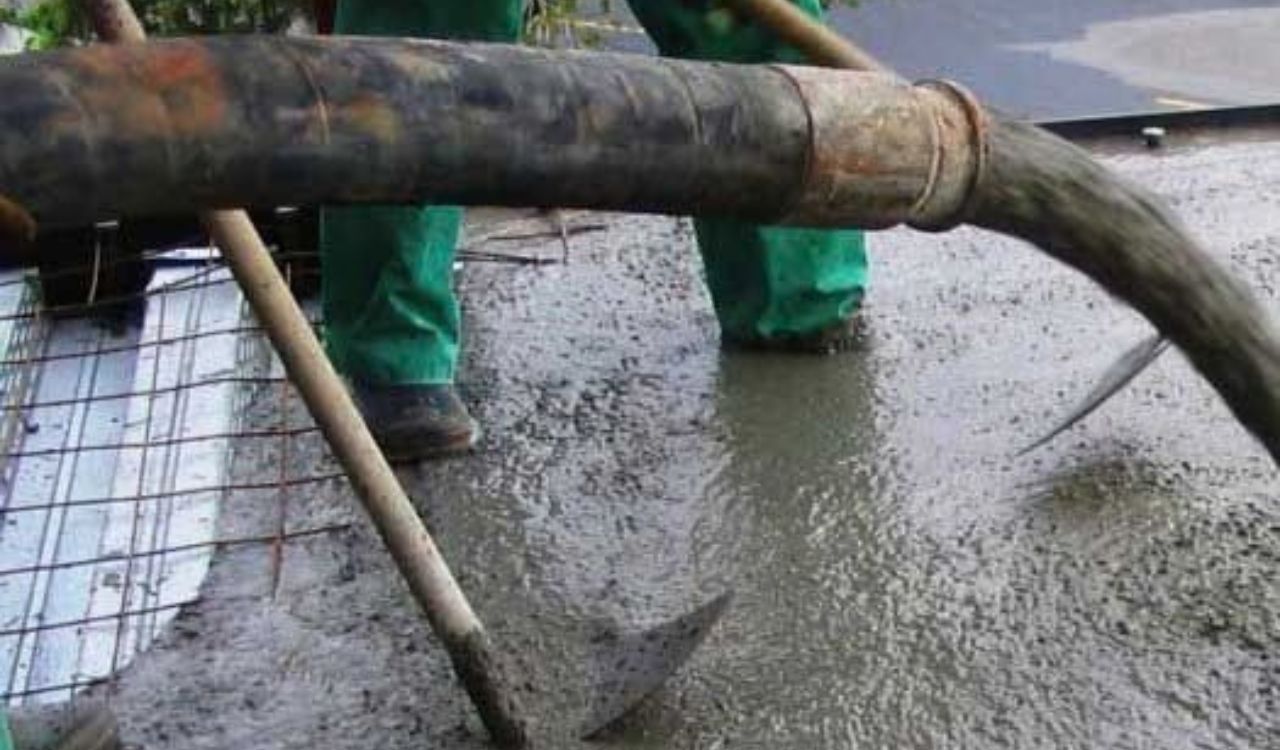
Concrete mix design is a balance between strength, workability, durability, material efficiency, and placement requirements. One of the most important variables in that balance is the amount of water used in the mixture. Water is necessary for cement hydration and for achieving workable concrete, but excessive water can increase porosity and reduce the performance of hardened concrete.
A water reducing admixture provides another way to control this balance. Instead of adding more water to obtain the required slump, the admixture can disperse cement particles and improve the flow of the mixture. This allows engineers to maintain or increase workability while reducing the amount of mixing water required. The Concrete Institute describes water-reducing admixtures as materials that can reduce water demand for a given slump, increase slump at the same water-cement ratio, or potentially allow lower cement content while maintaining specified performance.
For concrete producers, contractors, and engineers, this makes water reduction more than a simple additive adjustment. It becomes part of the overall mix-design strategy.
What Is a Water Reducing Admixture?
A water reducing admixture is a chemical admixture added to concrete to reduce the amount of mixing water needed to achieve a specified consistency or workability.
The basic concept is straightforward. Cement particles tend to form clusters when mixed with water. These clusters can trap water within the mixture and reduce the amount of water available to provide effective lubrication and flow. Dispersing admixtures interact with cement particles and help separate these clusters, allowing the available water to work more efficiently.
Depending on the product and dosage, the result can be used in several ways:
- Maintain the same slump with less water
- Increase slump without increasing water
- Reduce the water-cementitious materials ratio
- Improve concrete strength potential
- Improve placement and pumping
- Optimize cement content
- Support more consistent concrete production
This is why water reducers are considered an important part of modern concrete admixtures technology.
How Water Reducing Admixtures Work in Concrete
The mechanism depends on the chemistry of the product, but dispersion of cement particles is central to many water-reducing systems.
Cement Particle Dispersion
Without a dispersing admixture, cement particles can attract one another and form flocs. Some mixing water becomes trapped within these structures rather than contributing efficiently to concrete flow.
A water reducer adsorbs onto cement particles and changes the interaction between them. This improves dispersion and allows the mixture to flow more effectively without simply increasing the water content.
Improved Workability
Better particle dispersion lowers the resistance to movement within fresh concrete. The concrete can therefore achieve a desired slump or flow with less mixing water.
This is particularly useful when concrete must pass around reinforcement, move through pumping systems, or fill complicated forms.
Lower Water Demand
The main mix-design advantage is the ability to achieve the required consistency with reduced water content.
For example, an engineer may start with a concrete mixture requiring a certain amount of water to achieve the target slump. After selecting an appropriate admixture and confirming its performance through testing, the water content can potentially be reduced while maintaining the required workability.
The exact reduction depends on the admixture chemistry, dosage, cement, aggregates, temperature, and other mixture components.
How Water Reduction Changes the Water-Cement Ratio
The water-cement ratio, or more broadly the water-to-cementitious-materials ratio, is one of the key considerations in concrete performance.
If cementitious material remains constant while water is reduced, the water-cementitious materials ratio decreases.
For example:
| Mix condition | Cementitious material | Water | Approx. w/cm |
| Original mix | 400 kg/m³ | 200 kg/m³ | 0.50 |
| Reduced-water mix | 400 kg/m³ | 180 kg/m³ | 0.45 |
| Further optimized mix | 400 kg/m³ | 170 kg/m³ | 0.43 |
These numbers are only illustrative. Actual mix proportions must be established through project requirements and laboratory or field trials.
A lower water-to-cementitious-materials ratio can contribute to a denser hardened cement paste and lower permeability when the overall mixture is properly proportioned and cured. Water reduction can therefore support strength and durability objectives without requiring the concrete producer to sacrifice workability.
Water Reducing Admixtures and Concrete Mix Design
The most useful way to understand a water reducer is to see how it changes the choices available to the mix designer.
Option 1: Maintain Slump and Reduce Water
This is one of the most common applications.
The designer maintains approximately the same target slump but reduces mixing water through the use of the admixture. If the cementitious content remains unchanged, this lowers the water-cementitious materials ratio.
The potential result is:
- Higher strength potential
- Lower permeability
- Improved material efficiency
- Better durability characteristics
Option 2: Maintain Water and Increase Workability
A second approach is to maintain approximately the same water content while increasing slump or flow.
This can be useful when concrete must be:
- Pumped over long distances
- Placed around congested reinforcement
- Distributed through complex formwork
- Used in difficult placement conditions
Option 3: Reduce Cementitious Material
In some mix designs, water reduction can allow cementitious material to be reduced while maintaining a required water-cementitious materials ratio and target workability.
This approach requires careful evaluation because cementitious material also influences strength development, paste volume, finishability, durability, and other properties.
The goal should not simply be to use less cement. The goal is to optimize the entire mixture.
Main Types of Water Reducing Admixtures
Water reducers can be differentiated by their water-reduction capability, chemical composition, setting characteristics, and intended application.
ASTM C494 provides commonly used classifications for chemical admixtures, including Type A water-reducing admixtures, Type D water-reducing and retarding admixtures, Type E water-reducing and accelerating admixtures, and Type F and G high-range water-reducing admixtures.
Conventional Water Reducers
Conventional water reducers are generally used for normal concrete applications where moderate water reduction and improved workability are required.
They can be suitable for:
- General structural concrete
- Foundations
- Slabs
- Walls
- Columns
- Ready-mix applications
Mid-Range Water Reducers
Mid-range products provide more water reduction and workability improvement than conventional products while being positioned between traditional water reducers and high-range systems.
They can be useful when producers need improved flow and finishability without requiring the very high flow levels associated with some superplasticizers.
High-Range Water Reducers
High-range water reducers, commonly called superplasticizers, are designed to provide substantial water reduction and/or significant increases in flowability.
ASTM C494 identifies Type F as a high-range water-reducing admixture and Type G as a high-range water-reducing and retarding admixture.
These products are commonly used for:
- High-strength concrete
- Self-compacting concrete
- Precast concrete
- Pumped concrete
- Heavily reinforced structures
- High-performance concrete
Chemical Technologies Used in Water Reducers
Different chemical families provide different performance characteristics.
Lignosulfonate-Based Admixtures
Lignosulfonate-based products are established water-reducing technologies used for conventional concrete applications.
They can provide workability improvement and moderate water reduction, although performance depends heavily on formulation and the concrete system.
Naphthalene-Based Superplasticizers
Sulfonated naphthalene formaldehyde condensates have historically been widely used as high-range water reducers.
They can provide strong dispersing performance and are still relevant in certain concrete and dry-mix applications.
Polycarboxylate Ether Admixtures
Polycarboxylate ether, commonly abbreviated as PCE, represents an important modern technology for high-performance concrete admixtures.
PCE chemistry can provide high water reduction and can be formulated for specific requirements such as flowability, water reduction, or slump retention. Technical literature identifies PCE among the major modern superplasticizer technologies.
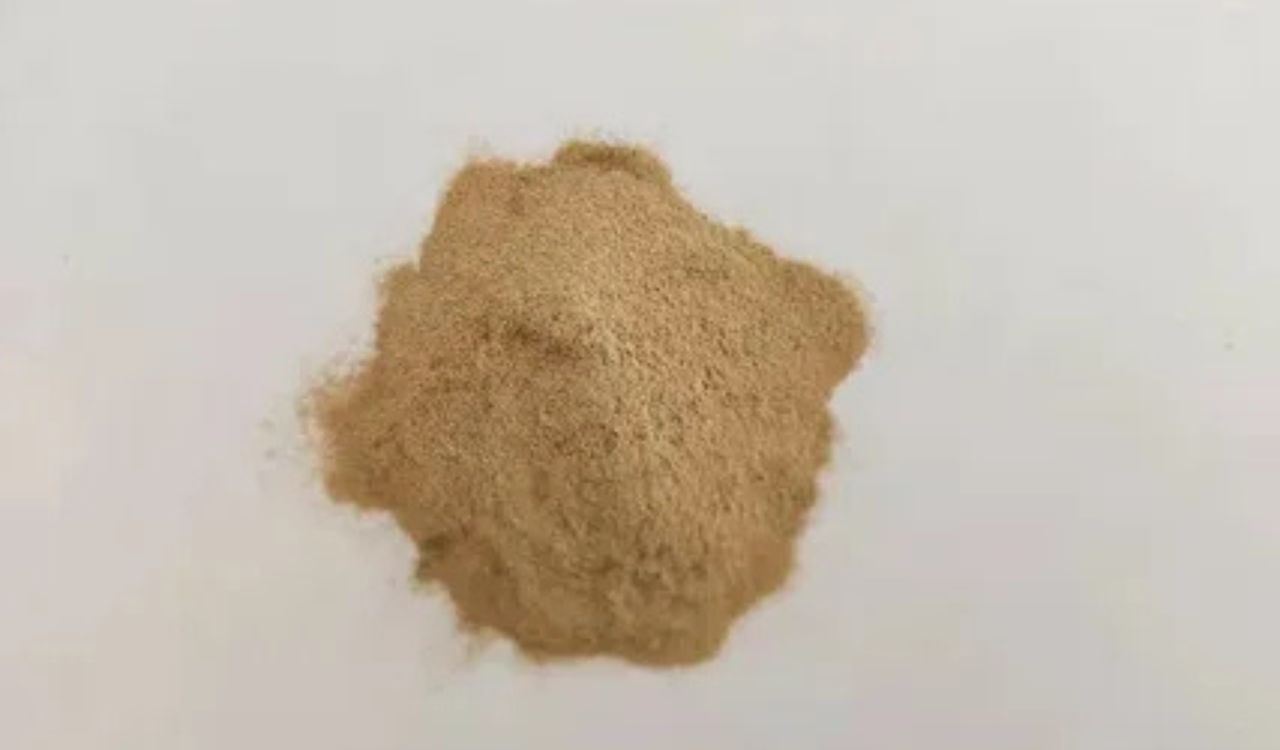
Luke Chemicals supplies PCE-based products for different cementitious systems, including VF530, VF560, VF570, and VF160. For example, VF530 is described as a powder-based PCE superplasticizer designed for water reduction and improved slump retention, while VF560 targets high water reduction for high-performance systems.
Benefits of Using a Water Reducing Admixture
The benefits depend on the specific formulation and mix design, but several performance improvements are commonly targeted.
Improved Workability
Water reducers allow engineers to improve fresh-concrete flow without relying only on additional mixing water.
This can make concrete easier to:
- Place
- Pump
- Consolidate
- Finish
Higher Strength Potential
Reducing unnecessary water can lower the water-cementitious materials ratio. When the mixture is properly proportioned and cured, this can support higher compressive strength.
The admixture itself does not automatically guarantee higher strength. Strength remains dependent on cementitious materials, aggregate characteristics, curing, air content, water content, and the overall mix design.
Reduced Permeability
A properly optimized low-water mixture can develop a denser cement paste structure. Lower permeability can help limit the movement of water and potentially harmful substances through hardened concrete.
Better Pumpability
Concrete with appropriate rheological properties can move more efficiently through pumping equipment.
However, high flow alone does not guarantee good pumpability. Aggregate grading, paste volume, viscosity, segregation resistance, and admixture compatibility must also be considered.
Improved Material Efficiency
Water reducers may allow a producer to optimize cementitious material content while meeting strength and workability requirements.
This can improve resource efficiency when the mix is designed and validated correctly.
Factors That Affect Water Reducer Performance
A water reducing admixture does not behave independently from the rest of the concrete system.
Cement Chemistry
Cement composition and fineness can affect admixture adsorption and dispersion.
Two cements can therefore respond differently to the same admixture.
Aggregate Gradation
Aggregate size, shape, surface texture, and grading influence water demand and workability.
A poorly graded aggregate system may require more paste or water even when an effective water reducer is being used.
Temperature
Concrete temperature can affect hydration and slump retention.
Hot conditions may accelerate slump loss, while cold conditions can change setting and early-age strength development.
Admixture Dosage
Dosage must be optimized rather than assumed.
Too little admixture may fail to provide the required performance. Excessive dosage can produce unwanted effects such as excessive retardation, segregation, or changes in setting behavior depending on the chemistry.
Compatibility With Other Admixtures
Multiple admixtures may be used in one concrete mixture, including:
- Water reducers
- Accelerators
- Retarders
- Air-entraining agents
- Corrosion inhibitors
- Shrinkage-reducing admixtures
- Viscosity-modifying admixtures
Compatibility should be confirmed through testing rather than assumed. Industry guidance also emphasizes that the interaction between cement and superplasticizer can affect slump retention and other concrete properties.
How to Select a Water Reducing Admixture
Selection should begin with the required concrete performance rather than simply choosing the product with the highest advertised water-reduction percentage.
Consider the following factors:
| Selection factor | Why it matters |
| Target slump or flow | Determines the required workability |
| Required water reduction | Helps establish the appropriate admixture class |
| Strength requirement | Influences the desired water-cementitious ratio |
| Slump retention | Important for transportation and delayed placement |
| Setting time | Critical for finishing and construction schedules |
| Cement type | Different cement systems can respond differently |
| Temperature | Influences hydration and workability |
| Other admixtures | Compatibility can affect performance |
| Aggregate characteristics | Influences water demand and rheology |
| Application | Ready-mix, precast, SCC, UHPC, and other systems have different requirements |
For industrial buyers, technical documentation should also be reviewed for recommended dosage, solid content, storage requirements, compatibility, packaging, and applicable standards.
Dosage and Trial Mix Testing
There is no universal dosage that works for every concrete mixture.
The appropriate dosage depends on:
- Cementitious material content
- Cement chemistry
- Water content
- Aggregate characteristics
- Desired slump
- Temperature
- Admixture formulation
- Required water reduction
- Other chemical admixtures
For this reason, the product manufacturer’s recommended range should be treated as a starting point rather than a substitute for mix testing.
Trial batches can evaluate:
- Initial slump
- Slump retention
- Water reduction
- Setting time
- Air content
- Bleeding
- Segregation
- Compressive strength
- Pumpability
- Surface finish
A properly designed trial mix helps establish the dosage that delivers the required performance under actual project conditions.
Storage and Handling of Water Reducing Admixtures
Storage conditions can affect the consistency and usability of chemical admixtures.
Liquid products should be stored according to the manufacturer’s specified temperature and handling requirements. Powder and flake products generally require protection from moisture because exposure can lead to caking or changes in handling characteristics.
For larger admixture production and storage facilities, monitoring systems may include concrete additive storage sensors or related instrumentation for temperature, level, and other operating conditions. Such systems can support inventory control and storage management, although they do not replace product-specific storage procedures.
For example, some PCE powder products require controlled storage conditions and protection from moisture. Luke Chemicals’ product information specifies cool, dry storage for VF860P and identifies moisture protection as important for maintaining product condition.
Applications of Water Reducing Admixtures
Water reducers can be incorporated into many concrete systems.
Ready-Mix Concrete
Ready-mix producers use water reducers to balance slump, water content, transportation time, and strength requirements.
Precast Concrete
Precast manufacturers often require consistent workability and early strength development to maintain production schedules.
High-Strength Concrete
High-range water reducers are particularly useful when low water-cementitious ratios must be achieved without producing an unworkably stiff mixture.
Self-Compacting Concrete
Self-compacting concrete requires high flowability while maintaining resistance to segregation. Superplasticizer technology is an important part of achieving these rheological characteristics.
Pumped Concrete
Appropriate water-reducing technology can improve flow and placement while avoiding unnecessary water additions.
Water Reducers Compared With Other Concrete Admixtures
A water reducer should not be confused with every other type of concrete additive.
| Admixture | Primary purpose |
| Water reducer | Reduce water demand and/or improve workability |
| Superplasticizer | Provide high-range water reduction and flowability |
| Retarder | Delay setting |
| Accelerator | Speed setting or early strength development |
| Air-entraining admixture | Introduce controlled microscopic air |
| Corrosion inhibitor | Help protect reinforcement from corrosion |
| Waterproofing admixture | Reduce water penetration or permeability |
| Viscosity modifier | Modify rheology and segregation resistance |
This distinction is important when comparing admixtures for concrete, because each product should be selected according to the performance requirement rather than treated as a universal solution.
Water Reducers and Other Concrete Additives
A project may require more than one type of admixture. For example, a concrete mix exposed to chloride-rich conditions may require corrosion protection in addition to workability control.
Calcium nitrite is one established corrosion-inhibiting technology, but whether a calcium nitrite corrosion inhibitor alternative is suitable depends on the exposure environment, project specifications, reinforcement protection strategy, and performance testing.
Similarly, water reducers should not automatically be considered a replacement for a waterproofing admixture. A lower water-cementitious materials ratio may reduce permeability, but integral waterproofing systems are designed for specific moisture-resistance requirements.
Therefore, questions such as the best waterproofing admixture for concrete or the appropriate plaster waterproofing additive require consideration of the substrate, exposure conditions, application method, and required performance rather than simply selecting a high water-reduction product.
Regional Demand for Concrete Admixture Technologies
The development of concrete admixture technologies is closely connected with infrastructure construction, ready-mix production, precast manufacturing, and demand for high-performance concrete.
The China concrete superplasticizer market is part of a broader construction-chemicals sector supported by large-scale concrete production and infrastructure development. China is also an important manufacturing and export base for construction chemicals.
Similarly, the India cement admixtures market is influenced by infrastructure development, urban construction, commercial projects, and increasing requirements for durable and workable concrete.
For manufacturers, these markets create demand for consistent raw materials, technical formulation, quality control, and reliable supply chains. Water reducers and superplasticizers may use specialized polymers and other specialty chemical manufacturing raw material inputs that need controlled production and quality assurance.
Common Mistakes When Using Water Reducers
Even a technically suitable admixture can produce poor results if the mix is not properly controlled.
Adding Water Instead of Optimizing the Admixture
Adding water at the job site can increase slump but may also increase the water-cementitious materials ratio.
Where permitted by the project specification, admixture adjustment is often a more controlled approach to workability management.
Using a Fixed Dosage for Every Mix
A dosage that works with one cement and aggregate combination may not produce the same result with another.
Ignoring Slump Retention
Initial slump is only one part of performance. For ready-mix applications, the concrete may need to remain workable throughout transportation and placement.
Combining Products Without Compatibility Testing
Different admixtures can interact in unexpected ways. Compatibility testing should be part of the mix-development process.
Focusing Only on Water Reduction
Maximum water reduction is not always the objective. The correct balance may involve workability, slump retention, setting time, strength, viscosity, finishability, and durability.
Best Practices for Mix Optimization
A practical water-reducer optimization process can include the following steps:
- Establish the required concrete strength and durability class.
- Define the target slump or flow.
- Characterize cementitious materials and aggregates.
- Establish the initial water and binder proportions.
- Select an appropriate water-reducing technology.
- Conduct laboratory trial batches.
- Evaluate dosage and water reduction.
- Check slump retention and setting behavior.
- Test strength and relevant durability indicators.
- Confirm compatibility with other admixtures.
- Validate the final mixture under representative field conditions.
- Monitor production consistency after implementation.
This approach treats the admixture as part of the complete mix design rather than as an isolated chemical addition.
How Luke Chemicals Fits Into Water-Reducing Admixture Supply
Luke Chemicals develops and supplies construction chemical products including PCE-based water-reducing and superplasticizer technologies. Its product range includes powder and flake formulations intended for different cementitious applications. VF530, for example, is positioned for high water reduction and slump retention, while VF560 is designed for systems requiring very high water reduction and performance characteristics suited to high-strength applications.
For engineers and industrial buyers, the important consideration is matching the admixture chemistry and formulation to the cement system, target performance, processing conditions, and application requirements.
Frequent Ask Questions
What does a water reducing admixture do in concrete?
A water reducing admixture reduces the amount of mixing water required to achieve a specified consistency or improves workability without requiring additional water. This can help lower the water-cementitious materials ratio or improve fresh-concrete flow.
Does a water reducing admixture increase concrete strength?
It can contribute to higher strength when it allows the mix designer to reduce water while maintaining the required workability. The resulting strength still depends on the complete mixture, curing conditions, cementitious materials, aggregates, and other factors.
What is the difference between a water reducer and a superplasticizer?
A conventional water reducer provides moderate water reduction, while a high-range water reducer or superplasticizer is designed to provide substantially greater water reduction and/or flowability. ASTM C494 classifies conventional water-reducing and high-range water-reducing admixtures separately.
Can water reducing admixtures be used with other admixtures?
Yes, multiple admixtures can be used in the same concrete mixture, but compatibility should be verified through appropriate testing. Cement chemistry, dosage, temperature, and admixture interactions can affect the final performance.
How is the correct dosage determined?
The dosage is established based on the manufacturer’s technical information and confirmed through trial mixtures. Cement type, cementitious content, aggregate characteristics, temperature, target slump, required water reduction, and other admixtures all influence the appropriate dosage.
Are PCE products water reducing admixtures?
Yes. Polycarboxylate ether, or PCE, is an important technology used in high-performance water-reducing and superplasticizing admixtures. PCE products can be formulated for high water reduction, flowability, or slump retention depending on their molecular design and intended application.
Can water reducing admixtures replace waterproofing admixtures?
Not necessarily. Reducing the water-cementitious materials ratio can help produce denser, less permeable concrete, but waterproofing admixtures are specifically formulated for moisture-resistance requirements. The appropriate solution depends on the exposure conditions, concrete design, and project specifications.