Modern concrete is expected to do much more than simply provide structural strength. Construction projects increasingly require concrete with controlled workability, predictable setting, high durability, improved water resistance, reduced permeability, and performance suited to demanding environmental conditions.
This growing range of requirements is supporting demand across the cement and concrete additives market.
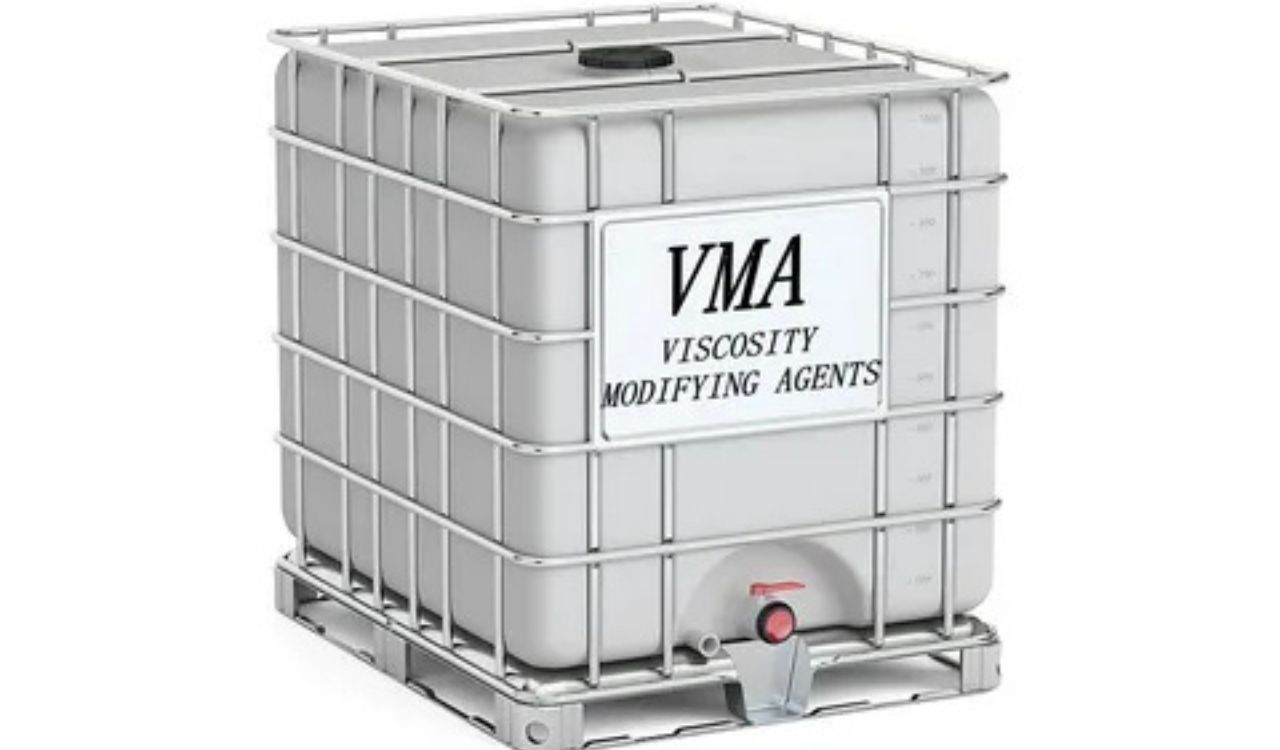
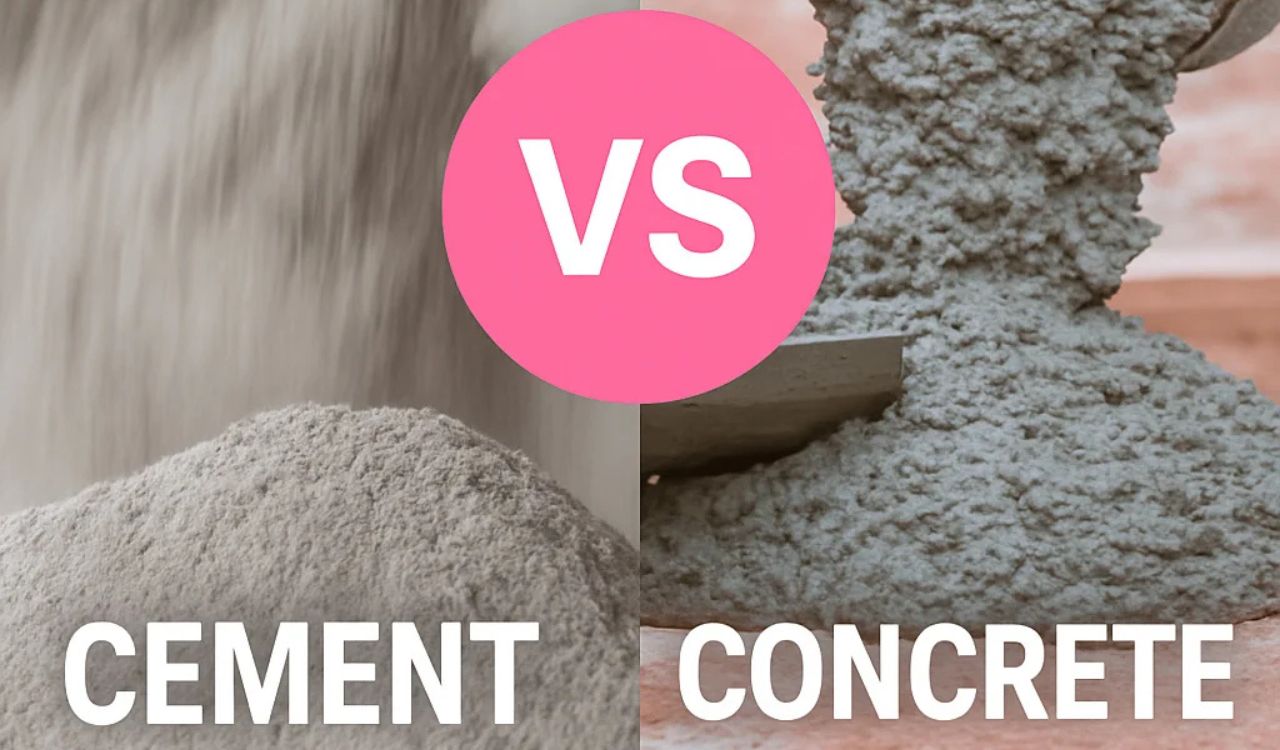
The terms cement additives, concrete additives, and concrete admixtures are sometimes used interchangeably, but they can refer to different materials and functions depending on the application and industry context. Understanding these distinctions is important for cement manufacturers, concrete producers, contractors, engineers, and industrial buyers.
The market includes chemical admixtures, mineral additions, specialty additives, and other materials used to modify cement or concrete properties. Their role can range from improving cement processing to modifying fresh concrete behavior and enhancing the durability of hardened concrete.
What Is the Cement and Concrete Additives Market?
The cement and concrete additives market encompasses products and materials incorporated into cement, mortar, or concrete to modify manufacturing characteristics, fresh-state properties, or hardened performance. Concrete additives for strength are an important part of this market, as they are used to improve compressive strength, durability, workability, and the overall performance of concrete in demanding construction applications.
The term can cover several broad groups:
- Chemical concrete admixtures
- Cement grinding and performance additives
- Mineral additions
- Supplementary cementitious materials
- Waterproofing additives
- Setting-control products
- Water-reducing technologies
- Air-entraining products
- Specialty performance additives
- Concrete additives for strength
The exact market definition varies among manufacturers and market research organizations. Some analyses focus specifically on chemical additives, while others include mineral materials and cement-processing products. Within the broader category, concrete additives for strength may include water-reducing admixtures, superplasticizers, mineral additions, and other performance-enhancing materials that help create denser, stronger, and more durable concrete.
This broader view is useful because cement and concrete are connected systems. Changes made during cement production can influence concrete performance, while additives introduced during concrete batching can modify the behavior of the final mix. As construction projects increasingly require higher strength and durability, concrete additives can help engineers and manufacturers optimize mix performance while meeting specific structural and application requirements.
Cement Additives vs Concrete Admixtures
One of the most important distinctions is where the material is introduced and what function it performs.
| Category | Main point of use | Primary purpose |
| Cement additives | During cement manufacturing | Improve grinding, processing, or cement performance |
| Concrete admixtures | During concrete production | Modify fresh or hardened concrete properties |
| Mineral additions | Cement or concrete systems | Modify binder properties and reduce clinker intensity |
| Specialty additives | Cement, mortar, or concrete | Address specific performance requirements |
Cement additives may be used during cement production to improve grinding efficiency or modify cement characteristics.
Concrete admixtures, in contrast, are generally added to concrete during batching to change properties such as workability, setting time, water demand, air content, or durability.
The distinction is important for procurement because the technical specifications, dosage, testing, and performance criteria can be different.
What Are Cement Additives?
Cement additives are materials introduced during cement production or used with cementitious systems to influence processing or performance.
Some cement additives are associated with:
- Grinding efficiency
- Cement particle dispersion
- Production throughput
- Setting characteristics
- Strength development
- Cement performance
- Storage behavior
Grinding aids, for example, can assist the cement milling process by reducing particle agglomeration and improving grinding efficiency.
Other additives may be used to influence the properties of the finished cement.
Their importance is particularly relevant to cement manufacturers because even relatively small changes in production efficiency or cement performance can affect manufacturing economics at large production volumes.
What Are Concrete Admixtures?
Concrete admixtures are chemical products added to concrete before or during mixing to modify specific properties.
They can influence:
- Water demand
- Workability
- Slump retention
- Setting time
- Early strength
- Air content
- Water resistance
- Durability
- Pumpability
- Rheology
- Corrosion protection
The concrete admixtures market therefore represents an important part of the broader cement and concrete additives industry.
Common categories include water reducers, superplasticizers, accelerators, retarders, air-entraining admixtures, waterproofing admixtures, corrosion inhibitors, and other specialty products.
Major Product Categories in the Cement and Concrete Additives Market
The market is diverse because different construction applications require different performance characteristics.
Water-Reducing Additives
Water-reducing admixtures help reduce the amount of mixing water required to achieve a specified level of workability.
This can support concrete mix designs with a lower water-to-cementitious-material ratio.
Potential benefits include:
- Improved strength development
- Better workability
- Reduced water demand
- Improved durability potential
- More efficient mix designs
The exact result depends on cement chemistry, aggregate characteristics, admixture dosage, and the complete mix design.
Superplasticizers
Superplasticizers are high-range water reducers used where substantial water reduction or high flowability is required.
Modern formulations often use polycarboxylate ether (PCE) technology.
They are widely relevant to:
- High-strength concrete
- High-performance concrete
- Precast concrete
- Ready-mix concrete
- Self-consolidating concrete
- Pumped concrete
PCE-based systems can be formulated for different requirements, including high water reduction and extended workability retention.
Accelerating Admixtures
Accelerating admixtures influence setting or early-age strength development.
They can be useful for:
- Cold-weather construction
- Precast production
- Repair work
- Shotcrete
- Fast-track construction
- Infrastructure maintenance
Selection must account for the concrete’s reinforcement, cement chemistry, temperature, and required setting behavior.
Retarding Admixtures
Retarding admixtures delay setting and can extend the time available for transporting and placing concrete.
They are particularly relevant to:
- Hot-weather construction
- Long-distance ready-mix transportation
- Large concrete pours
- Projects requiring extended placement periods
The correct dosage depends on temperature, cement composition, mix design, and required setting time.
Air-Entraining Admixtures
Air-entraining products introduce a controlled system of microscopic air voids into concrete.
These air voids can improve resistance to freeze-thaw cycles when the air-void system is properly designed and maintained.
Air entrainment can also influence workability, bleeding, density, and strength.
Waterproofing Additives
Waterproofing products are designed to reduce water penetration or improve moisture resistance.
They may be used in:
- Basements
- Foundations
- Tunnels
- Water tanks
- Underground structures
- Swimming pools
- Parking structures
- Water-retaining concrete
The term waterproofing admixture for concrete can encompass different technologies, including hydrophobic, pore-blocking, crystalline, and other mechanisms.
However, admixtures are only one component of an effective waterproofing system. Concrete quality, curing, crack control, joints, and construction practices remain important.
Mineral Additives and Supplementary Cementitious Materials
Not all materials used to modify cement and concrete are chemical admixtures.
Mineral materials such as fly ash, ground granulated blast-furnace slag, and silica fume can also be incorporated into cementitious systems.
These materials can influence:
- Strength development
- Permeability
- Heat of hydration
- Durability
- Workability
- Cement replacement levels
They can also contribute to lower-clinker concrete formulations when appropriately sourced and proportioned.
The interaction between mineral additions and chemical admixtures is important. Changing the binder system can alter water demand, setting behavior, rheology, and admixture response.
Applications Driving Market Demand
The cement and concrete additives market serves a wide range of construction activities.
Ready-Mix Concrete
Ready-mix producers require consistent workability from batching through transportation and placement.
Admixtures can help manage:
- Slump
- Slump retention
- Water demand
- Setting time
- Pumpability
Precast Concrete
Precast manufacturing places significant emphasis on production efficiency and predictable performance.
Additives and admixtures can support:
- Early strength development
- Surface quality
- Workability
- Production-cycle control
- High-strength concrete
Infrastructure
Infrastructure projects such as bridges, highways, tunnels, airports, railways, and water facilities often have demanding durability requirements.
This creates demand for performance-oriented products such as:
- Superplasticizers
- Waterproofing admixtures
- Corrosion inhibitors
- Accelerators
- Air-entraining admixtures
Commercial and Residential Construction
Buildings require concrete for foundations, columns, slabs, walls, parking areas, and other structural components.
Depending on the project, contractors may use water reducers, setting-control products, waterproofing technologies, and other admixtures.
Industrial Construction
Industrial facilities can expose concrete to chemicals, moisture, abrasion, temperature variation, and heavy loads.
This increases the importance of selecting additives based on the actual exposure conditions rather than simply choosing a general-purpose product.
Key Growth Factors in the Cement and Concrete Additives Market
Several factors are influencing demand for additives and admixtures.
Infrastructure Development
Investment in roads, bridges, railways, airports, utilities, and other infrastructure creates substantial demand for cementitious materials.
Infrastructure projects frequently require concrete with controlled durability and performance, increasing the role of specialized additives.
Growth of Ready-Mix Concrete
Ready-mix production depends on predictable batching and transportation.
Chemical admixtures help producers manage workability and setting behavior while meeting specified mix requirements.
Increasing Use of High-Performance Concrete
High-performance concrete can require precise control over water demand, flowability, strength, and durability.
This supports demand for advanced water-reducing and specialty admixture technologies.
Precast Manufacturing
Precast production benefits from controlled and repeatable manufacturing conditions.
Products that support early strength and workability control can help manufacturers optimize production cycles.
Demand for Durable Structures
Longer service-life expectations are increasing attention toward permeability, reinforcement corrosion, water penetration, freeze-thaw exposure, and other durability mechanisms.
This supports demand for specialized admixture technologies.
Sustainability Requirements
The construction sector is increasingly focused on reducing material consumption and lowering the environmental impact of cement-intensive construction.
Admixtures and other additives can contribute indirectly by enabling optimized concrete mixtures, while supplementary cementitious materials can reduce dependence on clinker in appropriate applications.
The result is increasing interest in technologies that support performance without simply increasing cement content.
How Additives Affect Concrete Performance
The effect of an additive depends on its chemistry, dosage, concrete composition, and application conditions.
For example, a water reducer may allow a producer to reduce mixing water while maintaining workability.
A superplasticizer may provide higher flowability for heavily reinforced concrete.
An accelerator may help achieve required early-age performance.
A waterproofing admixture may reduce water penetration.
The important point is that additives should be selected according to a defined performance objective.
Adding more product does not automatically produce better concrete.
Important Factors When Selecting Additives
Concrete mix composition
Cement, aggregates, water, supplementary cementitious materials, and other admixtures all interact with one another.
Cement chemistry
Different cement sources can respond differently to the same admixture.
Temperature
Temperature affects hydration and can significantly change setting and workability behavior.
Required workability
The target slump or slump flow should be defined before selecting a product.
Setting requirements
Projects may require rapid setting, normal setting, or extended working time.
Exposure conditions
Freeze-thaw cycles, chloride exposure, water, chemicals, and other environmental conditions can influence additive selection.
Dosage
The optimum dosage should be determined through appropriate testing rather than assumed from another concrete mixture.
Compatibility
Admixtures and other additives should be tested together where compatibility is uncertain.
Role of Chemical Raw Materials
Behind many modern concrete additives are specialized chemical raw materials.
These may include polymers, organic compounds, inorganic chemicals, surfactants, mineral materials, and other formulation components.
Raw-material characteristics can influence:
- Product consistency
- Dispersion
- Setting behavior
- Water reduction
- Storage stability
- Compatibility
- Manufacturing cost
For manufacturers, reliable raw-material sourcing is therefore closely connected to finished-product quality.
A change in raw-material supplier or specification should be evaluated carefully because even apparently similar materials can behave differently in a finished formulation.
Challenges Facing the Market
The market also faces several practical challenges.
Raw-material price volatility
Changes in chemical, energy, transportation, and other input costs can affect manufacturing economics.
Compatibility issues
Different cement sources and supplementary materials can produce different admixture responses.
Product quality consistency
Manufacturers must maintain consistent specifications across production batches.
Technical complexity
Advanced concrete mixtures require greater understanding of chemistry, rheology, hydration, and material interactions.
Regulatory and environmental considerations
Chemical manufacturers must comply with applicable safety, environmental, transportation, labeling, and product requirements.
Field variability
Temperature, aggregate moisture, mixing time, transportation, and site conditions can all affect concrete performance.
Cement and Concrete Additives: A Practical Comparison
| Factor | Cement additives | Concrete admixtures |
| Primary use | Cement production or cement processing | Concrete production |
| Typical objective | Improve cement manufacturing or properties | Modify concrete performance |
| Point of addition | Cement manufacturing stage | Batching/mixing stage |
| Examples | Grinding aids, performance modifiers | Water reducers, accelerators, retarders |
| Main users | Cement manufacturers | Ready-mix, precast and concrete contractors |
| Key concerns | Cement quality and production efficiency | Compatibility, dosage and concrete performance |
This distinction helps buyers identify the appropriate product category before beginning technical or commercial evaluation.
Best Practices for Additive Selection and Use
A reliable approach starts with the performance requirement.
Define the target
Identify required strength, workability, setting time, durability, permeability, and exposure conditions.
Evaluate the complete mix
Consider cement, aggregates, water, supplementary cementitious materials, fibers, and other admixtures.
Conduct laboratory trials
Laboratory testing can reveal compatibility and dosage requirements before full-scale production.
Perform field validation
Where conditions are variable, field trials can confirm performance under actual transportation, placement, temperature, and curing conditions.
Monitor dosage
Accurate dosing is essential for consistent results.
Maintain quality control
Regular testing of incoming raw materials and finished products can reduce variability.
Future Outlook
The future of the cement and concrete additives market is likely to be influenced by the continued development of higher-performance and more resource-efficient concrete.
Several areas are particularly important:
- High-performance concrete
- Low-permeability concrete
- Low-carbon cementitious systems
- Advanced PCE technologies
- Durable infrastructure
- Precast manufacturing
- Self-consolidating concrete
- Specialized waterproofing systems
- Compatibility with supplementary cementitious materials
- More efficient concrete mix designs
The industry is moving toward greater specialization. Rather than relying on a single additive to solve multiple problems, concrete producers are increasingly selecting products based on precise performance requirements and the interaction of multiple materials.
This creates opportunities for manufacturers that can provide consistent formulations, dependable raw materials, technical support, and application-specific solutions.
Frequently Asked Questions
What is the cement and concrete additives market?
The cement and concrete additives market includes materials used to modify cement production, cementitious systems, or concrete performance. Depending on the market definition, it can include chemical admixtures, mineral additions, supplementary cementitious materials, and cement-processing additives.
Are cement additives and concrete admixtures the same?
No. Cement additives are generally used during cement manufacturing or processing, while concrete admixtures are normally added during concrete production to modify properties such as water demand, workability, setting, air content, or durability.
What are the main concrete additives?
Major categories include water reducers, superplasticizers, accelerating admixtures, retarding admixtures, air-entraining admixtures, waterproofing products, corrosion inhibitors, and other specialty formulations.
Why are water-reducing admixtures important?
Water-reducing admixtures can help achieve a desired level of concrete workability with less mixing water. This can support optimized water-to-cementitious-material ratios and performance requirements when the complete mix is properly designed.
What factors are driving demand for concrete additives?
Infrastructure development, ready-mix and precast construction, demand for high-performance concrete, durability requirements, construction efficiency, and sustainability objectives are important factors influencing demand.
How do mineral additives differ from chemical admixtures?
Mineral additives such as fly ash, slag, and silica fume are cementitious or pozzolanic materials that can form part of the binder system. Chemical admixtures are generally used in much smaller quantities to modify specific concrete properties.
How should a concrete additive be selected?
Selection should consider the concrete mix, cement chemistry, required workability, setting time, strength, exposure conditions, temperature, dosage, and compatibility with other materials. Trial testing is recommended before large-scale application.
Conclusion
The cement and concrete additives market covers a broad range of technologies that influence cement manufacturing, concrete production, and final material performance. Although cement additives, mineral additions, and chemical concrete admixtures can serve different functions, they increasingly work as interconnected components of modern concrete technology.
Water reducers and superplasticizers help manage water demand and workability, accelerating and retarding admixtures provide setting control, waterproofing products address moisture-related performance, and mineral additions can modify the binder system while supporting more resource-efficient concrete designs.
As construction projects demand greater durability, productivity, performance, and resource efficiency, additive selection is becoming increasingly technical. The most effective approach is to evaluate the complete cementitious system, verify material compatibility, establish appropriate dosage through testing, and select products according to the actual performance requirements of the application.
For manufacturers, engineers, contractors, and industrial buyers, understanding these differences provides a stronger foundation for evaluating products, managing concrete performance, and making informed purchasing and formulation decisions.