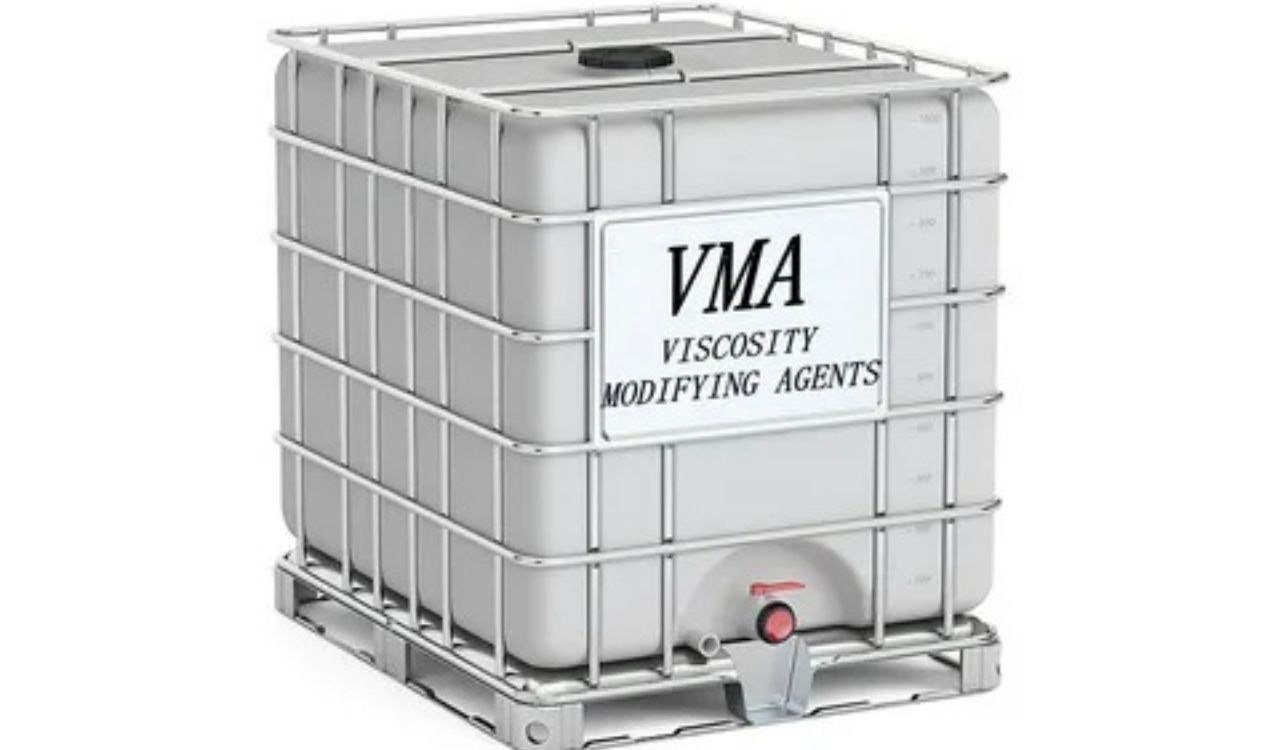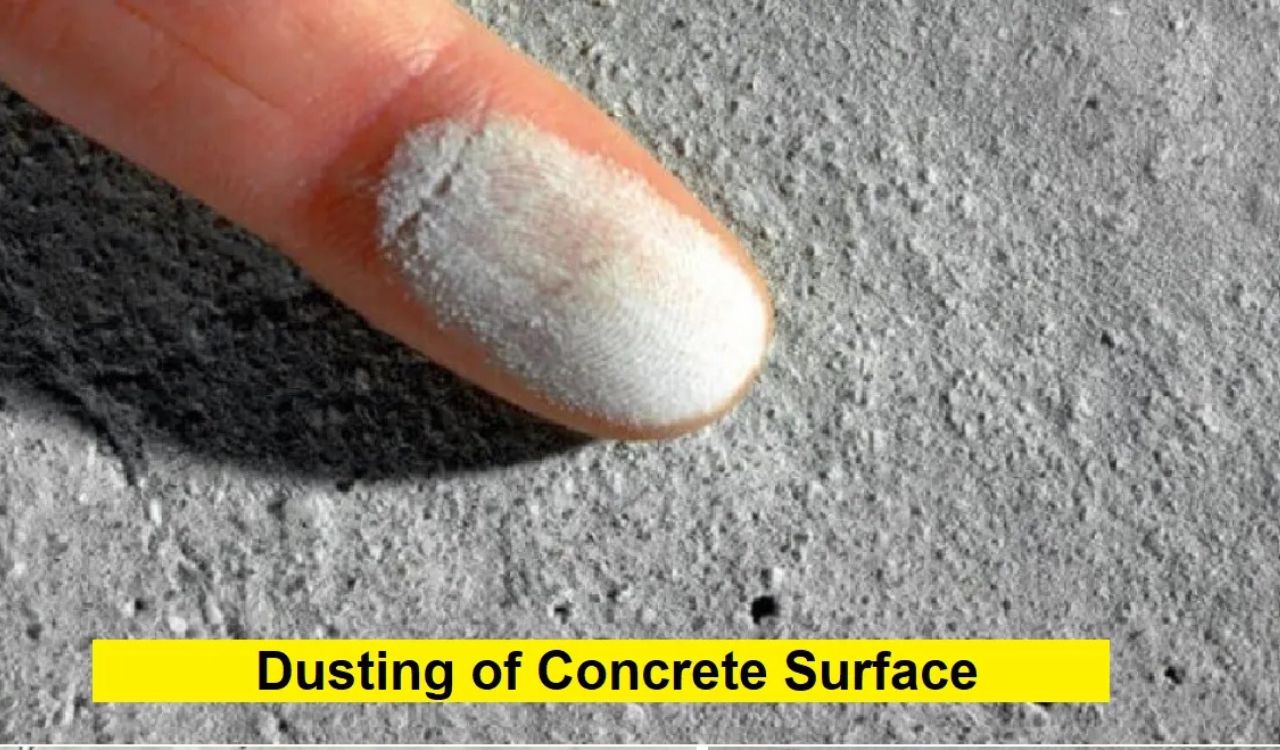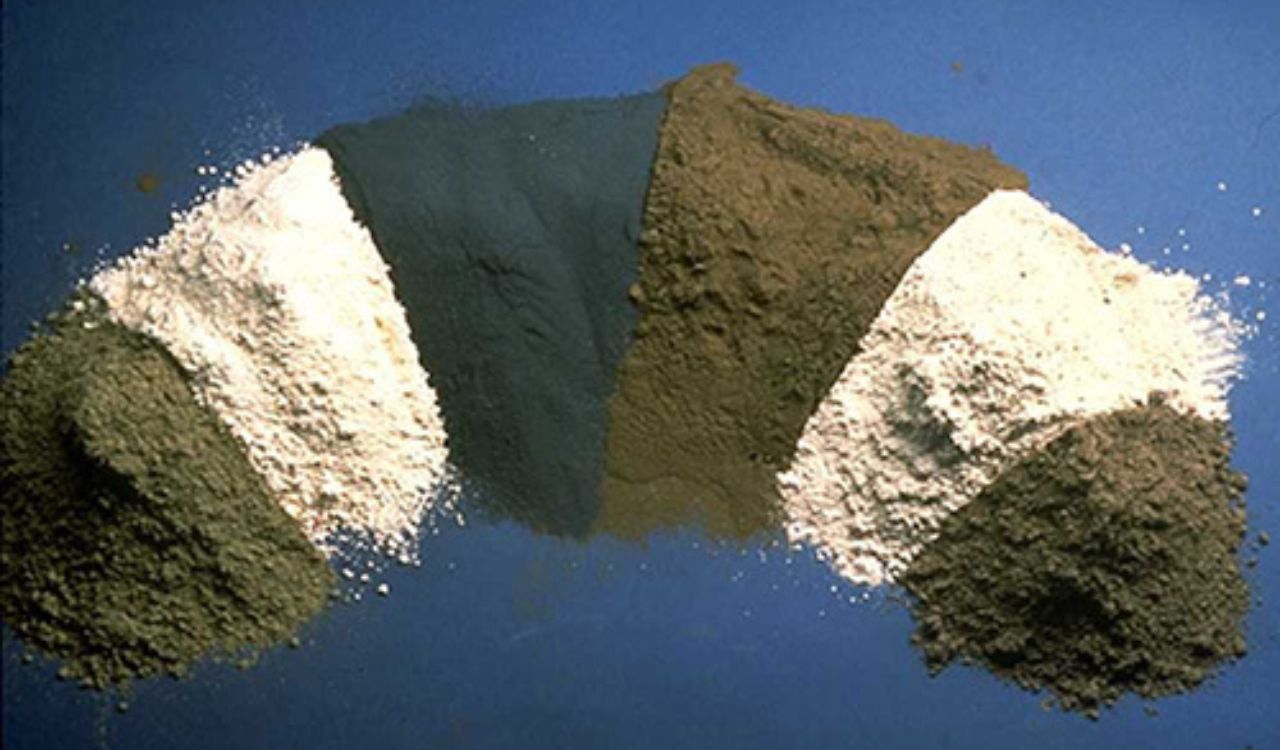
Chemical admixtures are an important part of modern concrete technology because they allow manufacturers and concrete professionals to modify fresh and hardened concrete properties without changing the basic proportions of cement, aggregates, and water alone. Depending on the intended application, an admixture may improve workability, reduce water demand, control setting time, increase durability, or provide other performance characteristics.
However, there is no single chemical admixture formula that works for every concrete application. Different types of admixtures in concrete are formulated for specific purposes, such as reducing water demand, controlling setting time, improving workability, accelerating strength development, or enhancing durability. The composition of an admixture therefore depends on its chemical function, active ingredients, concentration, product form, compatibility with cementitious materials, and required performance. Understanding these factors is important when developing, selecting, or applying concrete admixtures.
What Is a Chemical Admixture Formula?
A chemical admixture formula is the composition and proportion of chemical ingredients used to produce an admixture with a specific performance function in concrete or mortar.
The formulation may contain one principal active chemical or a combination of components designed to achieve a particular result. Depending on the product, these components can include water-reducing polymers, plasticizing agents, accelerating compounds, retarding agents, air-entraining materials, corrosion-inhibiting chemicals, stabilizers, and other formulation ingredients.
The formula determines characteristics such as:
- Water-reduction capacity
- Dispersion of cement particles
- Slump and workability
- Setting behavior
- Air content
- Strength development
- Compatibility with cement
- Storage stability
- Product concentration
- Performance at different temperatures
For manufacturers, formulation is therefore more than simply mixing chemicals. It involves controlling concentration, chemical compatibility, physical properties, and performance under defined concrete conditions.
Why There Is No Universal Concrete Admixture Formula
Concrete admixtures are designed for different functions, so their formulations vary considerably.
For example, a water-reducing admixture is formulated to improve cement-particle dispersion and reduce the amount of mixing water required for a target workability. A retarding admixture has a different chemical objective because it is designed to delay setting. An accelerating admixture is formulated to promote faster setting or early strength development.
The required formulation can also change according to:
- Cement chemistry
- Supplementary cementitious materials
- Water-to-cementitious-material ratio
- Aggregate properties
- Concrete temperature
- Required slump
- Mixing procedure
- Transportation time
- Desired setting time
- Required strength development
- Product concentration and physical form
Consequently, an admixture formula should be developed around the required application rather than copied as a fixed recipe.
Main Components Used in Chemical Admixture Formulations
The ingredients used in chemical admixtures depend on the product category and desired performance.
Active Chemical Components
The active component provides the primary functional effect of the admixture.
For example, formulations for water reduction may use polymeric dispersants or other surface-active chemicals, while some accelerating systems use inorganic salts or other compounds capable of influencing cement hydration.
The active component must be selected according to the required concrete performance and compatibility with the cementitious system.
Water and Carrier Components
Many liquid admixtures use water as a carrier. The amount of water affects the concentration, density, viscosity, and handling characteristics of the final product.
For this reason, manufacturers need to control water content consistently during production. Changes in concentration can alter the amount of active chemical delivered at a given dosage.
Polymers and Dispersing Agents
Polymeric materials are particularly important in modern water-reducing and superplasticizing formulations.
Polycarboxylate ether (PCE) technology is widely used in high-performance concrete because polymer structure can provide strong dispersion of cement particles. The polymer backbone and side-chain structure influence adsorption, dispersion, slump retention, and water-reduction behavior.
Stabilizers and Supporting Ingredients
Some formulations require additional components to maintain product stability, control viscosity, improve storage behavior, or support consistent performance.
The selection of these materials must consider interactions with the primary active ingredient and the intended storage and application conditions.
Chemical Admixture Formula by Function
Different admixture categories require different formulation approaches.
Water-Reducing Admixture Formula
Water-reducing admixtures are designed to improve concrete workability while allowing a reduction in mixing water.
Traditional formulations may use materials such as lignosulfonates or other dispersing chemicals. More advanced formulations can use polymer-based systems, including polycarboxylate ether technologies.
The formulation needs to balance:
- Water reduction
- Slump
- Slump retention
- Setting time
- Air entrainment
- Cement compatibility
- Strength development
A formulation that provides strong initial water reduction may not automatically provide the required slump retention, so both properties need to be evaluated.
PCE-Based Superplasticizer Formulation
PCE-based superplasticizers use specially designed polymers to disperse cement particles.
Their performance is influenced by factors such as:
- Polymer molecular structure
- Side-chain length
- Polymer dosage
- Active-solid concentration
- Cement composition
- Sulfate balance
- Mixing conditions
- Temperature
The interaction between PCE molecules and cement particles can create electrostatic and steric dispersion effects. This allows cement particles to separate more effectively, releasing water that would otherwise be trapped between agglomerated particles.
This is one reason PCE technology is widely associated with high water reduction and high-flow concrete applications.
Retarding Admixture Formulation
Retarding admixtures are formulated to delay the setting of cement paste.
They can be useful when concrete must remain workable for longer periods, particularly when transportation, placing, or environmental conditions increase the risk of premature setting.
The formulation must be controlled carefully because excessive retardation can negatively affect setting and early-age strength development.
Accelerating Admixture Formulation
Accelerating admixtures are designed to increase the rate of setting, early strength development, or both, depending on the product.
Their formulation and dosage must be selected according to the cement system, temperature, required setting characteristics, and project requirements.
Accelerators may be particularly relevant where early strength or faster construction cycles are required.
Air-Entraining Admixture Formulation
Air-entraining admixtures introduce and stabilize small air bubbles within concrete.
The formulation needs to provide controlled air entrainment rather than simply increasing total air content. Bubble size, distribution, stability, concrete composition, mixing conditions, and dosage can all influence the resulting air-void system.
How Concrete Admixture Dosage Is Calculated
The chemical admixture formula and admixture dosage are two different concepts.
The formula describes what the product contains, while the dosage describes how much of that product is added to a concrete mixture.
A basic dosage calculation can be expressed as:
Admixture quantity = Cementitious material × Dosage rate ÷ 100
For example, if a concrete mixture contains 500 kg of cementitious material per cubic meter and the selected admixture dosage is 1%, the calculated quantity is:
500 × 1 ÷ 100 = 5 kg/m³
This is a calculation example rather than a universal recommended dosage. Actual dosage should be established using the product’s technical specifications and laboratory or field trials.
Factors That Affect Chemical Admixture Formulation
A formulation that performs well in one concrete mixture may behave differently in another. Several variables can affect admixture performance.
Cement Composition
Different cement types can respond differently to the same admixture. Mineral composition, fineness, alkali content, sulfate balance, and other characteristics can influence adsorption and dispersion.
Supplementary Cementitious Materials
Fly ash, slag, silica fume, and other supplementary cementitious materials can change the fresh and hardened properties of concrete. They can also affect admixture demand and workability retention.
Water-to-Cementitious-Material Ratio
The water-to-cementitious-material ratio strongly influences concrete workability and strength. Admixture formulation should therefore be evaluated together with the overall mix design.
Temperature
Temperature can influence setting, hydration, viscosity, and admixture performance. A formulation suitable for moderate conditions may require different dosage or adjustment when concrete is produced in very hot or cold environments.
Aggregate Characteristics
Aggregate grading, absorption, moisture condition, shape, and surface characteristics can influence concrete workability and admixture demand.
Mixing Conditions
Mixing sequence, mixing time, equipment, and addition point can affect how an admixture interacts with the cementitious system.
Liquid vs Powder Chemical Admixture Formulations
Chemical admixtures can be supplied in liquid or powder form.
Liquid products are commonly supplied as concentrated solutions, suspensions, or polymer dispersions. Their formulation must account for water content, solids concentration, density, viscosity, and storage stability.
Powder products require different formulation considerations because moisture content, particle size, flowability, solubility, and packaging stability become important.
The same active chemistry may therefore require different formulation and manufacturing approaches depending on whether the final product is intended to be liquid or powder.
Common Problems in Chemical Admixture Formulation
Formulation problems can appear as inconsistent concrete performance rather than as an obvious defect in the admixture itself.
| Observed problem | Possible contributing factors |
| Low water reduction | Insufficient active component, incompatibility, or unsuitable dosage |
| Rapid slump loss | Polymer structure, cement interaction, temperature, or dosage |
| Excessive retardation | High dosage or formulation imbalance |
| Excessive air | Admixture chemistry, mixing conditions, or overdosing |
| Concrete segregation | Excessive fluidity or unsuitable dosage |
| Inconsistent results | Raw-material variation, concentration changes, or batching errors |
| Poor storage stability | Incompatible components or inadequate formulation control |
These issues should be investigated through controlled testing rather than corrected by simply increasing or reducing dosage.
How Chemical Admixture Formulations Are Tested
Before a formulation is used commercially, its performance should be evaluated under controlled conditions.
Typical testing may examine:
- Appearance and physical stability
- Density
- pH where applicable
- Solids content
- Water-reduction performance
- Slump and slump retention
- Setting time
- Air content
- Compressive strength
- Compatibility with cement
- Performance at different temperatures
- Storage stability
Concrete testing should use representative cementitious materials and mix proportions because an admixture’s laboratory performance can depend strongly on the materials used during testing.
Relevant standards and project specifications should also be considered when establishing test procedures and acceptance criteria.
Applications of Chemical Admixture Formulations
Chemical admixtures are used across many concrete and construction applications.
Ready-Mix Concrete
Ready-mix producers use admixtures to manage workability, water demand, setting behavior, and transportation requirements.
Precast Concrete
Precast manufacturers may use admixtures to achieve controlled workability and strength development while supporting efficient production cycles.
Dry-Mix Mortar
Admixture technologies are also used in mortar formulations to influence water demand, workability, adhesion, setting, and other properties.
High-Performance Concrete
High-performance and high-strength concrete commonly require carefully controlled water reduction and rheological behavior. PCE-based superplasticizers can be particularly relevant in these formulations.
Infrastructure Construction
Bridges, tunnels, foundations, marine structures, industrial floors, and other infrastructure applications may require admixture systems selected for specific durability and construction conditions.
Best Practices for Developing a Chemical Admixture Formula
Developing a reliable formulation requires systematic evaluation rather than relying on a single dosage or laboratory result.
Important practices include:
- Define the required concrete performance before selecting the chemistry.
- Establish the target active-solid concentration.
- Evaluate raw-material consistency.
- Test compatibility with the intended cementitious materials.
- Measure fresh-concrete properties under controlled conditions.
- Evaluate setting and strength development.
- Test the formulation at different dosage levels.
- Consider temperature and transportation conditions.
- Confirm storage stability of the finished product.
- Validate laboratory results through representative field trials.
For manufacturers such as Luke Chemicals, formulation consistency is particularly important because changes in raw materials, concentration, or processing conditions can affect the performance of the final concrete admixture.
Chemical Admixture Formula vs Admixture Dosage
These terms are often confused, but they describe different parts of admixture technology.
| Term | Meaning |
| Chemical admixture formula | The chemical composition and proportions used to manufacture the product |
| Active ingredient | The component primarily responsible for the intended chemical effect |
| Concentration | The amount of active material contained in the product |
| Dosage | The quantity of finished admixture added to concrete |
| Mix design | The complete proportioning of cementitious materials, water, aggregates, and admixtures |
Understanding this distinction helps engineers and buyers evaluate technical data more accurately.
How to Select a Chemical Admixture Formulation
The appropriate formulation should be selected according to the concrete’s actual requirements.
Consider:
- Required water reduction
- Target slump
- Slump retention period
- Setting-time requirements
- Early and later-age strength
- Cement and SCM composition
- Concrete temperature
- Aggregate characteristics
- Required durability
- Liquid or powder product requirements
- Applicable technical standards
- Required storage conditions
Product data should always be evaluated alongside trial-mix results. A formulation that performs well under one set of conditions should not automatically be assumed to produce the same result in another concrete system.
Frequently Asked Questions
What is a chemical admixtures formula?
A chemical admixtures formula is the composition and proportion of chemical ingredients used to manufacture an admixture designed to modify specific concrete properties.
What is the formula for calculating concrete admixture quantity?
A basic calculation is: Admixture quantity = cementitious material × dosage rate ÷ 100. The actual dosage should be established from product specifications and concrete trials.
What are the main ingredients in chemical admixtures?
Ingredients vary by product. Depending on the formulation, they can include polymeric dispersants, lignosulfonates, accelerating or retarding compounds, air-entraining chemicals, water, stabilizers, and other supporting components.
Is there one formula for all concrete admixtures?
No. Different admixture functions require different chemical formulations. Cement composition, concrete materials, environmental conditions, and performance requirements can also influence formulation selection.
What is a PCE-based concrete superplasticizer?
A PCE-based superplasticizer is a polymer-based high-range water-reducing admixture that uses polycarboxylate ether chemistry to disperse cement particles and improve concrete flow or reduce water demand.
Can admixture dosage be calculated without laboratory testing?
A mathematical calculation can estimate the starting quantity, but final dosage should be confirmed through laboratory or field trials because admixture performance depends on the complete concrete system.
Why can the same admixture perform differently in different concrete?
Differences in cement chemistry, supplementary cementitious materials, aggregate properties, water content, temperature, mixing conditions, and admixture dosage can all affect performance.
Conclusion
A chemical admixtures formula is not simply a fixed recipe. It is a controlled combination of active chemicals and supporting components developed to achieve a specific performance objective in concrete or mortar.
Water reducers, PCE-based superplasticizers, accelerators, retarders, air-entraining agents, and other admixtures require different formulation approaches. Their effectiveness also depends on cement chemistry, mix proportions, temperature, aggregate properties, dosage, and mixing conditions.
For reliable results, admixture formulation should therefore be supported by raw-material control, compatibility testing, dosage evaluation, concrete performance testing, and field validation. This approach helps manufacturers, engineers, contractors, and industrial buyers select chemical admixture systems based on measurable performance rather than relying on a universal formula.
FAQs
What is a chemical admixture formula?
A chemical admixture formula is the composition and proportion of chemical ingredients used to produce an admixture for modifying specific properties of concrete or mortar.
What are the main ingredients in chemical admixtures?
Ingredients depend on the intended function and may include polymers, dispersing agents, salts, air-entraining chemicals, water, stabilizers, and other supporting components.
Is there one formula for all concrete admixtures?
No. Water reducers, superplasticizers, accelerators, retarders, air-entraining agents, and other admixtures require different formulations based on their intended functions and performance requirements.
How is concrete admixture dosage calculated?
A basic calculation is: Admixture quantity = cementitious material × dosage rate ÷ 100. The final dosage should be confirmed through product specifications and concrete trials.