Modern construction projects demand more from concrete than simply achieving a required compressive strength. Concrete may need to remain workable during transportation, flow through congested reinforcement, develop strength within a specific timeframe, or withstand moisture and aggressive environmental conditions for many years.
This is where concrete admixtures play an important role. An admixture for concrete can be used to modify specific properties of a concrete mix and help producers, engineers, and contractors achieve more consistent performance. Rather than changing the basic purpose of concrete, admixtures help adjust how the material behaves during mixing, placement, setting, curing, and long-term service.
The right admixture of concrete depends on the mix design, construction conditions, performance requirements, and compatibility of the materials being used. Understanding these factors is essential when selecting a suitable solution for modern construction projects.
Why Are Concrete Admixtures Important in Modern Construction?
Construction conditions are rarely the same from one project to another. A high-rise building, bridge, tunnel, precast plant, and ready-mix operation can all require different concrete characteristics.
For example, concrete used in a large infrastructure project may need extended workability to support transportation and placement. A precast operation may require controlled strength development to maintain production efficiency. Structures exposed to moisture or aggressive environments may require concrete with improved resistance to water penetration and long-term deterioration.
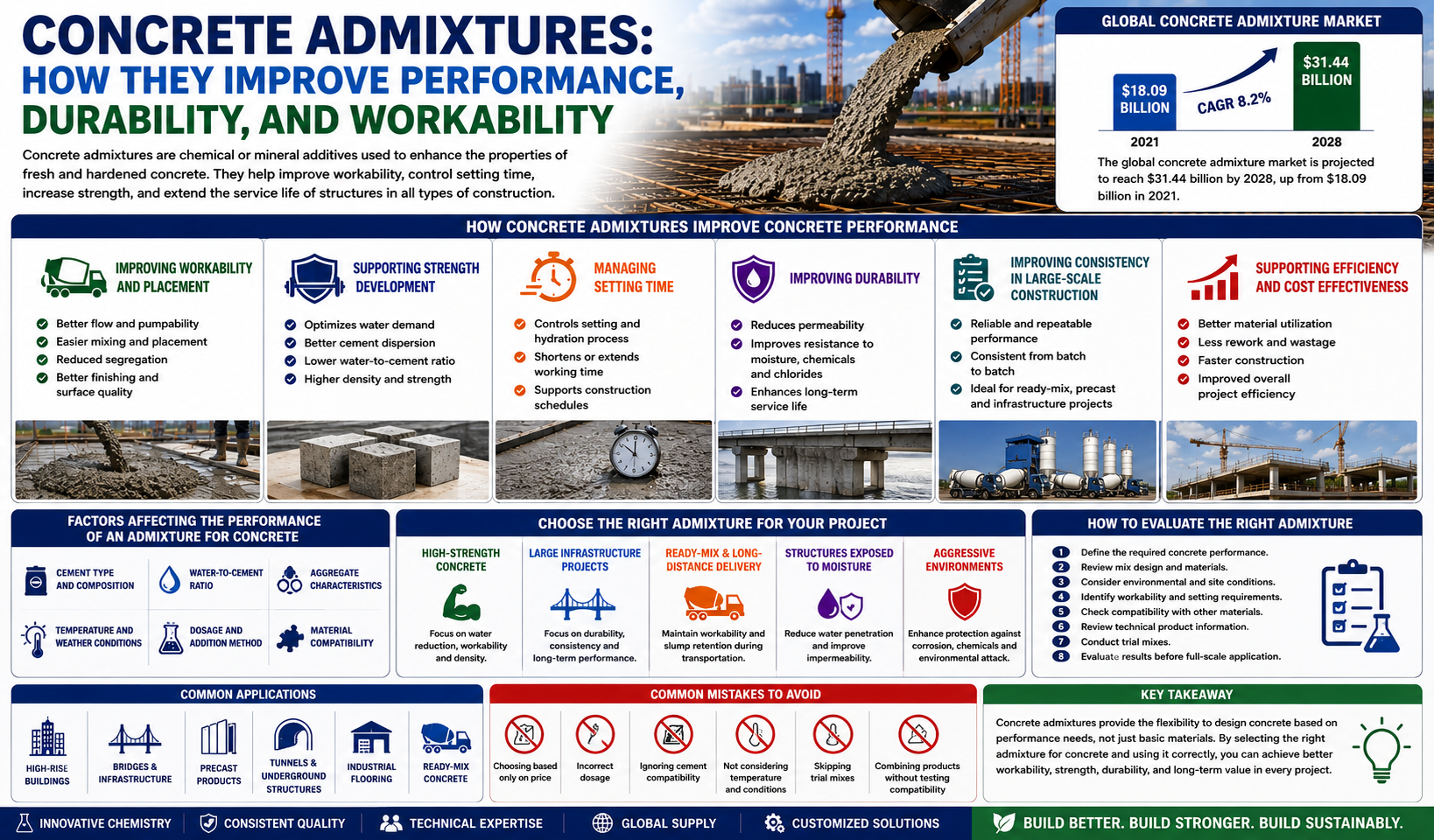
Concrete admixtures allow the concrete mix to be designed around these specific requirements. They can help improve workability, manage water demand, influence setting behavior, support strength development, and improve durability.
The key advantage is flexibility. Instead of relying only on changes to cement content or water content, an appropriate admixture for concrete can help achieve targeted performance more efficiently.
How Concrete Admixtures Influence Concrete Performance
Improving Workability and Placement
Workability affects how easily concrete can be mixed, transported, pumped, placed, consolidated, and finished. Poor workability can make placement more difficult and may affect the consistency of the finished structure.
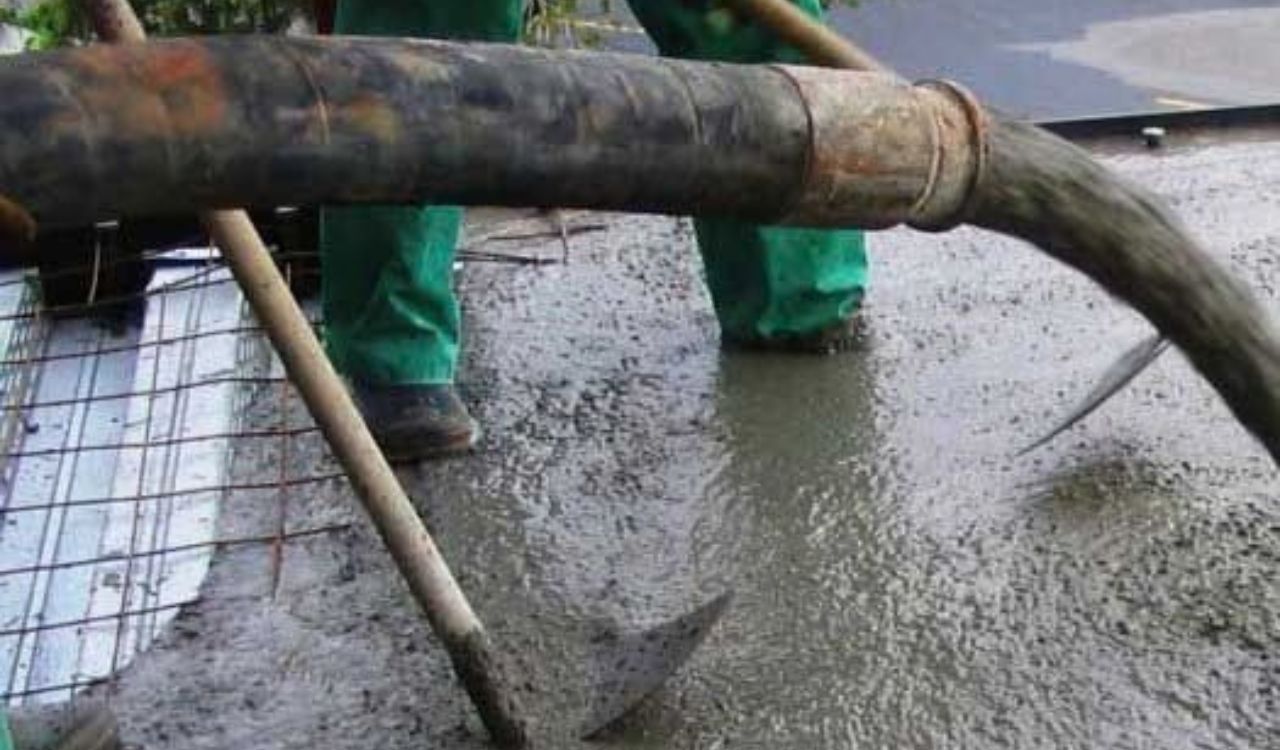
Certain concrete admixtures can improve the movement and flow of the mix without simply adding more water. This can be particularly useful when concrete must move through pumps, fill complex formwork, or flow around dense reinforcement.
Better workability may also support more efficient placement and help construction teams maintain consistency throughout the pouring process.
Supporting Strength Development
Concrete performance is closely connected to the relationship between water, cement, aggregates, and other materials in the mix. Some admixtures help optimize water demand and cement particle dispersion, which can support the production of denser concrete.
A lower water-to-cement ratio, when properly designed, can contribute to improved strength and reduced porosity. However, the appropriate approach depends on the complete mix design and project requirements.
For projects specifically focused on this topic, more detailed information can be explored in a dedicated guide on Concrete Additives for Strength.
Managing Setting Time
Construction schedules and environmental conditions can significantly influence how concrete should behave after placement.
In some situations, concrete may need more working time before setting. In others, faster strength development may be important for maintaining construction schedules or production efficiency.
Concrete admixtures can help manage these requirements by influencing the setting and hydration process. This is particularly valuable when dealing with changing temperatures, large pours, transportation requirements, or fast-track construction schedules.
Improving Durability
Long-term durability is one of the most important considerations in modern concrete construction. Structures may be exposed to water, chlorides, temperature changes, chemicals, and other environmental conditions throughout their service life.
Concrete admixtures can support durability by helping reduce permeability, improve concrete density, and address specific environmental challenges.
Depending on the project requirements, specialized solutions may also be used for waterproofing, corrosion resistance, crack control, or other durability objectives.
Improving Consistency in Large-Scale Construction
Large concrete operations require reliable and repeatable performance. Small variations in workability, setting time, or material compatibility can create challenges when thousands of cubic meters of concrete are involved.
The proper use of concrete admixtures can help support consistency from batch to batch when used as part of a controlled mix design and production process. This is especially important for ready-mix plants, infrastructure projects, precast production, and other large-scale applications.
How to Evaluate the Right Admixture of Concrete
A practical selection process should include several steps:
- Define the required concrete performance.
- Review the cement, aggregates, and overall mix design.
- Consider weather and construction conditions.
- Identify workability and setting-time requirements.
- Check compatibility with other materials.
- Review technical product information.
- Conduct trial mixes.
- Evaluate the results before large-scale application.
This process helps reduce uncertainty and supports more reliable concrete performance.
Conclusion
Concrete admixtures have become an important part of modern concrete technology because they help construction professionals design mixes around specific performance requirements. Whether the objective is improved workability, controlled setting, better durability, or more consistent large-scale production, the right admixture for concrete can support better results when properly selected and tested.
The most effective approach is to evaluate the complete concrete system rather than focusing on a single product. Mix materials, environmental conditions, dosage, compatibility, and project requirements should all be considered before making a final decision.
By matching the right concrete admixtures to the specific needs of a project and confirming performance through appropriate testing, producers and construction teams can create concrete mixes that are better suited to modern construction demands.
Frequently Asked Questions
When should an admixture be added to concrete?
The addition method depends on the specific product and mix design. Manufacturers’ technical recommendations should be followed.
Can more than one admixture be used in a concrete mix?
Yes, multiple admixtures may be used when they are compatible and have been properly evaluated through testing.
Does admixture dosage affect concrete performance?
Yes. Dosage can significantly influence workability, setting behavior, and other concrete properties.
Can the same admixture be used with every cement type?
Not necessarily. Cement composition and other mix materials can affect compatibility and performance.
Why are trial mixes important?
Trial mixes help evaluate how the selected admixture performs with the actual materials and conditions of a specific project.