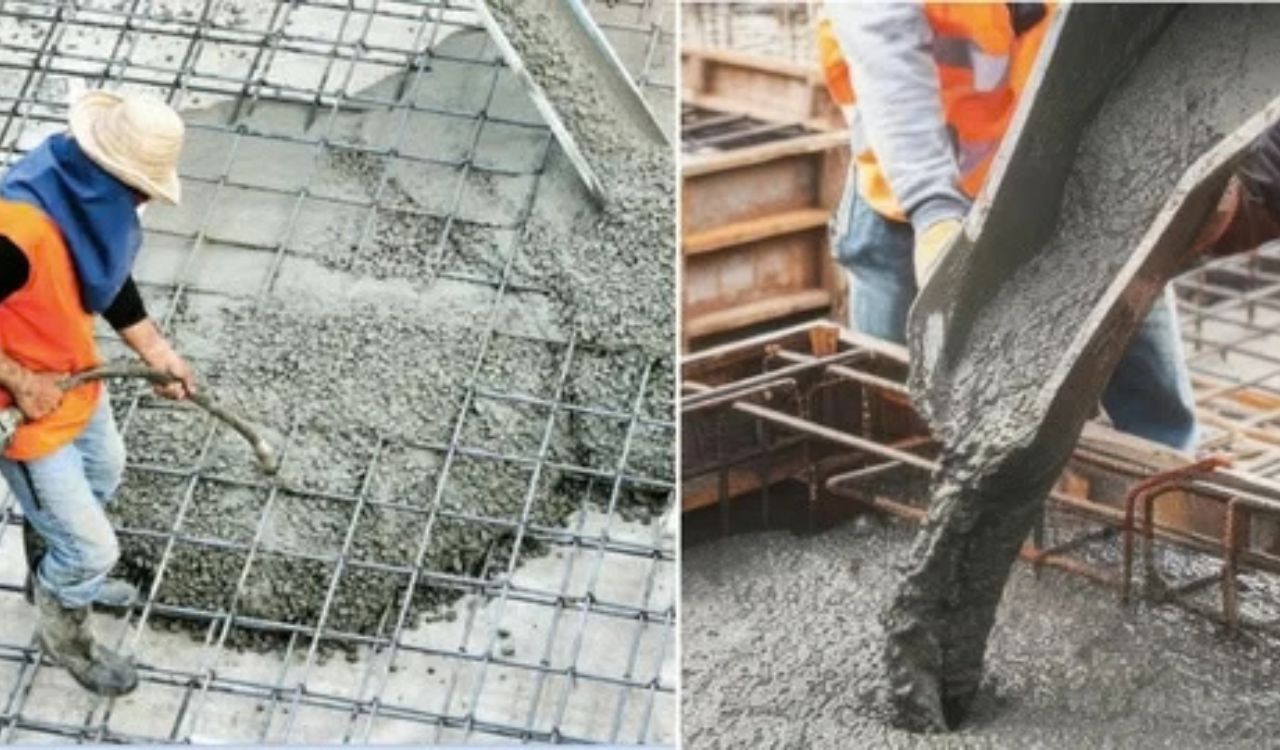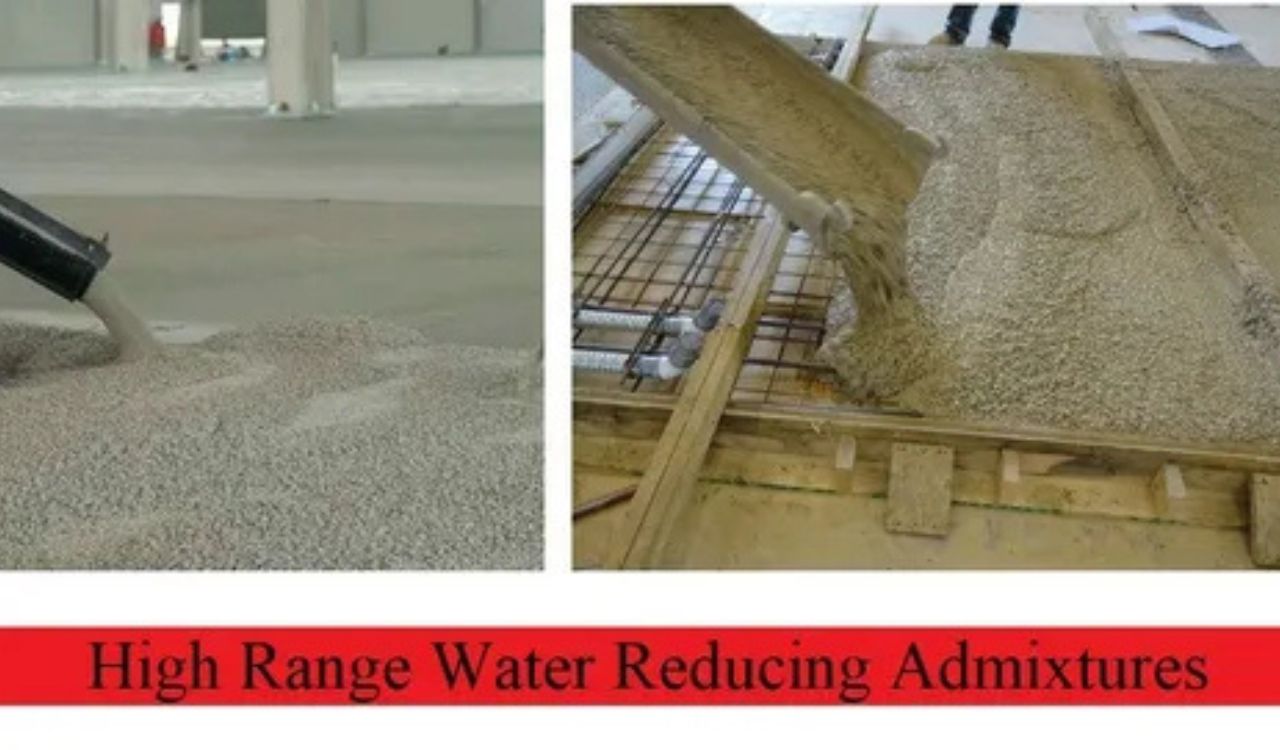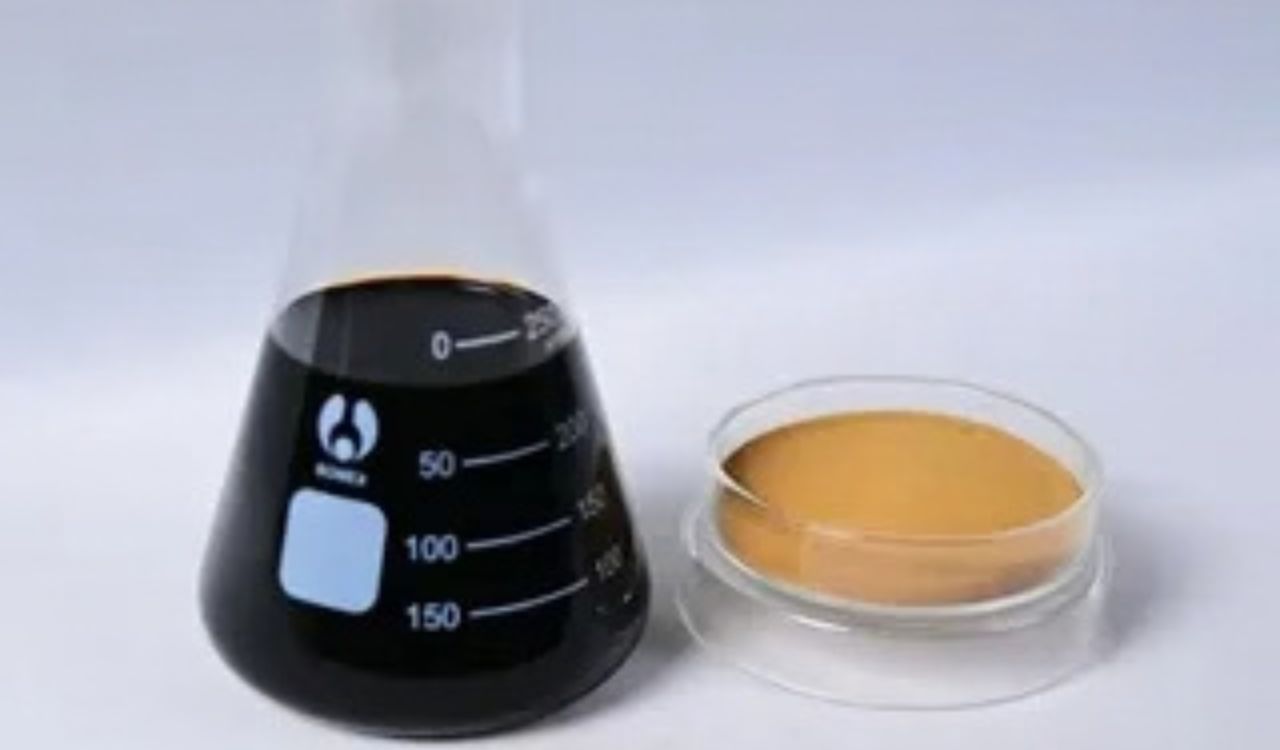
A high range water reducer is a concrete admixture that produces highly workable concrete while significantly reducing the mixing water required for a specified consistency. These admixtures are commonly known as superplasticizers and are widely used in high-performance, high-strength, ready-mix, precast, prestressed, and flowable concrete.
The main function of a high-range water-reducing admixture is to disperse cement particles more effectively. This allows concrete producers to achieve greater slump or flow without simply adding more water. Mid-range water reducers provide a similar dispersing effect but are generally designed for moderate water reduction and improved workability rather than the higher water-reduction levels targeted by high-range products. When the water-cementitious ratio is reduced while maintaining the required workability, the resulting concrete can develop higher strength and a denser cementitious matrix.
Modern high range water reducers in concrete are frequently based on polycarboxylate ether (PCE) technology, although other chemical technologies and blended formulations are also available. Commercial products can provide substantially different levels of water reduction depending on their formulation, dosage, cementitious system, and application. Some current PCE-based products report water reduction capabilities of up to approximately 30–45% under specified conditions.
What Is a High Range Water Reducer?
A high range water reducer is a chemical admixture designed to provide a much stronger plasticizing and water-reducing effect than a conventional water reducer.
Instead of increasing the water content to make concrete easier to place, the admixture improves the dispersion of cement particles. This can release water trapped within cement agglomerations and make the available water more effective.
The result can be:
- Higher slump without additional water
- Lower water-cementitious ratio
- Improved concrete flow
- Better pumpability
- Higher potential compressive strength
- Improved finishing
- More efficient placement
- Greater flexibility in high-performance mix design
The American Concrete Institute has described high-range water-reducing admixtures as materials capable of increasing concrete strength and providing greatly increased workability without adding excessive water.
The exact performance depends on the product and concrete mixture, so the term should not be interpreted as a guarantee of one fixed water-reduction percentage.
How Does a High Range Water Reducer Work?
The mechanism begins with the interaction between the admixture and cement particles.
When cement is mixed with water, particles can form agglomerations. These clusters can trap portions of the available water and make the paste less efficient.
A high range water reducer helps disperse these particles.
Cement Particle Dispersion
Many modern high range water reducers contain polymers that adsorb onto cement particles. PCE-based admixtures use polymer structures that provide strong dispersion and can be engineered for different workability and slump-retention characteristics.
Improved Particle Separation
When cement particles are better dispersed, the mixture can become more fluid without increasing the amount of mixing water.
Lower Water Demand
Because the concrete can achieve the required consistency with less water, the water-cementitious ratio can be reduced.
Improved Concrete Flow
At appropriate dosage levels, the increased dispersion can produce high-slump or high-flow concrete that is easier to pump, place, consolidate, and finish.
Modern PCE technology has significantly expanded the ability to tailor concrete performance around water reduction, slump, setting behavior, and workability retention.
High Range Water Reducer vs Conventional Water Reducer
Although both products reduce water demand, they are intended for different performance requirements.
| Property | Conventional Water Reducer | High Range Water Reducer |
| Water reduction | Lower | Higher |
| Plasticizing action | Moderate | Strong |
| Workability | Improved | Significantly improved |
| Typical use | General concrete | High-performance and flowable concrete |
| Low water-cementitious ratio | Less common | Common |
| High slump/flow concrete | Limited | Well suited |
| High-strength concrete | Possible | Frequently used |
| Typical technology | Various plasticizers | PCE and other superplasticizer technologies |
| Dosage sensitivity | Product dependent | Often more sensitive |
| Mix optimization | Important | Critical |
The distinction is based on performance rather than one universal chemical composition.
Some modern products are designed to work at different dosage levels. A single formulation may function as a normal water reducer or mid-range water reducer at a lower dosage and as a high range water reducer at a higher dosage.
High Range Water Reducer vs Superplasticizer
The terms high-range water reducer and superplasticizer are commonly used for closely related admixture technology.
“Superplasticizer” emphasizes the strong plasticizing effect, while “high-range water reducer” emphasizes the ability to achieve substantial water reduction while maintaining workability.
Depending on the applicable specification and product, a high range water reducer may be classified under standards such as ASTM C494. Commercial products are available that meet Type A and Type F requirements, although classification depends on the tested performance of the individual product.
Therefore, buyers should review the technical data sheet and applicable standard rather than assuming that every product marketed as a superplasticizer has identical performance.
Types of High Range Water Reducers
High range water reducers can be differentiated according to their chemical technology and performance characteristics.
Polycarboxylate Ether Water Reducers
Polycarboxylate ether (PCE) is one of the most important technologies used in modern high range water-reducing admixtures.
PCE polymers can be designed to provide combinations of:
- High water reduction
- Strong cement dispersion
- Slump retention
- Rapid dispersion
- Controlled setting
- Improved flow
- Compatibility with different cementitious systems
PCE technology is particularly important for high-performance and high-flow concrete.
Sulfonated Naphthalene-Based Admixtures
Sulfonated naphthalene-formaldehyde condensates have historically been used as superplasticizing materials. They can provide strong water reduction and plasticizing action but may have different slump-retention and compatibility characteristics from modern PCE systems.
Sulfonated Melamine-Based Admixtures
Sulfonated melamine-based technologies are another category of high-range water-reducing materials. Their performance characteristics can make them suitable for particular concrete and precast applications.
Blended Formulations
Some products combine different technologies or incorporate additional components to target specific requirements such as workability retention, setting behavior, or compatibility with difficult aggregates.
The appropriate technology depends on the concrete mix and performance target rather than the chemical name alone.
Benefits of High Range Water Reducers
Lower Water-Cementitious Ratio
One of the most important benefits is the ability to reduce mixing water while maintaining the required consistency.
A lower water-cementitious ratio can contribute to increased strength and reduced permeability when the concrete is properly proportioned and cured.
Higher Workability
High range water reducers can make concrete substantially more fluid without requiring additional water.
This is particularly valuable when concrete must flow around reinforcement, travel through pumping systems, or fill complex formwork.
Higher Strength Potential
When water content is reduced while cementitious content and other mix variables remain appropriately controlled, the lower water-cementitious ratio can support higher compressive strength.
This is one reason high range water reducers are widely used in high-strength concrete.
Improved Pumpability
Concrete with suitable rheology can be easier to transport through pumping equipment.
However, pumpability depends on the complete mixture, including paste volume, aggregate grading, fines, lubrication, and rheology. The admixture should therefore be considered as one component of the pumping system rather than a standalone solution.
Better Finishing
Appropriate flow and cohesion can improve placement and finishing efficiency.
A well-designed admixture system can help reduce the labor required for consolidation and finishing, particularly in high-flow applications.
Reduced Need for Mechanical Consolidation
Some high-flow concrete mixtures can be placed with reduced vibration compared with conventional low-slump concrete. Commercial PCE products specifically advertise high-slump or high-flow concrete that can often be placed with minimal vibration under suitable conditions.
Potential Durability Improvements
Lowering unnecessary water content can produce a denser cementitious matrix. Depending on the complete mix design and curing conditions, this may reduce permeability and support improved durability.
A high range water reducer itself should not be considered a standalone durability solution. Concrete durability remains dependent on materials, proportions, curing, exposure conditions, and construction quality.
Applications of High Range Water Reducers
Ready-Mix Concrete
Ready-mix producers use high range water reducers to achieve specified workability and strength without adding excessive water.
Some formulations are also designed for extended slump retention, which can be important when concrete requires transportation over longer distances.
High-Strength Concrete
High-strength concrete commonly requires a low water-cementitious ratio while maintaining sufficient workability.
A high range water reducer allows producers to achieve this combination more efficiently.
High-Performance Concrete
High-performance concrete often requires multiple properties at the same time, such as:
- Low permeability
- High strength
- Controlled rheology
- High durability
- Suitable placement characteristics
High range water reducers can help provide the workability needed to place these low-water-content mixtures.
Self-Consolidating Concrete
Self-consolidating concrete requires high flowability while maintaining stability against segregation.
High range water reducers, particularly appropriately designed PCE systems, are commonly used to achieve the required flow characteristics.
Precast Concrete
Precast production can benefit from admixtures that provide controlled workability and predictable strength development.
Fast-dispersing or faster-setting formulations may be useful where production cycles require early demolding. Commercial products are available specifically for precast and prestressed applications.
Prestressed Concrete
Prestressed elements often require high strength and controlled production cycles. High range water reducers can support the low water-cementitious ratios and workability needed for these mixtures.
Pumped Concrete
High range water reducers can help create concrete with suitable flow and rheology for pumping, particularly when a low water-cementitious ratio must be maintained.
Complex Reinforced Structures
Concrete containing closely spaced reinforcement can be difficult to consolidate.
A high-flow mixture can help concrete move through restricted spaces when its stability and rheological properties are appropriately controlled.
High Range Water Reducer Dosage
There is no single universal dosage for a high range water reducer.
Dosage depends on:
- Cement type
- Cement content
- Cement fineness
- Supplementary cementitious materials
- Aggregate grading
- Sand characteristics
- Initial water-cementitious ratio
- Required slump or flow
- Required water reduction
- Concrete temperature
- Mixing equipment
- Transportation time
- Other admixtures
- Desired setting behavior
Commercial products demonstrate why dosage must be determined individually. Different high range formulations provide different performance levels, and manufacturers may specify different dosage ranges and water-reduction capabilities.
How Should Dosage Be Determined?
A practical procedure is:
- Establish the required concrete strength.
- Set the target water-cementitious ratio.
- Determine the required slump or flow.
- Select the cementitious materials and aggregates.
- Follow the manufacturer’s recommended starting dosage.
- Produce laboratory trial batches.
- Measure initial slump or flow.
- Check slump retention where required.
- Measure air content and setting behavior.
- Test compressive strength.
- Check bleeding and segregation.
- Optimize the dosage based on actual results.
The objective is not simply to use the highest possible dosage. The objective is to achieve the required performance with a stable and economical concrete mixture.
Factors That Affect High Range Water Reducer Performance
Cement Chemistry
Different cements can respond differently to the same admixture.
Cement mineralogy, alkali content, sulfate balance, fineness, and other characteristics can influence adsorption and dispersion.
Supplementary Cementitious Materials
Fly ash, slag, silica fume, and other supplementary cementitious materials can significantly alter concrete rheology and admixture demand.
A formulation that performs well with one cementitious system may require adjustment when the system changes.
Aggregate Grading
Aggregate shape, size distribution, surface texture, and fines content influence concrete flow.
Poorly graded or highly angular aggregates may require greater paste fluidity to achieve the same slump.
Concrete Temperature
Temperature affects cement hydration and can change slump loss and setting behavior.
A product selected for hot-weather concrete may therefore need different workability-retention characteristics from one used in controlled precast production.
Water Quality
Mixing-water chemistry can influence cement hydration and admixture performance.
Mixing Sequence
The order in which water, cementitious materials, aggregates, and admixtures enter the mixer can affect dispersion and final performance.
Compatibility With Other Admixtures
A high range water reducer may be used alongside:
- Air-entraining admixtures
- Retarding admixtures
- Accelerating admixtures
- Shrinkage-reducing admixtures
- Corrosion inhibitors
- Waterproofing admixtures
Compatibility should be established before full-scale production.
High Range Water Reducers and PCE Technology
PCE technology has become particularly important in modern high range water-reducing admixtures because the polymer structure can be modified to target different performance characteristics.
For example, commercial PCE formulations may be developed around:
- Maximum water reduction
- Extended slump retention
- Rapid wetting
- Fast dispersion
- Controlled setting
- Precast production
- High-flow concrete
Current commercial products illustrate how different PCE formulations are targeted toward different requirements. Some emphasize high water reduction, while others emphasize extended workability or faster setting for precast applications.
This flexibility is one reason PCE-based products are widely used in modern concrete mix design.
High Range Water Reducer and Supplementary Cementitious Materials
Modern concrete frequently incorporates supplementary cementitious materials such as:
- Fly ash
- Ground granulated blast-furnace slag
- Silica fume
- Calcined clay
- Other mineral additions
These materials can change the rheology, setting behavior, water demand, and admixture response of the concrete.
For this reason, admixture selection should be based on the actual cementitious blend, not only the Portland cement type.
Trial batching becomes particularly important when the percentage or source of supplementary cementitious material changes.
High Range Water Reducers in High-Performance Concrete
High-performance concrete often requires a combination of low water-cementitious ratio and sufficient workability.
Without an effective water-reducing system, lowering the water content can make concrete too stiff to place properly.
A high range water reducer helps separate these two requirements:
Low water content + controlled admixture dispersion = high workability at a low water-cementitious ratio
This principle is central to the production of many high-strength and high-performance mixtures.
Research published through ACI also continues to examine high-range water-reducing admixtures in optimized low-cement concrete mixtures, including their relationship with aggregate packing, durability, service life, and material efficiency.
High Range Water Reducer and Concrete Strength
A high range water reducer does not automatically make concrete stronger.
Its contribution comes primarily from allowing the concrete producer to reduce water while maintaining required workability.
For example, if a concrete mix requires a particular slump, the producer can potentially:
Maintain workability + reduce mixing water → lower water-cementitious ratio → greater strength potential
Actual strength still depends on:
- Cementitious material
- Water-cementitious ratio
- Aggregate quality
- Curing
- Temperature
- Mixing
- Placement
- Consolidation
- Age at testing
Therefore, strength should always be verified through concrete testing rather than assumed from admixture dosage.
High Range Water Reducer and Slump Retention
Initial slump is only one part of concrete performance.
A concrete mixture may leave the plant with the desired slump but lose workability during transportation.
For this reason, some high range water reducers are formulated specifically for extended workability.
Commercial products demonstrate that different PCE formulations can be optimized for different slump-life requirements. For example, some products emphasize extended slump retention, while others are designed for rapid wetting and faster setting in precast applications.
When selecting an admixture, consider both:
- Initial slump
- Slump after the expected transportation and placement period
Quality Control and Testing
A high range water reducer should be evaluated through controlled testing before being introduced into full-scale concrete production.
Important measurements include:
Slump or Slump Flow
This determines the consistency or flowability of fresh concrete.
Slump Retention
Testing at multiple time intervals helps determine whether the mixture can maintain the required workability.
Air Content
Air content can affect strength, durability, and workability.
Setting Time
The admixture can influence setting depending on its chemistry and dosage.
Compressive Strength
Strength testing verifies whether the intended water-cementitious ratio and mixture proportions produce the required performance.
Bleeding and Segregation
High-flow concrete must remain cohesive. Excessive flow without sufficient stability can result in segregation.
Temperature
Concrete temperature should be monitored because it influences hydration, setting, and workability.
ACI’s guidance on high-range water reducers specifically addresses water-cementitious ratio, slump control, redosing, flowing-concrete placement, temperature considerations, and quality control.
Common Problems When Using High Range Water Reducers
Excessive Dosage
Using more admixture than necessary can cause undesirable changes in setting, air content, slump retention, or concrete stability.
Segregation
Very high flow does not automatically mean good concrete. The mixture must remain cohesive enough to prevent aggregate separation.
Excessive Slump Loss
Some formulations may not provide sufficient workability retention for long transportation times.
Unexpected Setting Behavior
Cement chemistry, temperature, dosage, and other admixtures can influence setting.
Incompatibility With Cement
A change in cement source can change the response of the concrete to the admixture.
Uncontrolled Water Addition
Adding water at the job site can increase the water-cementitious ratio and undermine the purpose of using a high range water reducer.
How to Choose a High Range Water Reducer
When selecting a product, evaluate the complete performance requirement rather than choosing solely according to the highest advertised water reduction.
Consider the Required Water Reduction
Determine how much water must be removed from the mixture to meet the target water-cementitious ratio.
Consider Slump Requirements
A conventional high-slump mix may require different admixture characteristics from self-consolidating concrete.
Consider Slump Retention
Long transportation and hot weather may require extended workability.
Consider Setting Time
Precast production, rapid construction, and conventional placement can have different setting requirements.
Consider Cementitious Materials
Test the product with the actual cement, fly ash, slag, silica fume, or other materials used in production.
Consider Aggregate Characteristics
Manufactured sand, clay contamination, angular aggregates, and fines can affect admixture demand.
Consider Other Admixtures
Evaluate the complete chemical admixture system for compatibility.
Conduct Trial Batches
The final selection should be verified under actual or representative production conditions.
Best Practices for Using High Range Water Reducers
For consistent performance:
- Follow the manufacturer’s technical data sheet.
- Establish the target water-cementitious ratio before admixture dosing.
- Use trial batches with actual project materials.
- Optimize dosage rather than maximizing it.
- Measure both initial and retained slump.
- Monitor concrete temperature.
- Check compatibility with other admixtures.
- Maintain accurate aggregate moisture corrections.
- Avoid uncontrolled water addition.
- Maintain consistent batching procedures.
- Record concrete test results.
- Requalify the mixture when major raw materials change.
These practices are particularly important for industrial concrete producers where small changes in cement, aggregate moisture, temperature, or admixture dosage can affect large production volumes.
High Range Water Reducer Storage and Handling
Admixture storage should follow the manufacturer’s requirements.
Important considerations include:
- Recommended storage temperature
- Protection from freezing
- Protection from contamination
- Container condition
- Shelf life
- Batch identification
- Dispensing equipment
- Proper dosing calibration
Large-scale concrete operations should also maintain accurate inventory and dosing records.
Where liquid admixtures are stored in bulk tanks, appropriate monitoring systems can help operators maintain consistent material handling and reduce dosing errors.
High Range Water Reducers and Concrete Sustainability
Water-reducing admixtures can also play a role in more efficient concrete mixture design.
If an admixture allows a producer to maintain required workability at a lower water-cementitious ratio, the concrete can potentially be optimized around its required strength and durability rather than relying on additional cement solely to compensate for excess water.
Current research is also investigating high-range water-reducing admixtures in low-cement concrete systems, with attention to aggregate optimization, durability, service life, and life-cycle considerations.
However, sustainability benefits depend on the complete mix design. Using an admixture does not automatically make a concrete mixture environmentally preferable.
High Range Water Reducer for Industrial Concrete Production
For manufacturers, ready-mix producers, precast plants, and construction-material suppliers, admixture selection should be based on repeatable performance.
A suitable high range water reducer should provide the required combination of water reduction, flow, slump retention, setting behavior, and compatibility with the plant’s cementitious system.
Luke Chemicals can be considered within this broader approach to concrete admixtures, particularly when selecting admixture chemistry according to the requirements of the final concrete rather than focusing on a single performance characteristic.
Conclusion
A high range water reducer is an important tool for producing concrete with high workability while maintaining a low water-cementitious ratio. Its strong dispersing action allows concrete producers to achieve greater flow without relying on additional mixing water.
The technology is widely applicable to high-strength concrete, high-performance concrete, ready-mix concrete, precast concrete, prestressed concrete, pumped concrete, and self-consolidating concrete.
PCE-based formulations have expanded the ability to tailor high range water reducers for specific requirements, including high water reduction, extended slump retention, rapid dispersion, and controlled setting.
The best results come from treating the admixture as part of the complete concrete mix design. Cement chemistry, aggregate characteristics, supplementary cementitious materials, temperature, dosage, mixing sequence, and compatibility with other admixtures should all be considered.
FAQs About High Range Water Reducers
What is a high range water reducer?
A high range water reducer is a chemical admixture that significantly reduces the amount of mixing water required to achieve a specified concrete consistency. It can also provide strong plasticizing action and improve concrete flow.
Is a high range water reducer the same as a superplasticizer?
The terms are commonly used for closely related admixture technology. High range water reducers are often called superplasticizers because of their strong ability to increase workability while reducing water demand.
How much water can a high range water reducer reduce?
The reduction depends on the specific product, dosage, and concrete mixture. Current commercial products report different capabilities, with some PCE-based products advertising reductions of approximately 30–45% under specified conditions.
What is the dosage of a high range water reducer?
There is no universal dosage. The appropriate dosage depends on the product formulation, cementitious materials, aggregate characteristics, required slump, temperature, and other mix conditions. Trial batching should be used to establish the final dosage.
Can a high range water reducer increase concrete strength?
It can contribute to higher strength by allowing the producer to reduce the water-cementitious ratio while maintaining required workability. The actual strength depends on the complete mix design and curing conditions.
Can PCE be used as a high range water reducer?
Yes. PCE, or polycarboxylate ether, is widely used in modern high range water-reducing admixtures. PCE formulations can be designed for different combinations of water reduction, flow, slump retention, and setting behavior.
Can high range water reducers be used in ready-mix concrete?
Yes. They are widely used in ready-mix applications where producers need high workability, controlled water-cementitious ratios, strength, or slump retention. Some commercial formulations are specifically designed for ready-mix applications.