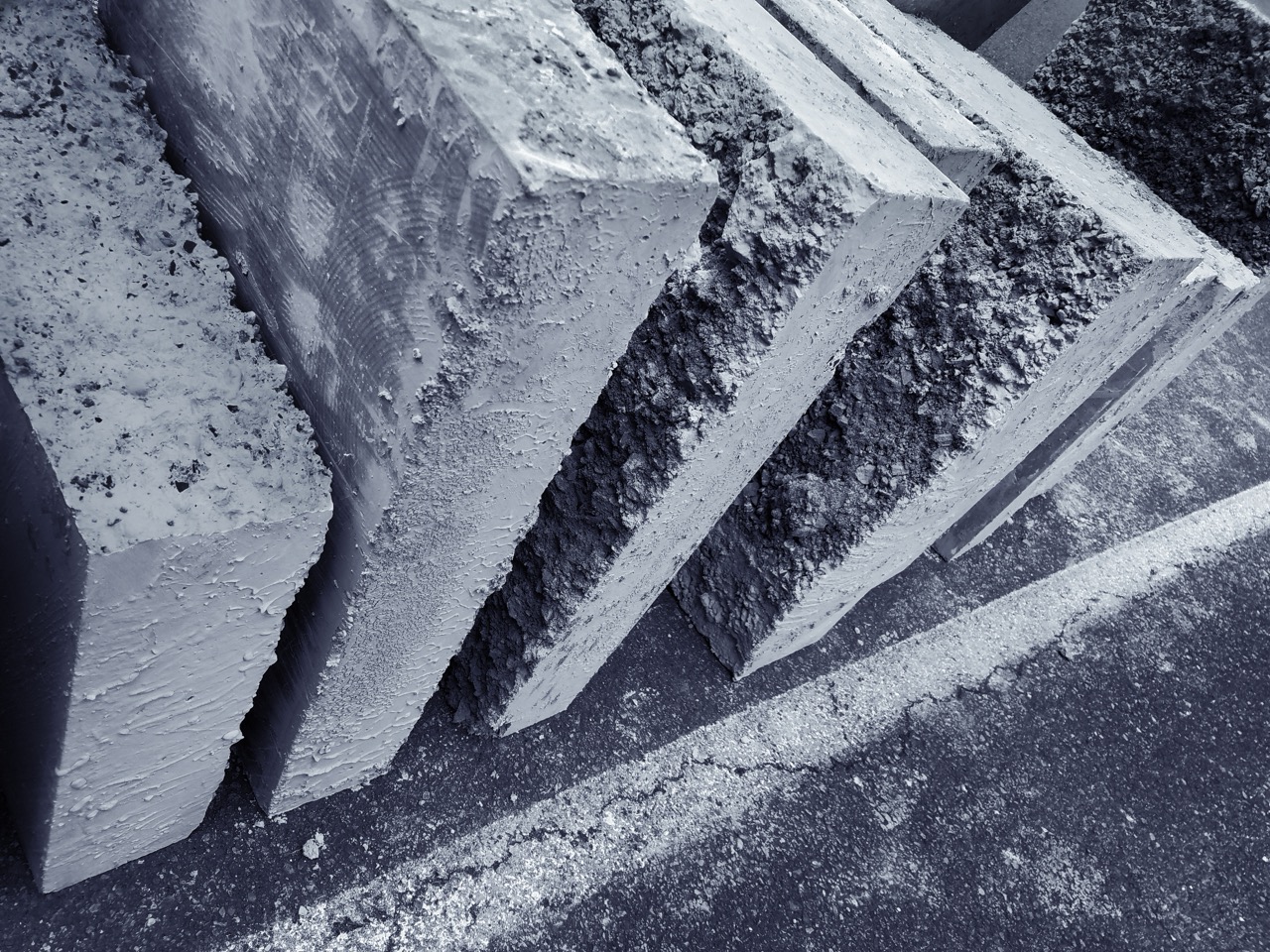
Concrete is naturally porous. Even well-designed concrete contains a network of capillary pores and other microscopic pathways that can allow water and dissolved substances to move through the cementitious matrix. If permeability is too high, moisture can penetrate deeper into the concrete, potentially contributing to durability problems, reinforcement corrosion, freeze-thaw damage, and deterioration in water-exposed environments.
A waterproof concrete additive is used as part of the concrete mix to reduce water movement through this pore network. Depending on its chemistry, the additive may block or refine pores, reduce capillary absorption, create water-repellent surfaces within pores, or promote reactions that form additional solid material in available pathways. These products are one category within the broader types of admixtures in concrete, which also include water reducers, accelerating admixtures, retarding admixtures, air-entraining admixtures, and corrosion-inhibiting admixtures, each designed to modify specific concrete properties.
The effectiveness of waterproofing does not depend on the additive alone. Water-cement ratio, cementitious materials, aggregate grading, compaction, curing, cracking, joint detailing, and application conditions all influence the final permeability of concrete. Selecting the appropriate admixture technology and combining it with good concrete mix design and construction practices is therefore essential for achieving consistent water resistance and long-term durability.
What Is Concrete Permeability?
Concrete permeability describes how easily fluids can move through interconnected pores and pathways within the hardened concrete.
Concrete contains different types of voids, including:
- Capillary pores
- Gel pores
- Entrapped air voids
- Entrained air voids
- Microcracks
- Interconnected pore channels
Not every pore contributes equally to water movement. Large, connected capillary pathways are generally more important for fluid transport than very small isolated pores.
When the pore network is highly connected, water can move more easily under pressure or through capillary absorption. Reducing pore connectivity and refining the pore structure can therefore reduce permeability.
How Does a Waterproof Concrete Additive Work?
Different waterproofing technologies use different mechanisms. A concrete waterproof admix may work by physically blocking pores, modifying the surface of pores, reacting within the cementitious matrix, or reducing the amount of free water needed to achieve a particular workability.
The main mechanisms include:
- Pore blocking
- Pore refinement
- Hydrophobic action
- Crystalline formation
- Reduction of water demand
- Reduction of capillary connectivity
The actual mechanism depends on the formulation and chemistry of the waterproofing product.
1. Pore Blocking Reduces Water Pathways
One approach to admixture waterproofing is to reduce the number or size of pathways available for water movement.
A pore-blocking material can occupy or partially obstruct capillary channels within the cement paste. When these pathways become narrower or less interconnected, water has greater difficulty passing through the concrete.
This can be particularly useful where the objective is to reduce water absorption and fluid transport through the hardened matrix.
However, pore blocking should not be interpreted as making every pore completely inaccessible. Concrete remains a porous material, and performance depends on the overall pore structure.
2. Pore Refinement Reduces Connectivity
Water movement depends not only on the total amount of porosity but also on the size and connectivity of pores.
During cement hydration, the cementitious matrix develops a complex structure. Appropriate mix design and curing can produce a denser matrix with fewer continuous pathways.
Some waterproofing admixtures support this effect by contributing to pore refinement or modifying the microstructure of the cement paste.
A simplified relationship can be understood as:
Lower connected capillary porosity → fewer continuous water pathways → lower permeability
This is why waterproofing admixture selection should be considered together with concrete mix design rather than as an isolated chemical treatment.
3. Hydrophobic Action Limits Water Absorption
Some waterproofing technologies work by making pore surfaces less attractive to water.
Hydrophobic components can modify the internal surfaces of pores so that water does not readily wet and spread across them. This can reduce capillary water absorption.
This mechanism differs from physically filling the pores. The pore may still exist, but its interaction with liquid water is changed.
Hydrophobic additives can therefore be useful where reducing moisture absorption is an important performance requirement.
4. Crystalline Reactions Can Block Capillary Pathways
Certain cementitious waterproofing systems use reactive chemicals that interact with components in the cement matrix and moisture to form insoluble crystalline products.
These products can develop within available pores and capillary pathways. As the pathways become partially filled or obstructed, water movement can be reduced.
Crystalline technology is only one category of waterproofing admixture. It should not be treated as representative of every waterproof concrete additive because different formulations rely on different mechanisms.
5. Water Reduction Can Improve Concrete Density
Some admixture technologies can reduce the amount of mixing water required to achieve a target workability.
A lower water-cement ratio can generally produce a denser cement paste after adequate hydration and curing. A denser cementitious matrix can have fewer interconnected capillary pathways.
This creates an important connection between water reducing admixtures and concrete permeability.
However, a water reducer is not automatically a waterproofing admixture. Its primary function may be workability and water reduction rather than direct waterproofing. Whether it contributes to improved resistance to water penetration depends on the specific product, dosage, concrete mixture, and resulting microstructure.
Waterproofing Additive Mechanisms Compared
| Mechanism | Main Effect | Potential Contribution |
| Pore blocking | Obstructs capillary pathways | Reduces fluid movement |
| Pore refinement | Reduces or modifies connected pores | Lowers permeability |
| Hydrophobic action | Changes pore-water interaction | Reduces capillary absorption |
| Crystalline formation | Produces insoluble material within pathways | Restricts water movement |
| Water reduction | Reduces mixing-water demand | Can produce a denser matrix |
| Microstructure modification | Changes cement-paste structure | Can improve resistance to fluid transport |
Why Water-Cement Ratio Matters
The water-cement ratio is one of the most important factors affecting concrete permeability.
Excess mixing water is not all consumed by cement hydration. As concrete hardens and dries, some of this water can leave behind capillary spaces.
A mixture with a high water-cement ratio can therefore develop a more connected capillary pore system than a properly proportioned low-water mixture.
For this reason, adding a waterproofing admixture to a poorly designed concrete mixture cannot automatically compensate for excessive water, inadequate compaction, or poor curing.
A waterproofing strategy should consider:
- Water-cement ratio
- Cementitious content
- Supplementary cementitious materials where appropriate
- Aggregate grading
- Admixture compatibility
- Mixing procedure
- Compaction
- Curing
- Crack control
- Joint detailing
How Water Penetrates Concrete
Water can enter concrete through several mechanisms.
Pressure-Driven Flow
When concrete is exposed to hydrostatic pressure, water can move through interconnected pores and cracks from a high-pressure region toward a lower-pressure region.
This is particularly relevant for:
- Underground structures
- Water-retaining structures
- Tunnels
- Foundations
- Basements
- Reservoirs
Capillary Absorption
Concrete can also absorb water without external hydraulic pressure.
Small capillary pores can draw liquid water into the material. The rate of absorption depends on factors such as pore structure, moisture condition, surface characteristics, and concrete composition.
Diffusion
Water and dissolved substances can also move through the cementitious matrix by diffusion. This process becomes particularly important when considering the transport of aggressive substances such as dissolved salts.
Reducing pore connectivity can help limit the movement of fluids and dissolved substances through concrete.
Waterproof Concrete Additive vs Surface Waterproofing
Integral waterproofing additives and surface-applied waterproofing systems operate differently.
| Factor | Integral Waterproofing Additive | Surface Waterproofing |
| Location | Mixed into concrete | Applied to concrete surface |
| Main target | Internal pore structure or water interaction | Surface barrier |
| Application stage | During concrete production | Before or after curing |
| Coverage | Incorporated throughout the mix | Limited to treated surfaces |
| Main consideration | Mix compatibility and dosage | Surface preparation and coating performance |
| Crack limitation | Does not eliminate structural cracking | Performance depends on coating system and substrate |
In some projects, integral waterproofing and surface protection can be used as complementary measures rather than competing solutions.
Where Waterproof Concrete Additives Are Used
A waterproof concrete admixture may be considered for concrete exposed to moisture or water pressure.
Common applications include:
Foundations and Basements
Below-grade structures can experience prolonged exposure to groundwater and soil moisture. Reducing concrete permeability can form part of a broader waterproofing strategy.
Water Tanks and Reservoirs
Water-retaining structures require careful control of water movement through the concrete and through cracks and joints.
Tunnels and Underground Structures
Tunnels can face groundwater pressure and moisture exposure over long service periods. Concrete mix design, waterproofing systems, drainage, joints, and crack control all need to work together.
Retaining Walls
Retaining structures may be exposed to soil moisture and water pressure. Waterproofing admixtures can be considered alongside drainage and structural detailing.
Marine and Water-Exposed Concrete
Structures exposed to persistent moisture can benefit from concrete designed for low permeability and appropriate durability.
Factors That Affect Waterproofing Performance
Selecting a waterproofing admixture is only one part of achieving low-permeability concrete.
Concrete Mix Design
The cementitious system, aggregate proportions, water-cement ratio, and admixture combination influence the resulting pore structure.
Admixture Dosage
Too little product may not deliver the intended performance, while excessive dosage can affect workability, setting, air content, or other concrete properties depending on the chemistry.
The manufacturer’s technical documentation and project-specific testing should determine the appropriate dosage.
Cement and Admixture Compatibility
Different cement types and cementitious materials can respond differently to admixtures.
Compatibility should be evaluated before large-scale production, particularly when multiple admixtures are being used.
Mixing and Dispersion
The additive needs to be properly incorporated into the concrete mixture. Poor dispersion can create inconsistent performance.
Compaction
Entrapped air and poorly compacted concrete can create additional pathways for water penetration.
Proper placement and consolidation are therefore essential.
Curing
Adequate curing allows cement hydration to continue and supports development of the hardened cementitious matrix.
Poor curing can negatively affect surface quality and permeability even when an appropriate waterproofing admixture has been selected.
Cracks and Joints
A low-permeability concrete matrix cannot compensate for large cracks, poorly detailed construction joints, or uncontrolled water pathways.
Waterproofing design should therefore address:
- Construction joints
- Expansion joints
- Cracks
- Penetrations
- Formwork connections
- Cold joints
- Pipe penetrations
How to Select a Waterproof Concrete Additive
A practical selection process should begin with the required performance rather than simply choosing a product labeled “waterproof.”
Define the Exposure Condition
Determine whether the concrete will experience:
- Intermittent moisture
- Continuous water exposure
- Hydrostatic pressure
- Groundwater
- Marine exposure
- Water-retaining conditions
- Freeze-thaw exposure
- Chemical exposure
Define the Required Performance
Consider whether the primary requirement is:
- Reduced permeability
- Reduced capillary absorption
- Water repellency
- Improved durability
- Reduced water ingress
- Compatibility with other admixtures
- Maintenance of workability
Evaluate Product Chemistry
Identify whether the product works through:
- Hydrophobic modification
- Pore blocking
- Crystalline reaction
- Water reduction
- Other microstructural mechanisms
The chemistry should be compatible with the intended concrete system.
Conduct Trial Mixes
Laboratory or field trial mixes can help evaluate:
- Slump or workability
- Setting time
- Air content
- Compressive strength
- Water absorption
- Permeability
- Compatibility with other admixtures
- Hardened concrete performance
For industrial applications, performance should be verified under conditions representative of the actual project.
Common Mistakes When Using Waterproofing Admixtures
Several mistakes can reduce the effectiveness of an otherwise suitable product.
Using the Additive Without Mix Optimization
A waterproofing additive cannot replace proper concrete proportioning.
Increasing Dosage Without Testing
More additive does not necessarily mean better waterproofing. Excessive dosage can alter other concrete properties.
Ignoring Cracks
Water can bypass the low-permeability matrix through cracks and poorly sealed joints.
Poor Curing
Insufficient curing can prevent the concrete from developing its intended hardened structure.
Mixing Incompatible Admixtures
Multiple chemical admixtures should be evaluated for compatibility before production.
Treating Waterproofing as a Single-Product Solution
Durable water resistance normally requires a system that considers concrete quality, admixture technology, structural design, joints, drainage, curing, and construction quality.
Waterproof Concrete Additive Testing
Performance should be evaluated using appropriate test methods rather than relying only on product descriptions.
Depending on the project, testing may examine:
- Water penetration
- Water absorption
- Sorptivity
- Permeability
- Compressive strength
- Flexural performance
- Setting characteristics
- Air content
- Workability
- Durability indicators
The appropriate test method depends on the project specification and the property that needs to be demonstrated.
Standards such as ASTM C494 classify certain chemical admixtures according to their primary performance characteristics, but a waterproofing requirement should be matched to the relevant project specification and test method rather than assuming that one admixture classification alone defines waterproofing performance.
Role of Concrete Admixtures in Modern Waterproofing
The wider concrete admixtures sector includes water reducers, accelerating admixtures, retarding admixtures, air-entraining agents, corrosion inhibitors, and other specialty technologies.
Waterproofing additives represent one part of this broader chemical admixture field.
In practical concrete production, several technologies may work together. For example, a water reducer can help achieve the required workability at a lower water-cement ratio, while a dedicated waterproofing admixture can provide an additional mechanism for limiting water absorption or penetration.
The combination should always be evaluated through compatible mix designs and trial testing.
How Waterproof Concrete Additives Support Durability
Reducing water penetration can have benefits beyond keeping visible water out of concrete.
Lower fluid transport can help reduce the movement of dissolved substances through the cementitious matrix. Depending on exposure conditions, this can contribute to improved resistance against processes associated with moisture and aggressive chemical ingress.
For reinforced concrete, limiting moisture and aggressive ion transport can be an important part of durability design because reinforcement corrosion requires suitable environmental conditions.
However, waterproofing admixtures should not be presented as a complete corrosion-protection solution. Reinforcement cover, concrete quality, crack control, exposure conditions, and corrosion-control measures also influence durability.
Practical Checklist for Waterproof Concrete Additive Selection
Before using an additive, engineers and concrete producers should review:
- Required water-resistance performance
- Exposure and hydrostatic pressure
- Concrete grade and mix design
- Water-cement ratio
- Cement and supplementary cementitious materials
- Admixture chemistry
- Recommended dosage
- Compatibility with other admixtures
- Workability requirements
- Setting characteristics
- Curing conditions
- Crack and joint control
- Relevant performance testing
- Manufacturer technical documentation
- Trial-mix results
Frequently Asked Questions
What does a waterproof concrete additive do?
A waterproof concrete additive is incorporated into concrete to reduce water absorption or movement through the cementitious matrix. Depending on its chemistry, it may block pores, refine pore pathways, create hydrophobic effects, form crystalline products, or contribute indirectly through water reduction.
Does a waterproofing admixture make concrete completely waterproof?
No. An admixture can reduce permeability or water penetration, but it does not guarantee that concrete will be completely impermeable. Cracks, joints, penetrations, poor curing, inadequate compaction, and excessive water-cement ratio can still create pathways for water.
What is the difference between a waterproof concrete additive and a water reducer?
A water reducer is primarily designed to reduce mixing-water demand while maintaining required workability. A waterproofing additive is formulated to provide resistance to water absorption or penetration through a specific mechanism. Some products can provide overlapping benefits, but their functions should not be assumed to be identical.
Can waterproofing admixture be used with other concrete admixtures?
In many concrete systems, multiple admixtures can be used together, but compatibility must be evaluated. Cement chemistry, dosage, mixing sequence, setting behavior, air content, and workability can all be affected by combining products.
Does reducing the water-cement ratio improve waterproofing?
A properly controlled lower water-cement ratio can contribute to a denser cementitious matrix and lower connected capillary porosity. However, the final performance also depends on hydration, curing, compaction, cracking, and overall mix design.
Where are waterproof concrete admixtures commonly used?
They can be considered for foundations, basements, tunnels, retaining structures, water-retaining structures, underground facilities, and other concrete exposed to moisture or water pressure.
How should a waterproof concrete additive be tested?
Testing should reflect the required project performance. Depending on the application, evaluation can include water penetration, absorption, sorptivity, permeability, strength, workability, setting time, and compatibility with other admixtures. Project specifications and applicable standards should determine the final testing program.
Conclusion
Water penetration in concrete is strongly influenced by the size, connectivity, and distribution of pores within the cementitious matrix. A waterproof concrete additive can reduce permeability through several mechanisms, including pore blocking, pore refinement, hydrophobic action, crystalline formation, and, in some cases, reduced water demand.
The best results come from treating waterproofing as part of the complete concrete design. Appropriate water-cement ratio, material compatibility, mixing, compaction, curing, crack control, joint detailing, and performance testing all contribute to the final resistance to water ingress.
For manufacturers and construction professionals, the important question is not simply whether an additive is labeled waterproof. The more useful evaluation is how the product changes water transport, whether that mechanism suits the exposure condition, and whether the resulting concrete meets the required performance criteria. Luke Chemicals can position its waterproofing and concrete admixture expertise within this broader performance-based approach.