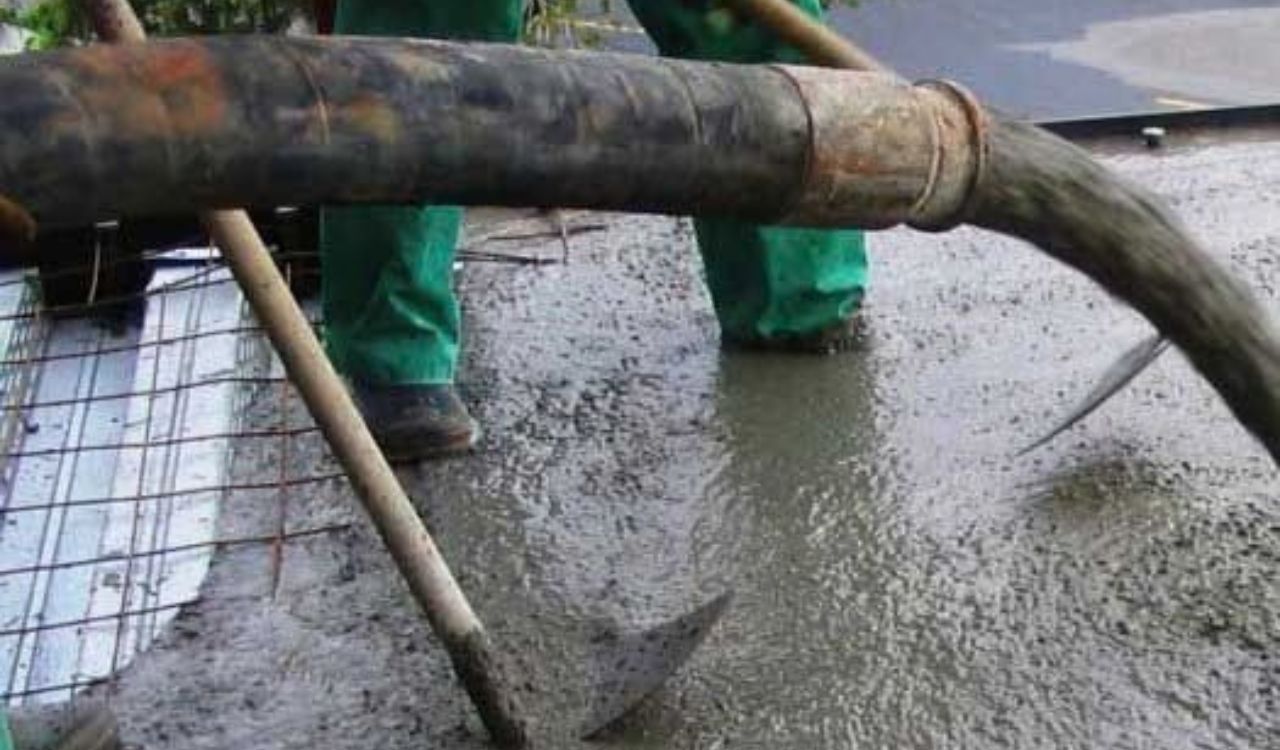
Pumping allows fresh concrete to be transported through pipelines and placed at locations that may be difficult to reach with conventional discharge methods. However, concrete must have the right combination of flowability, cohesion, stability, and rheological behavior to move through the pipeline without excessive pressure or blockage.
A concrete mix can appear workable before pumping and still behave differently after passing through the pump and delivery line. Research on real-scale pumping has shown that concrete rheological properties can change during pumping because of pressure, shearing, aggregate moisture effects, and additional mixing inside the pump.
As concrete admixture factory trends increasingly focus on more efficient water reduction, longer workability retention, and better control of fresh-concrete rheology, admixture selection is becoming more closely connected to the specific pumping conditions and mix design. This is why admixtures for pumped concrete should be selected as part of the complete mix design. High-range water reducers can provide flow without unnecessarily increasing water content, while viscosity-modifying technologies can help improve cohesion and reduce bleeding or segregation when the mix requires additional stability.
What Is Pumped Concrete?
Pumped concrete is concrete transported from a mixer or delivery vehicle through a pump and pipeline to the placement location.
The system may include:
- Concrete pump
- Hopper
- Pump cylinders
- Delivery pipeline
- Bends and elbows
- Couplings
- Flexible hose
- Placing boom
- Discharge point
The concrete must remain sufficiently homogeneous while moving through the entire system.
The types of admixtures in concrete used for pumped applications can influence these properties in different ways. Water reducers and superplasticizers improve flowability without requiring excessive additional water, while viscosity-modifying and other specialty admixtures can help control cohesion, segregation, setting, and workability retention. The appropriate admixture combination depends on the concrete composition and pumping conditions.
ACI guidance on placing concrete by pumping emphasizes the importance of mixture proportioning, aggregate grading, cementitious materials, admixtures, trial mixtures, pipeline configuration, and consistent production.
Why Does Concrete Pressure Increase During Pumping?
The pump must overcome resistance as concrete moves through the delivery system.
Several factors contribute to pumping pressure and pressure loss:
- Concrete yield stress
- Plastic viscosity
- Pipe diameter
- Pumping rate
- Pipeline length
- Number of bends and elbows
- Vertical lifting height
- Aggregate characteristics
- Concrete temperature
- Lubricating layer at the pipe wall
- Mix stability
- Changes in concrete rheology during pumping
Research has demonstrated that pumping pressure can be related to concrete rheology, flow rate, pipe diameter, and the properties of the lubricating layer between the concrete and pipe wall.
This means that simply increasing admixture dosage is not always the solution to high pressure. The complete mixture and pumping system need to be evaluated.
How Admixtures Improve Pumpability
Admixtures can influence the fresh concrete properties that determine how easily the material moves through a pump line.
The main mechanisms include:
Reducing Water Demand
High-range water-reducing admixtures can increase concrete flowability while allowing the mixture to maintain a controlled water-to-binder ratio.
This is important because simply adding water to make concrete easier to pump can increase the risk of bleeding, segregation, strength loss, and durability problems.
Improving Particle Dispersion
Superplasticizers disperse cement particles and improve paste flow. This can reduce internal resistance while maintaining the desired concrete consistency.
Controlling Cohesion
A pumpable mixture needs enough cohesion to prevent coarse aggregate from separating from the mortar phase.
When cohesion is insufficient, segregation can create unstable flow and increase the possibility of blockage.
Maintaining Workability
For long-distance pumping or hot-weather placement, the concrete may need to retain its required workability for an extended period.
A suitable slump-retaining admixture can help maintain the required rheological behavior during transportation and placement.
Controlling Segregation and Bleeding
Viscosity-modifying admixtures can be useful where additional stability is required. EFNARC/EFCA guidance specifically identifies VMA applications in pumped concrete as well as SCC and underwater concrete.
Key Admixtures Used in Pumped Concrete
Different pumping conditions require different admixture strategies.
| Admixture type | Main function | Relevance to pumping |
| Water reducer | Reduces water demand | Helps achieve workable concrete at controlled water content |
| Superplasticizer | Provides high flowability | Can reduce resistance to flow |
| PCE superplasticizer | High-range dispersion and workability | Useful for modern high-performance pumpable mixes |
| Slump-retaining admixture | Maintains workability | Useful for long transport and placement times |
| VMA | Increases cohesion and stability | Helps control bleeding and segregation |
| Mineral additions | Modify paste and particle packing | Can influence rheology and pumpability |
The correct combination depends on the cementitious system, aggregates, required workability, pumping distance, temperature, and placement conditions.
PCE Superplasticizers for Pumped Concrete
Polycarboxylate ether (PCE) superplasticizers are widely used in modern concrete because they can provide high water reduction and workability without requiring additional mixing water.
For pumped concrete, PCE selection should consider more than initial slump.
Important characteristics include:
- Water-reduction efficiency
- Initial workability
- Slump retention
- Cement compatibility
- Dispersion behavior
- Temperature sensitivity
- Setting characteristics
- Interaction with mineral additions
- Stability during pumping
Research on superplasticized concrete has found that suitable admixture use can reduce pumping pressure and line pressure compared with control mixtures.
However, excessive superplasticizer can also create problems. Research on pumping has shown that additional mixing and high pressure inside the pump can further activate admixtures, potentially reducing yield stress and viscosity and increasing segregation risk in some high-performance mixtures.
Role of Viscosity Modifying Admixtures
A VMA modifies the rheological behavior of fresh concrete by increasing cohesion and viscosity.
This can be particularly useful when the concrete contains:
- Variable fines content
- Low cementitious content
- Poor aggregate grading
- Difficult aggregate combinations
- High water demand
- A high risk of bleeding or segregation
A VMA should be used carefully because excessive viscosity can make concrete harder to pump.
The objective is to find a balance between:
Low enough resistance for pumping + sufficient cohesion for stability
Commercial pumping admixture technologies similarly target increased internal cohesion and reduced segregation and bleeding in difficult concrete mixtures.
How Concrete Blockages Occur
A blockage occurs when concrete can no longer move normally through the delivery line.
One important mechanism occurs when coarse aggregate separates from the mortar phase, particularly during the beginning of pumping or under unfavorable conditions. ACI-published research on blockage identified several blockage mechanisms and found a relationship between bleeding and blockage tendency.
Potential causes include:
- Excessive bleeding
- Segregation
- Poor aggregate grading
- Insufficient fines
- Excessive coarse aggregate
- Incorrect water content
- Loss of workability
- Inadequate lubrication
- Sudden changes in pipe direction
- Inconsistent material moisture
- Incorrect admixture dosage
- Long pumping distances
- Inadequate priming
A blockage is therefore usually a mix-and-system problem, rather than simply an equipment problem.
Aggregate Grading and Pumpability
Aggregate grading has a major influence on pumpability.
A well-graded aggregate system can improve particle packing and reduce unnecessary voids. The cement paste then has a better chance of providing sufficient lubrication and cohesion.
Poor grading can increase the amount of paste required and may increase the risk of segregation or excessive pressure.
Important aggregate factors include:
- Maximum aggregate size
- Particle-size distribution
- Fine aggregate content
- Aggregate shape
- Surface texture
- Aggregate moisture
- Fine-particle content
ACI guidance specifically identifies aggregate gradation and mixture proportioning as important considerations when selecting proportions for pumpable concrete.
The Lubricating Layer in Concrete Pumping
One of the most important concepts in concrete pumpability is the lubricating layer.
As concrete moves through a pipe, the material immediately next to the pipe wall behaves differently from the bulk concrete. This boundary region can act as a lubricating layer that significantly affects pressure loss and flow.
The properties of this layer depend on the mortar and paste composition.
Research has shown that the rheological properties of the lubricating layer can be used to help predict pumped-concrete flow behavior.
This explains why two concrete mixes with similar slump values can require different pumping pressures.
Common Pumping Problems and Solutions
| Problem | Likely causes | Possible approach |
| High pump pressure | High viscosity, poor grading, long line | Optimize rheology and pipeline configuration |
| Pipeline blockage | Segregation, bleeding, aggregate separation | Improve cohesion and aggregate grading |
| Rapid slump loss | Temperature, cement/admixture compatibility | Evaluate PCE and retention system |
| Excessive bleeding | High water content, insufficient fines | Adjust water and paste balance |
| Segregation | Excessive flow, poor cohesion | Adjust PCE, VMA, fines, and aggregate system |
| Poor pumping rate | High yield stress or excessive viscosity | Optimize rheology |
| Inconsistent performance | Variable aggregate moisture or material properties | Improve production control |
Pumped Concrete Mix Design Considerations
A pumpable concrete mixture should be developed around the actual pumping conditions.
Pumping Distance
Long pipelines create more opportunity for pressure loss and rheological changes.
Pumping Height
Vertical pumping introduces additional pressure requirements and should be considered during system planning.
Pipe Diameter
Smaller pipelines can produce higher resistance depending on the concrete and pumping conditions.
Pumping Rate
Increasing flow rate can increase pressure requirements. The appropriate rate depends on the concrete rheology and pumping system.
Aggregate Size
The aggregate size should be compatible with the pipe diameter, reinforcement conditions, and mixture proportions.
Paste Volume
Adequate paste is needed to coat aggregate particles and support movement through the pipeline.
Cementitious Materials
Cement, supplementary cementitious materials, and mineral fillers can significantly affect viscosity, water demand, and stability.
Admixture Compatibility
The interaction between cementitious materials and chemical admixtures should be verified through trial mixtures.
Best Practices for Pumped Concrete
Use Trial Mixes
Test the complete mixture before large-scale placement.
Measure Workability Retention
If the concrete will travel for an extended period, evaluate consistency at realistic transport times.
Monitor Aggregate Moisture
Small changes in aggregate moisture can significantly affect effective water content.
Avoid Overdosing Superplasticizer
Use enough admixture to meet the required performance without creating excessive flow or instability.
Maintain Consistent Mixing
Adequate mixing time and intensity are important for activating and distributing chemical admixtures uniformly.
Check the Pipeline
Inspect couplings, bends, reducers, hoses, and other components before pumping.
Prime the Pumping System Correctly
Priming helps establish appropriate conditions inside the pipeline before the main concrete flow begins. Poor priming can contribute to blockage, particularly during startup.
Clean the Pipeline After Placement
Residual concrete can harden inside the line and create restrictions for subsequent pumping operations.
Admixture Storage and Production Control
Admixture performance depends not only on formulation but also on proper handling.
For powder products, moisture exposure can cause caking and affect handling. For liquid admixtures, storage temperature and container condition should be controlled according to the product’s technical documentation.
Where plants use automated concrete additive storage sensors monitoring, these systems can help track storage conditions such as temperature or other operational parameters. Such monitoring is a production-control measure rather than a substitute for concrete testing.
Applications of Pumped Concrete
Pumped concrete is commonly used where concrete needs to be transported vertically, horizontally, or into locations that are difficult to access directly.
Applications include:
- High-rise buildings
- Bridges
- Tunnels
- Foundations
- Deep excavations
- Large slabs
- Industrial structures
- Infrastructure projects
- Precast and specialized construction
- Heavily reinforced structural elements
Long-distance and high-rise pumping make rheology control particularly important because the concrete must maintain adequate stability while moving through an extended delivery system.
How Luke Chemicals Admixtures Can Support Pumpable Concrete
Luke Chemicals supplies PCE-based concrete admixture technologies designed to improve water reduction, flowability, and workability in cementitious systems. Its product range includes VF530, VF560, VF570, and other polycarboxylate-based products, with final selection and dosage dependent on the specific concrete formulation and performance requirements.
For pumped concrete, the important consideration is not choosing an admixture based only on its water-reduction rate. The selected product should be tested with the actual cement, aggregates, mineral additions, water content, pumping distance, temperature, and required workability-retention period.
Limitations of Using Admixtures for Pumpability
Admixtures can improve concrete performance, but they cannot correct every underlying mix-design problem.
Potential limitations include:
- Poor aggregate grading cannot always be corrected by increasing admixture dosage.
- Excessive water can still cause segregation.
- Excessive PCE can create excessive flow or reduce stability.
- Excessive VMA can increase viscosity and pumping resistance.
- Incompatible cement and admixture combinations can cause unpredictable slump behavior.
- Long pumping distances may still require changes to the mix and equipment.
- Pumping pressure depends on both concrete properties and pipeline configuration.
Therefore, admixtures should be viewed as one part of a complete pumpability strategy.
Frequently Asked Questions
What admixtures are best for pumped concrete?
High-range water reducers, particularly PCE-based superplasticizers, are commonly used to achieve flowability while controlling water content. A VMA or other workability/stability technology may be considered when additional cohesion or segregation resistance is required.
Can admixtures reduce concrete pump pressure?
Yes, an appropriately selected admixture can improve rheology and reduce resistance to flow. Research has demonstrated lower pumping and line pressures for some superplasticized concrete mixtures compared with control mixtures. However, the effect depends on the complete mix and pumping conditions.
What causes concrete pump blockages?
Common causes include segregation, bleeding, poor aggregate grading, excessive coarse aggregate, loss of workability, inadequate lubrication, improper priming, and unsuitable pumping conditions. Blockage research has particularly linked bleeding and aggregate separation with blockage risk.
Does more superplasticizer make concrete easier to pump?
Not necessarily. Increasing superplasticizer can increase flowability, but excessive dosage can reduce viscosity and yield stress enough to increase segregation risk under pumping conditions.
What is the role of VMA in pumped concrete?
A viscosity modifying admixture can improve internal cohesion and help control bleeding and segregation. It can be useful for difficult mixes, but excessive VMA can make concrete too viscous and increase pumping resistance.
Why does concrete slump change after pumping?
Concrete can experience pressure and intense shearing inside the pump, while aggregate moisture and additional mixing can also affect rheology. Consequently, fresh properties measured before pumping may not be identical to those measured after pumping.
How can concrete pump blockages be prevented?
Use a properly proportioned pumpable mix, optimize aggregate grading, control water and admixture dosage, maintain adequate cohesion, monitor aggregate moisture, prime the line correctly, and validate the mixture under representative pumping conditions.