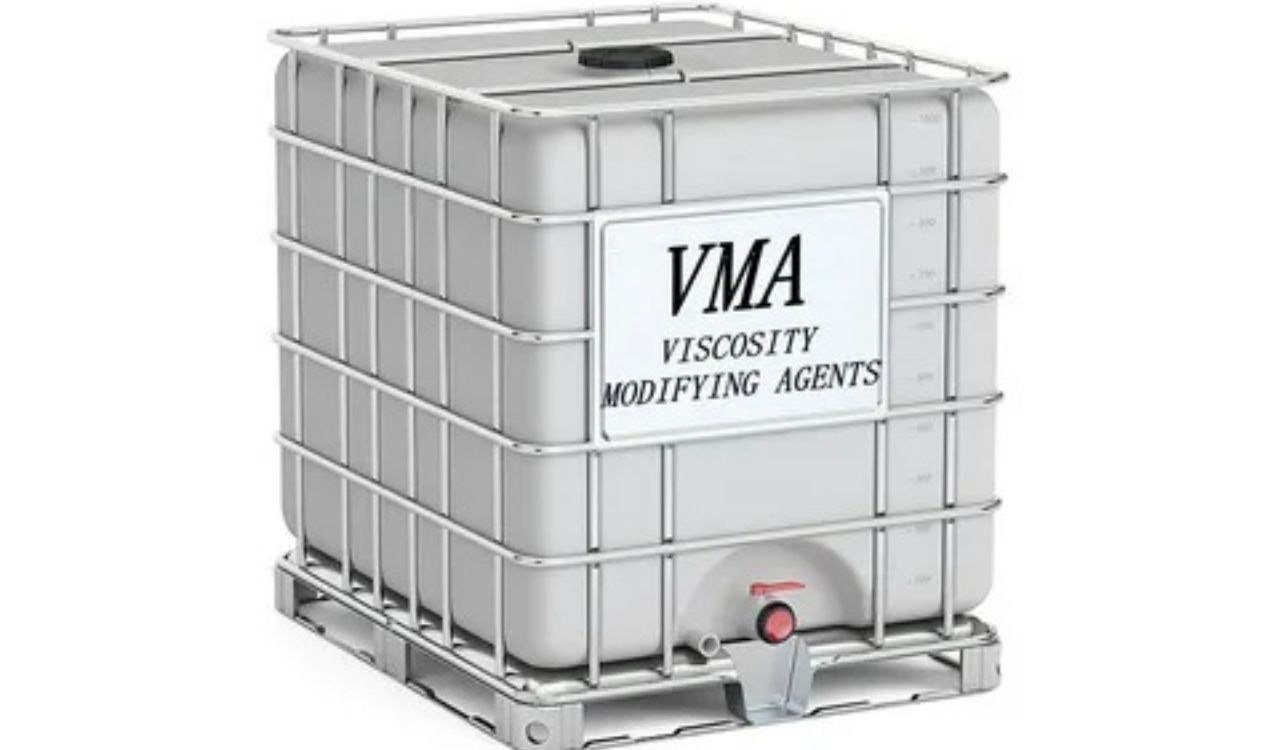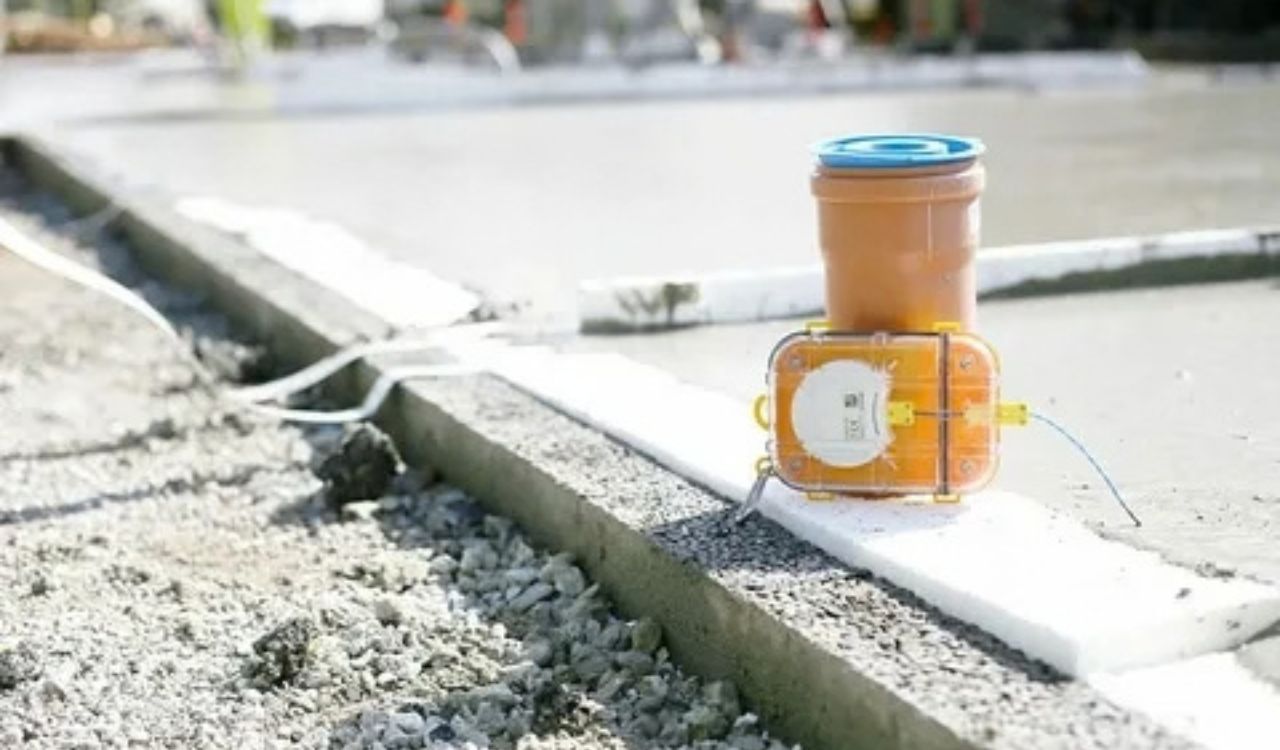
Concrete additives and chemical admixtures are often stored in tanks, containers, silos, bags, or dedicated warehouse areas before they are introduced into a concrete or mortar production process. Maintaining suitable storage conditions is important because changes in temperature, moisture, product level, or handling conditions can affect material management and production reliability.
As concrete production becomes more automated, manufacturers are increasingly using sensors to monitor storage conditions and inventory in real time. Concrete additive storage sensors can provide information about tank levels, temperature, humidity, pressure, and other operating conditions without requiring workers to perform every inspection manually.
This type of monitoring can be particularly useful for manufacturers handling products such as polycarboxylate ether (PCE) superplasticizers, water-reducing admixtures, corrosion inhibitors, waterproofing additives, and other chemical admixtures. Some commercial admixture-management systems already use IoT sensors to monitor tank fill levels and support proactive replenishment.
For concrete producers, the objective is not simply to install more sensors. The objective is to obtain reliable information that helps control inventory, protect stored materials, reduce avoidable interruptions, and maintain consistent production.
What Are Concrete Additive Storage Sensors?
Concrete additive storage sensors are monitoring devices installed on or around storage equipment to measure physical conditions associated with stored concrete additives.
Depending on the storage system, sensors may monitor:
- Material level
- Temperature
- Humidity
- Pressure
- Weight
- Tank condition
- Leakage
- Environmental conditions
- Product movement
- Storage-system status
The information can be displayed locally or transmitted to a centralized monitoring platform. More advanced systems can connect sensors to automated inventory software, plant-control systems, or cloud-based dashboards.
The type of sensor required depends on the physical form of the additive and the storage method.
A liquid water reducing admixture stored in a tank, for example, may require level and temperature monitoring. A powdered PCE superplasticizer stored in bags may require environmental humidity and temperature monitoring rather than a liquid-level sensor.
Why Storage Monitoring Matters for Concrete Additives
Storage is an important part of the supply chain between chemical manufacturing and final concrete production.
A material may meet its technical specification when manufactured, but inappropriate storage can create handling or quality-control problems.
For example, many PCE powder products are sensitive to moisture and are recommended to be stored in dry conditions and protected from humidity. Manufacturer guidance commonly emphasizes moisture protection and controlled temperature for these products.
Liquid admixtures can have different requirements. Some products may need protection against excessive heat, freezing, or other environmental conditions. Storage requirements should therefore always be based on the specific product’s technical data sheet rather than applying one storage rule to every admixture.
Sensors can help operators identify changes in storage conditions before they become larger operational problems.
Main Types of Sensors Used in Additive Storage
Different storage systems require different monitoring technologies.
Level Sensors
Level sensors measure how much liquid or bulk material remains inside a tank, vessel, or silo.
Common technologies include:
- Ultrasonic level sensors
- Radar level sensors
- Hydrostatic level sensors
- Capacitive level sensors
- Load-cell-based measurement
For liquid concrete admixtures, level monitoring can provide a continuous estimate of remaining inventory.
This is useful when an admixture is consumed continuously during concrete production and manual tank inspections would otherwise be required.
Temperature Sensors
Temperature sensors monitor conditions inside storage tanks, warehouses, or surrounding environments.
Temperature can be important for chemical storage because excessive heat or very low temperatures may affect certain products. The acceptable range varies according to the formulation.
For example, Luke Chemicals specifies storage for its VF530 PCE powder in a cool, dry environment between 5°C and 35°C and recommends protecting the product from moisture and excessive pressure.
A temperature sensor can therefore provide an additional layer of monitoring when storage conditions need to be controlled.
Humidity Sensors
Humidity monitoring is particularly relevant for powdered additives.
Moisture can cause some powder products to absorb water, form lumps, or become more difficult to handle. Several PCE powder manufacturers specifically recommend dry storage and protection from moisture.
A humidity sensor can monitor the surrounding warehouse or storage area and generate an alert when conditions exceed a predefined operating range.
Humidity monitoring does not replace sealed packaging or proper warehouse practices, but it can help identify environmental changes.
Pressure Sensors
Pressure sensors can be used where storage systems operate under pressure or where pressure provides useful information about equipment conditions.
In certain liquid-storage systems, pressure measurements can support process monitoring and help identify unusual operating conditions.
Pressure monitoring should be designed according to the storage vessel, chemical properties, and plant engineering requirements.
Weight Sensors and Load Cells
Load cells can estimate the quantity of material by measuring the weight of a tank, hopper, or container.
This approach can be useful for:
- Bulk powder storage
- Liquid tanks
- IBC containers
- Dosing systems
- Batch-production systems
Unlike some level sensors, load cells measure weight directly. This can provide useful inventory information where material density or surface conditions make level measurement less convenient.
Leak Detection Sensors
Leak detection systems can identify unwanted liquid accumulation around storage tanks, pipelines, valves, or dispensing areas.
For chemical storage, early detection can help operators respond more quickly to equipment problems and reduce the potential impact of a leak.
The exact detection technology should be selected according to the stored material and the facility’s safety requirements.
How Sensor-Based Monitoring Works
A basic monitoring system can be understood as a sequence:
Sensor → Measurement → Controller or Gateway → Monitoring Platform → Alert or Action
For example, a liquid admixture tank may use a level sensor to measure the remaining material. The sensor sends the measurement to a controller or communications gateway. The data is then displayed on a plant dashboard.
If the level falls below a predefined threshold, the system can generate an alert.
This creates a more proactive inventory-management process.
Instead of discovering that a tank is almost empty during a manual inspection, an operator can receive an early warning and arrange replenishment before production is affected.
How Sensors Improve Inventory Management
One of the clearest advantages of storage sensors is better visibility of inventory.
Without continuous monitoring, inventory checks may depend on:
- Manual tank measurements
- Visual inspection
- Spreadsheet records
- Production estimates
- Periodic warehouse checks
These methods can work, but they may provide less frequent information.
Sensor-based monitoring can provide near-real-time information about material availability.
Benefits of Automated Inventory Monitoring
A monitoring system can help operators:
- Track remaining stock
- Identify consumption trends
- Set minimum inventory levels
- Detect unusually rapid consumption
- Plan replenishment
- Reduce emergency purchasing
- Coordinate deliveries
- Maintain production continuity
This becomes increasingly useful for facilities handling multiple concrete admixtures with different consumption rates.
Sensors and Automated Replenishment
Inventory monitoring can be connected to purchasing and supply-chain processes.
For example:
- A sensor measures the level of an admixture tank.
- The system records the measurement.
- Inventory falls below the predefined threshold.
- An automated notification is generated.
- The purchasing or operations team reviews the requirement.
- Replenishment is scheduled.
Commercial concrete-admixture monitoring solutions already use IoT-based tank-level monitoring to support proactive ordering and stock management.
The actual replenishment process should still include human verification because sensor data, product requirements, delivery schedules, and production plans all need to be considered.
Monitoring Water-Reducing Admixtures
A water-reducing admixture is commonly used to reduce water demand or improve workability in concrete.
These products may be supplied as liquids, powders, flakes, or other formulations. The storage and monitoring approach therefore depends on the specific product.
For powder-based PCE products, monitoring should focus strongly on:
- Moisture exposure
- Temperature
- Packaging integrity
- Storage duration
- Caking
- Warehouse conditions
For liquid products, monitoring may focus more on:
- Tank level
- Temperature
- Storage duration
- Pump condition
- Pipeline condition
- Agitation where required
- Dispensing accuracy
The manufacturer’s product data sheet should remain the primary reference for storage requirements.
Monitoring PCE Superplasticizer Storage
Polycarboxylate ether, commonly called PCE, is widely used in modern high-performance concrete and dry-mix mortar formulations.
PCE products can be formulated for different performance objectives, including high water reduction, flowability, and slump retention.
Luke Chemicals’ VF530, for example, is a powder-based PCE superplasticizer designed for concrete and dry-mix mortar systems, with storage guidance that includes protection from moisture and excessive pressure. (lukechemicals.com)
VF560 is another PCE powder formulation from Luke Chemicals intended for high-performance concrete and mortar applications, including UHPC and self-compacting concrete. Its product information also specifies controlled storage conditions and protection from moisture and excessive pressure. (lukechemicals.com)
For products such as these, sensors can complement conventional storage controls by helping operators monitor the environment around the material.
Storage Monitoring for Powder Additives
Powdered additives create different monitoring challenges from liquid admixtures.
A warehouse storing bags of PCE powder, for example, does not normally require a liquid-level sensor on each package. Instead, the monitoring system may combine:
- Temperature sensors
- Humidity sensors
- Warehouse environmental monitoring
- Barcode or RFID tracking
- Inventory-management software
- Weight measurement
- Visual inspections
The goal is to identify environmental or inventory conditions that could affect material handling and production planning.
Why Moisture Monitoring Is Important
Many powdered chemical admixtures are hygroscopic or can be affected by moisture exposure.
Moisture can contribute to:
- Caking
- Reduced flowability
- Difficult dosing
- Packaging problems
- Inconsistent handling
PCE powder storage guidance from multiple manufacturers recommends dry conditions and protection from moisture.
Sensor-based humidity monitoring therefore has a practical role in warehouse management.
Storage Monitoring for Liquid Admixtures
Liquid admixtures are often stored in tanks, drums, or IBC containers.
A liquid storage system may include several monitoring points.
| Parameter | Typical monitoring method | Operational purpose |
| Tank level | Radar, ultrasonic, pressure, or load cell | Inventory visibility |
| Temperature | RTD or thermocouple | Storage-condition monitoring |
| Leakage | Leak detector | Early detection of spills |
| Flow | Flow meter | Dispensing verification |
| Pressure | Pressure sensor | Equipment/process monitoring |
| Tank condition | Inspection and instrumentation | Equipment reliability |
Not every installation requires all of these sensors. The system should be designed around the product, tank configuration, plant process, and risk profile.
How Sensors Support Concrete Production
Storage monitoring becomes more valuable when it is connected to the production process.
Concrete batching plants may use admixtures at controlled dosages to achieve specific fresh and hardened concrete properties.
If an admixture tank unexpectedly runs empty, production may be interrupted or the mix design may need to be changed.
If a dispensing system is inaccurate, the actual admixture dosage may differ from the intended dosage.
Monitoring can therefore contribute to process control by providing information about both material availability and equipment operation.
Sensors and Admixture Dosing Accuracy
Storage monitoring and dosing monitoring are related but not identical.
A tank-level sensor tells an operator how much material remains. It does not necessarily prove that the correct quantity is being added to every batch.
For dosing accuracy, a plant may also require:
- Flow meters
- Weighing systems
- Calibrated pumps
- Automated dosing controls
- Batch records
- Equipment calibration
Combining storage-level data with dispensing information can provide a more complete view of admixture usage.
For example, a significant difference between expected and measured consumption may indicate:
- A leak
- A calibration issue
- Incorrect dosing
- Inventory-record errors
- Unexpected production demand
Benefits of Concrete Additive Storage Sensors
Sensor-based storage monitoring can provide several operational advantages.
Better Inventory Visibility
Operators can see current material levels without relying entirely on manual inspection.
Earlier Replenishment
Low-level alerts can provide additional time to arrange deliveries.
Reduced Manual Inspection
Routine measurements can be automated, allowing personnel to focus on other plant activities.
Better Storage-Condition Control
Temperature and humidity monitoring can help identify environmental conditions outside the desired range.
Improved Production Planning
Historical consumption data can help plants understand how quickly different additives are being used.
Faster Response to Abnormal Conditions
Alerts can notify operators when tank levels, temperature, humidity, or other parameters change unexpectedly.
Better Record Keeping
Digital measurements can create a historical record that can be reviewed during inventory checks, maintenance, and quality investigations.
Applications Across Concrete and Construction Chemical Facilities
Sensor systems can be used in several types of operations.
Ready-Mix Concrete Plants
Ready-mix facilities may consume significant quantities of liquid admixtures. Tank-level monitoring can help prevent unexpected material shortages.
Precast Concrete Plants
Precast facilities often operate controlled production schedules. Reliable admixture availability can support consistent batching and production planning.
Dry-Mix Mortar Manufacturers
Powder additives require particular attention to moisture and warehouse conditions. Environmental sensors can provide continuous monitoring.
Construction Chemical Manufacturers
Manufacturers producing admixtures for concrete may use sensors throughout raw-material storage, production, intermediate storage, and finished-product handling.
Distribution Warehouses
Distributors can combine environmental monitoring with digital inventory systems to manage multiple products and storage locations.
Sensors for Specialty Chemical Storage
Concrete admixtures are part of a wider specialty-chemical supply chain.
A facility may handle polymers, mineral additives, accelerators, corrosion inhibitors, waterproofing materials, and other specialty chemical manufacturing raw material inputs.
The monitoring strategy should therefore account for the characteristics of each material.
A temperature sensor suitable for one product may not be sufficient for another. Likewise, a level sensor designed for a low-viscosity liquid may not perform well with a different chemical.
Sensor selection should consider:
- Chemical compatibility
- Temperature range
- Measurement range
- Accuracy
- Installation method
- Cleaning requirements
- Communication protocol
- Environmental conditions
- Maintenance requirements
Sensor Selection Factors
Choosing a sensor is not simply a matter of selecting the most advanced technology.
Material Properties
Consider viscosity, density, conductivity, particle size, moisture sensitivity, and other characteristics.
Storage Configuration
The sensor required for a vertical storage tank may differ from one used on an IBC, silo, hopper, or warehouse.
Required Accuracy
Inventory management may tolerate a different measurement accuracy from automated dosing.
Environmental Conditions
Outdoor tanks may experience temperature changes, rain, dust, and sunlight that indoor systems do not encounter.
Communication Requirements
Plants may use wired communication, wireless networks, industrial protocols, or cloud-connected systems.
Maintenance
Sensors require inspection, calibration, cleaning, and replacement according to the application.
Limitations of Sensor-Based Storage Monitoring
Sensors can improve visibility, but they are not a replacement for good storage management.
Sensor Failure
A damaged, contaminated, incorrectly installed, or poorly calibrated sensor can provide inaccurate information.
Installation Costs
A complete monitoring system may require sensors, wiring, controllers, communications equipment, software, and installation.
False Alerts
Incorrect thresholds or poor sensor configuration can produce unnecessary alarms.
Connectivity Problems
Wireless or cloud-connected systems depend on reliable communications.
Calibration Requirements
Measurement devices should be checked according to their application and manufacturer’s recommendations.
Product-Specific Requirements
Sensors cannot compensate for unsuitable storage conditions. If a product requires dry storage, for example, the facility still needs appropriate packaging, ventilation, environmental control, and handling procedures.
Best Practices for Concrete Additive Storage Monitoring
A practical monitoring program should combine technology with standard operating procedures.
1. Identify Critical Storage Parameters
Determine whether each product requires monitoring of:
- Level
- Temperature
- Humidity
- Pressure
- Weight
- Leakage
- Storage duration
2. Match the Sensor to the Material
Consider the physical and chemical properties of the product before selecting measurement technology.
3. Establish Alert Thresholds
Set practical minimum and maximum values based on product documentation and facility requirements.
4. Calibrate and Inspect Sensors
Regular verification helps maintain confidence in measurement data.
5. Keep Manual Checks
Automated monitoring should complement, not necessarily eliminate, physical inspections.
6. Record Historical Data
Trend data can help identify changes in consumption, storage conditions, or equipment performance.
7. Integrate Inventory With Procurement
Where appropriate, connect low-stock alerts with purchasing workflows.
8. Review Sensor Data Regularly
Monitoring only creates value when the information is reviewed and acted upon.
How Sensor Data Can Improve Preventive Maintenance
Sensor information can also support maintenance planning.
Suppose a plant notices that an admixture tank is losing material faster than expected. The discrepancy could indicate increased production demand, a dosing issue, or a possible leak.
Similarly, an unusual temperature trend could indicate a problem with the storage environment or equipment.
Historical sensor data can help maintenance teams compare current conditions with normal operating patterns.
This moves maintenance from purely reactive inspection toward more data-supported preventive maintenance.
Sensors and Quality Control
Storage monitoring can contribute to quality management, but it should not be confused with laboratory quality testing.
Quality control for concrete admixtures may involve testing characteristics such as:
- Appearance
- Moisture content
- Solid content
- Density
- pH
- Chloride content
- Water-reduction performance
- Compatibility
- Slump retention
The exact tests depend on the product.
Sensors provide operational information about storage and handling, while laboratory testing determines whether the material meets relevant specifications.
Both functions can work together.
Regional Relevance to Concrete Admixture Supply
The need for reliable storage and inventory management becomes more significant as construction chemical supply chains become larger and more distributed.
The China concrete superplasticizer market includes manufacturers and suppliers serving domestic and international concrete and dry-mix applications. Products may move through manufacturing facilities, warehouses, ports, distributors, and concrete plants before reaching their final application.
Similarly, growth in construction and infrastructure activity contributes to demand for admixture technologies in markets such as India. The India cement admixtures market includes products designed to improve concrete workability, strength, durability, setting behavior, and other performance characteristics.
For suppliers operating across international markets, digital inventory monitoring can help coordinate material availability between manufacturing and distribution locations.
Monitoring Other Concrete Additives
Storage sensors are not limited to water reducers or PCE products.
Facilities may also monitor materials associated with:
- Corrosion protection
- Waterproofing
- Expansion control
- Shrinkage reduction
- Air entrainment
- Setting acceleration
- Setting retardation
- Slump retention
A calcium nitrite corrosion inhibitor alternative, for example, would still need storage and handling requirements based on its specific chemical formulation rather than being treated like a conventional water reducer.
The same principle applies when selecting the best waterproofing admixture for concrete or a plaster waterproofing additive. Product-specific technical documentation should determine the required storage conditions and monitoring approach.
How Luke Chemicals Approaches Admixture Storage and Product Handling
Luke Chemicals supplies different forms of construction chemical products, including PCE powders, water-reducing flakes, slump-retaining products, and waterproofing admixtures.
For example, Luke Chemicals’ VF160 is a polycarboxylate water-reducing flake intended for concrete applications, while VF1000 is a powder-based slump-retaining product for cement-based systems. Their published product information provides specific storage and handling guidance, illustrating why storage controls need to be matched to the individual formulation.
For manufacturers and industrial buyers, this distinction is important: monitoring equipment should support the storage requirements of the actual product rather than being selected as a generic solution for every chemical.
Future of Smart Admixture Storage
The next stage of admixture storage management is likely to involve greater integration between sensors, inventory software, plant automation, and supply-chain systems.
A smart storage system could potentially combine:
- Real-time tank levels
- Environmental monitoring
- Digital inventory
- Automated alerts
- Consumption analysis
- Batch-production data
- Delivery scheduling
- Maintenance records
This creates a connected view of the material from storage through production.
The value is not the sensor alone. The value comes from turning measurement data into useful operational decisions.
Practical Checklist for Installing Storage Sensors
Before implementing a monitoring system, a facility can review the following checklist:
- Identify all stored admixture types.
- Determine whether each product is liquid, powder, flake, or another form.
- Review the manufacturer’s storage requirements.
- Identify critical environmental conditions.
- Determine required inventory accuracy.
- Select compatible sensors.
- Establish alert thresholds.
- Integrate sensors with the preferred monitoring system.
- Establish calibration procedures.
- Create manual inspection procedures.
- Train plant personnel.
- Review sensor data regularly.
- Maintain records for troubleshooting and planning.
Conclusion
Concrete additive storage is an important part of maintaining reliable concrete production. As plants handle larger volumes and more specialized concrete admixtures, manual inventory checks alone may provide limited visibility.
Concrete additive storage sensors can help monitor tank levels, temperature, humidity, pressure, weight, and other conditions depending on the storage system. When connected to suitable monitoring software, these sensors can provide earlier warnings about low inventory, changing environmental conditions, and unusual operating patterns.
The most effective approach is not to install sensors everywhere. Instead, manufacturers, contractors, and industrial buyers should identify the parameters that matter for each product and select monitoring technology that matches the material, storage equipment, and production process.
When combined with proper packaging, storage procedures, calibration, physical inspections, and product-specific technical guidance, sensor-based monitoring can become a practical part of modern concrete additive inventory and quality management.
Frequently Ask Questions
What are concrete additive storage sensors?
Concrete additive storage sensors are devices used to monitor conditions associated with stored concrete additives. Depending on the system, they can measure tank level, temperature, humidity, pressure, weight, leakage, or other operating parameters.
What sensors are commonly used for liquid concrete admixtures?
Liquid admixture storage may use ultrasonic or radar level sensors, pressure-based measurement, load cells, temperature sensors, flow meters, and leak detection systems. The appropriate technology depends on the tank and the properties of the stored product.
Why is humidity monitoring important for PCE powder?
Some PCE powders can absorb moisture, which may contribute to caking and handling difficulties. Manufacturers commonly recommend storing PCE powder in dry conditions and protecting it from moisture.
Can sensors automatically reorder concrete admixtures?
They can support automated or semi-automated replenishment by detecting when inventory falls below a predefined level. Commercial admixture tank-management systems already use IoT-based level monitoring to support proactive replenishment.
Do sensors replace manual storage inspections?
No. Sensors provide continuous or periodic measurements, but physical inspections, equipment maintenance, calibration, packaging checks, and adherence to product-specific storage procedures remain important.
Can storage sensors improve concrete production efficiency?
They can help improve inventory visibility, reduce unexpected material shortages, support production planning, and identify unusual consumption patterns. Their effectiveness depends on accurate installation, calibration, appropriate alert settings, and proper use of the collected data.
What should be monitored when storing concrete admixtures?
The required parameters depend on the product. Common monitoring points include material level, temperature, humidity, pressure, weight, leakage, and storage duration. The manufacturer’s technical data sheet should determine which conditions are critical for a particular admixture.
Suggested Luke Chemicals internal links
For this article, I would keep the internal-link structure focused rather than adding links to every related product. The most relevant existing Luke Chemicals pages are: