Water is one of the biggest long-term threats to concrete. It carries chlorides, sulfates, and carbon dioxide into the matrix, corrodes reinforcing steel, and slowly breaks down structures that were built to last decades. For below-grade structures, tunnels, water tanks, and marine works, keeping water out is not optional. This is where integral crystalline waterproofing admixture comes in. Instead of relying only on external membranes or coatings, this admixture is mixed directly into concrete so the waterproofing becomes part of the structure itself.
This guide covers what integral crystalline waterproofing admixture is, how it works at a chemical level, where it fits compared to membrane systems, dosage and application practices, relevant standards, and what to check before choosing a supplier.
What Is Integral Crystalline Waterproofing Admixture
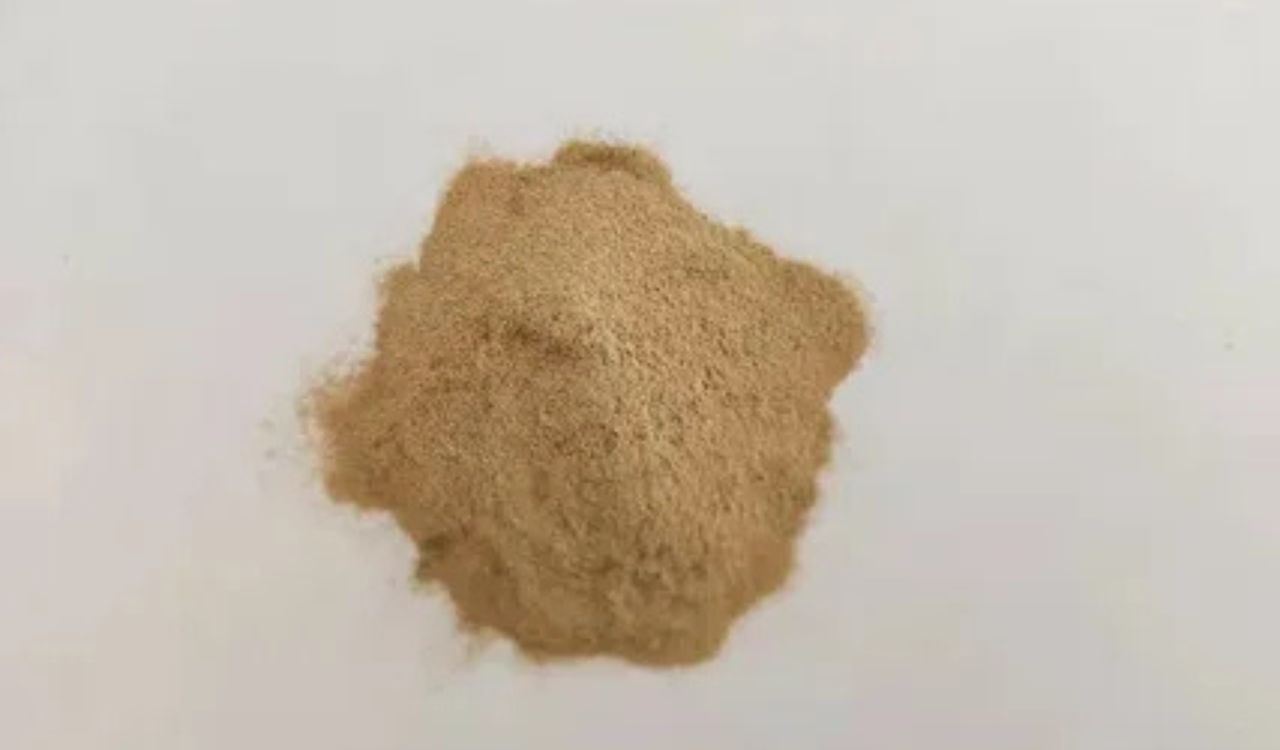
Integral crystalline waterproofing admixture is a powder or liquid additive introduced into concrete during batching. It reacts with the moisture and unhydrated cement particles already present in the mix, forming needle-like crystals that grow through the capillary pores and microcracks in the concrete. These crystals physically block the pathways water would otherwise use to move through the concrete matrix.
Unlike surface-applied waterproofing, which sits on top of concrete and can fail if punctured or if the bond to the substrate weakens, this type of admixture becomes part of the concrete itself. It does not rely on adhesion to a surface, so there is no membrane to tear, lift, or delaminate over time.
How Crystalline Waterproofing Works
The chemistry behind crystalline admixtures is based on a reaction between the active chemicals in the admixture, calcium hydroxide released during cement hydration, and water. This reaction produces insoluble calcium silicate hydrate crystals that fill capillary pores and hairline cracks.
What makes this technology distinct is that the reaction is not a one-time event. Once the concrete dries out, the unreacted chemicals remain dormant inside the matrix. If a new crack later forms and water enters, the dormant chemicals reactivate and grow new crystals to seal the crack. This self-sealing behavior is one of the main reasons specifiers choose crystalline admixtures for structures that are difficult or expensive to access for repairs, such as tunnel linings, foundation walls, and underground water tanks.
Research on early age sealing has shown that dosage rates around three percent of cement mass tend to produce the best self-sealing performance in the first few weeks after casting, though optimal dosage can vary by product and mix design.
PRAH vs PRAN: A Distinction Worth Understanding
Not all permeability reducing admixtures perform the same way under pressure. ACI 212.3R classifies these products into two categories.
PRAN, or permeability reducing admixture for non-hydrostatic conditions, reduces water absorption and permeability but is not rated to resist water pushing against concrete under pressure.
PRAH, or permeability reducing admixture for hydrostatic conditions, is tested and rated to resist water under positive hydrostatic pressure, which makes it suitable for below-grade walls, basements, tunnels, and water retaining structures where groundwater or standing water exerts continuous pressure against the concrete.
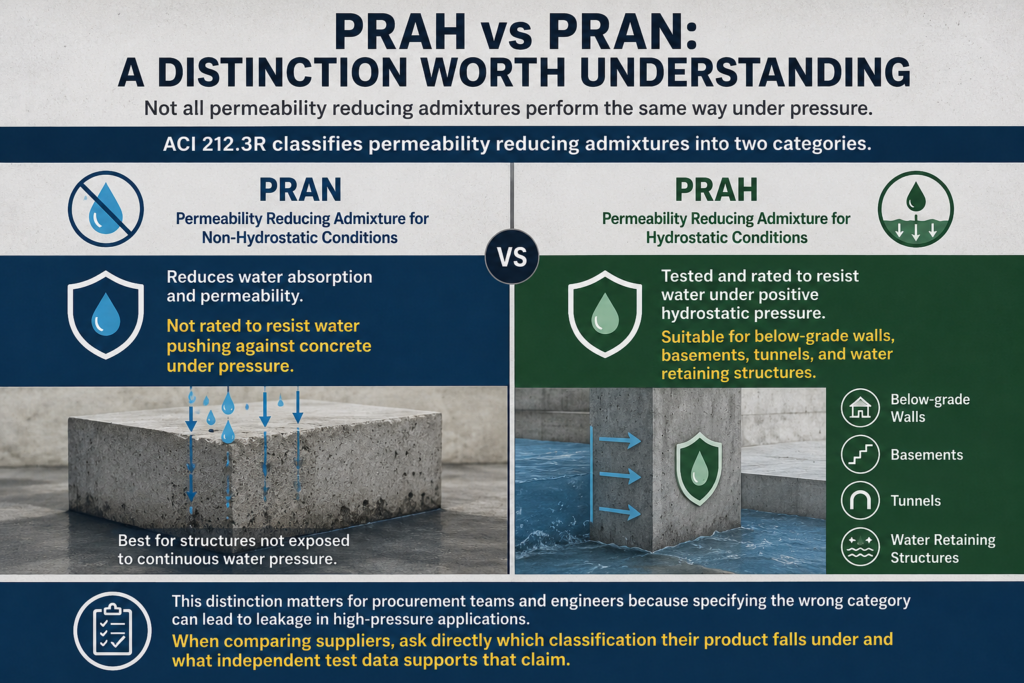
This distinction matters for procurement teams and engineers because specifying the wrong category can lead to leakage in high-pressure applications. When comparing suppliers, it is worth asking directly which classification their product falls under and what independent test data supports that claim.
Standards and Testing References
Buyers sourcing crystalline waterproofing admixtures for export or infrastructure projects typically expect compliance with recognized standards, including ACI 212.3R for classification and performance criteria, EN 934-2 for concrete admixture requirements in European markets, and ASTM test methods for water penetration and permeability. In China, underground waterproofing design and material selection are governed under GB 50108, the technical code for waterproofing of underground works, which sets requirements for concrete structure waterproofing on infrastructure and civil projects.
Products intended for potable water contact, such as water tanks or reservoirs, should also carry certification confirming they are safe for use with drinking water and free of volatile organic compounds.
Where Integral Crystalline Waterproofing Is Used
This admixture category is common in below-grade basements and foundation walls, subway and highway tunnels, water and wastewater treatment structures, elevated and underground water tanks, marine and coastal structures exposed to seawater, precast concrete elements, and parking structures and podium slabs where reduced water ingress helps protect embedded steel from corrosion.
It is generally not recommended as a standalone solution where structures experience significant thermal movement or dynamic joint stress, since crystalline admixtures create a rigid waterproofing system. In those cases, engineers often pair crystalline admixtures with flexible waterstops or joint systems rather than relying on the admixture alone.
Application and Dosage
Crystalline waterproofing admixtures are typically added at the batching plant or directly into the ready mix truck, then mixed for several minutes to ensure even dispersion. Dosage is usually expressed as a percentage of cement weight, commonly in the one to three percent range, though the correct dosage depends on the specific formulation, mix design, and exposure conditions. Because these products interact directly with cement hydration, compatibility testing with the specific cement source and other admixtures in the mix design is good practice before large-scale use.
What to Check Before Choosing a Supplier
For importers, distributors, and precast manufacturers evaluating suppliers, a few questions are worth asking upfront. Is the product classified as PRAH or PRAN, and is there third-party test data to support that classification? What dosage range does the manufacturer recommend, and is there guidance for different exposure conditions? Does the product carry certification for potable water contact if needed? Can the manufacturer provide a long-term track record, technical data sheets, and support for mix design trials?
Luke Chemicals manufactures VF 36, a crystalline self-healing waterproofing admixture designed for integral use in concrete exposed to moisture and hydrostatic pressure, and supports buyers with technical documentation and dosage guidance for their specific mix designs.
Final Thoughts
Integral crystalline waterproofing admixture offers a durable, low-maintenance alternative to surface-applied waterproofing systems, particularly for structures where future access for repairs is limited. Understanding the difference between hydrostatic and non-hydrostatic rated products, checking for relevant standard compliance, and confirming dosage guidance with the manufacturer are the key steps to specifying the right product for a given project.