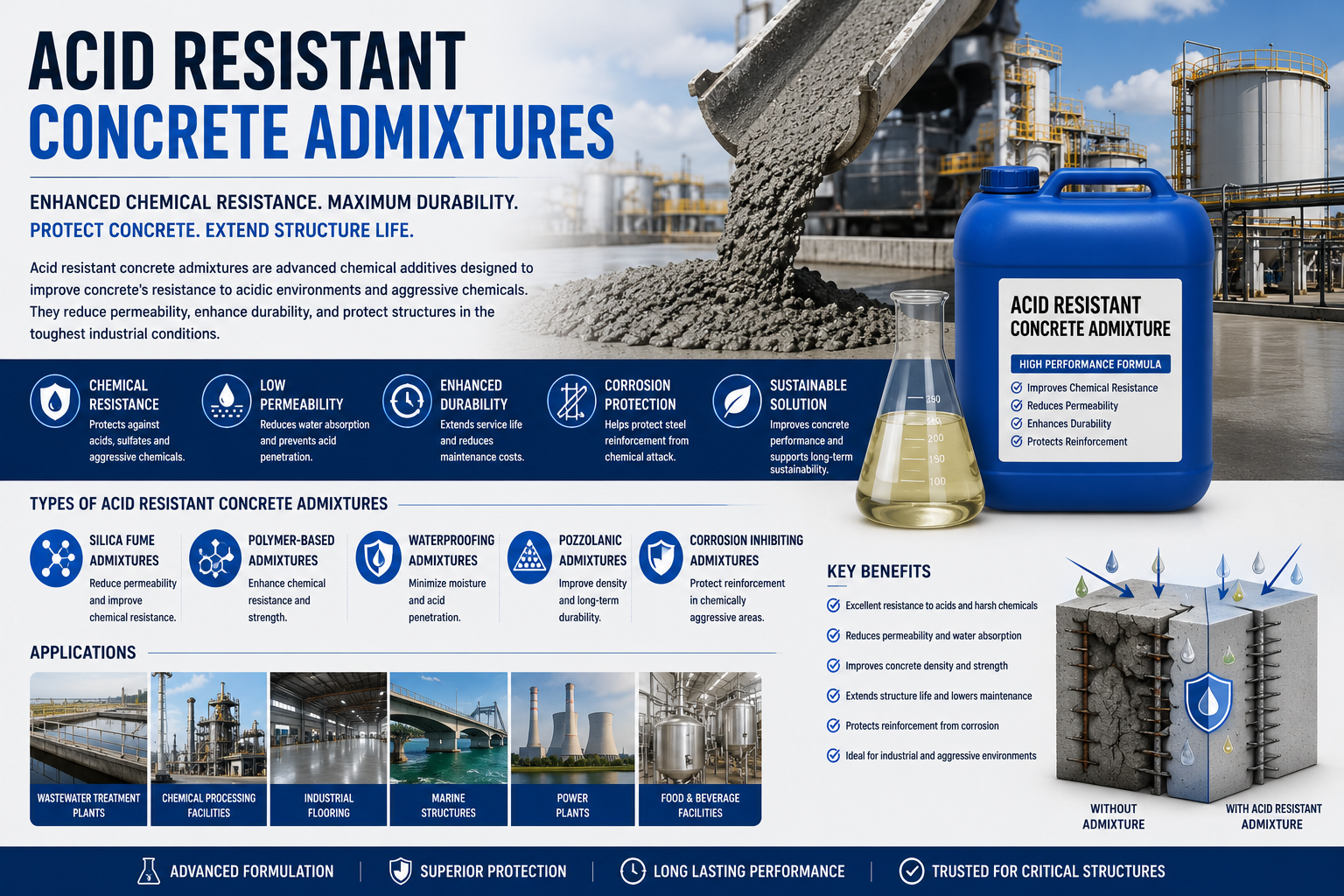
Acid resistant concrete admixtures are specialized construction chemicals designed to improve concrete’s resistance to acidic environments and aggressive chemical attacks. These admixtures help protect concrete structures from deterioration caused by industrial chemicals, wastewater, sulfuric acid, organic acids, and other corrosive substances.
Widely used in chemical plants, wastewater treatment facilities, industrial flooring, marine structures, and manufacturing facilities, acid resistant concrete admixtures enhance durability, reduce maintenance costs, and extend the service life of concrete structures.
What Are Acid Resistant Concrete Admixtures?
Acid resistant concrete admixtures are chemical additives incorporated into concrete during mixing to reduce permeability, improve density, and increase resistance to acid penetration. By creating a more compact concrete matrix, these admixtures help prevent chemical attacks that can weaken concrete and damage reinforcement.
They are often used alongside acid-resistant coatings and specialized concrete formulations in highly corrosive environments.
How Acid Resistant Concrete Admixtures Work
These admixtures improve concrete performance by:
- Reducing porosity and permeability
- Limiting acid penetration
- Enhancing concrete density
- Increasing chemical resistance
- Improving durability in aggressive environments
- Protecting reinforcement from corrosion
The result is a stronger and longer-lasting concrete structure capable of withstanding harsh industrial conditions.
Types of Acid Resistant Concrete Admixtures
Silica Fume Admixtures
Silica fume significantly reduces permeability and improves resistance to chemical attack.
Benefits include:
- High density
- Reduced water absorption
- Improved durability
Polymer-Based Admixtures
Special polymers create a more chemically resistant concrete matrix.
Advantages:
- Enhanced chemical resistance
- Improved bonding properties
- Lower permeability
Waterproofing Admixtures
These admixtures reduce moisture penetration and help prevent acid infiltration.
Pozzolanic Admixtures
Materials such as fly ash and metakaolin improve durability and reduce concrete porosity.
Corrosion Inhibiting Admixtures
Provide additional protection to steel reinforcement in chemically aggressive environments.
Benefits of Acid Resistant Concrete Admixtures
Enhanced Chemical Resistance
Protect concrete from acids, sulfates, and industrial chemicals.
Reduced Permeability
Minimizes the penetration of aggressive substances into the concrete structure.
Improved Durability
Extends the lifespan of concrete exposed to harsh conditions.
Lower Maintenance Costs
Reduces repair frequency and long-term maintenance expenses.
Better Structural Integrity
Helps maintain strength and stability even in corrosive environments.
Protection of Reinforcement
Limits corrosion risks that can compromise structural performance.
Applications of Acid Resistant Concrete Admixtures
Wastewater Treatment Plants
Protect tanks, channels, and structures from acidic wastewater exposure.
Chemical Processing Facilities
Enhance concrete durability in areas exposed to corrosive chemicals.
Industrial Flooring
Improve resistance to chemical spills and industrial processes.
Marine Structures
Provide additional protection against aggressive environmental conditions.
Power Plants
Support long-term durability in challenging operating environments.
Food and Beverage Facilities
Protect concrete surfaces exposed to organic acids and cleaning chemicals.
Factors Affecting Acid Resistance
Several factors influence concrete performance in acidic environments:
Water-Cement Ratio
Lower water-cement ratios improve density and chemical resistance.
Cement Type
Specialized cement formulations may offer enhanced acid resistance.
Admixture Selection
Choosing the correct admixture is critical for long-term performance.
Curing Conditions
Proper curing maximizes durability and strength development.
Environmental Exposure
Different acids and concentrations require specific protection strategies.
Best Practices for Using Acid Resistant Concrete Admixtures
- Use low-permeability concrete designs.
- Follow manufacturer dosage recommendations.
- Conduct laboratory testing for specific chemical environments.
- Ensure proper mixing and placement procedures.
- Apply suitable curing methods.
- Consider additional protective coatings when required.
Why Use Acid Resistant Concrete Admixtures?
Concrete structures in industrial and chemical environments face continuous exposure to aggressive substances that can cause deterioration and costly repairs. Acid resistant concrete admixtures provide an effective solution by improving durability, reducing permeability, and increasing resistance to chemical attack. These benefits help ensure long-term structural performance and lower lifecycle costs.
Conclusion
Acid resistant concrete admixtures are essential for protecting concrete structures in chemically aggressive environments. By reducing permeability, enhancing durability, and improving resistance to acid attack, these admixtures help extend service life and minimize maintenance requirements. Whether used in wastewater treatment plants, chemical facilities, industrial flooring, or marine structures, they play a critical role in ensuring long-term concrete performance.