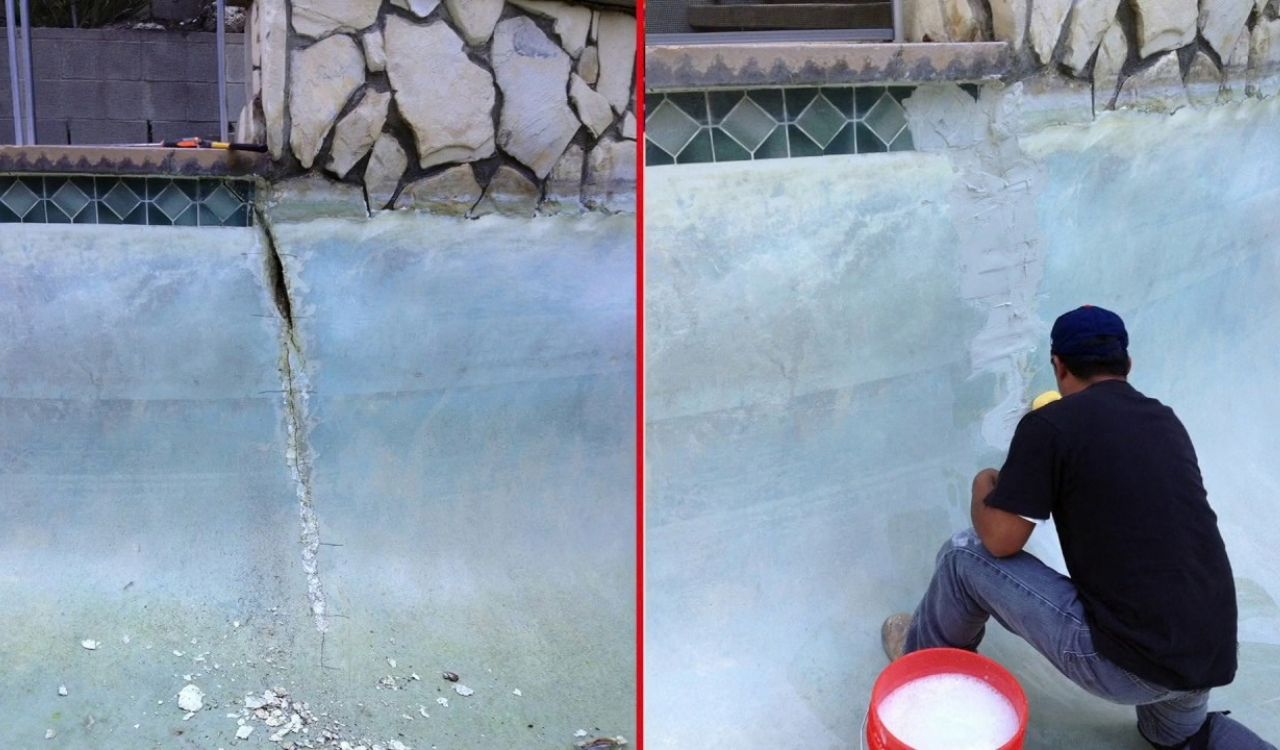
Why do basements, swimming pools and water tanks so often crack within weeks of being cast? The answer is early-age shrinkage acting on large, restrained concrete elements. As cement hydrates and moisture leaves the mix, the concrete tries to contract, but footings, rebar and adjacent pours hold it back. Tensile stress builds, and cracks open before the structure carries its first load. In water-retaining and below-grade work, those cracks become leakage paths under hydrostatic pressure.
What can engineers and contractors do about it? One proven answer is expansive concrete, also known as shrinkage-compensating concrete, which grows slightly in the first days to offset later shrinkage. Combined with a water reducing agent in concrete and a suitable waterproofing admixture, it gives a practical way to control cracking from the start. This guide explains how expansive concrete works, where to use it, how to dose and cure it, and what to watch for on site.
What Is Expansive Concrete?
Expansive concrete, also called shrinkage-compensating concrete, is a concrete mix designed to expand slightly during the first days after placing. That small expansion offsets the volume loss that normally occurs as concrete dries and hardens. When reinforcement, subgrade or formwork restrains the expansion, it creates a mild compressive stress. That stress is used up as drying shrinkage develops, so tensile stress stays below the level that causes cracking.
The expansion usually comes from an expansive component in the binder. Common sources include:
- Calcium sulfoaluminate (CSA) agents, which form ettringite as they react with water and calcium sulfate.
- Calcium oxide (CaO) agents, which expand as lime hydrates to calcium hydroxide.
- Magnesium oxide (MgO) agents, which expand more slowly and suit later-age compensation.
- Type K or ASTM C845 Type E-1 expansive cements, which carry the expansive phase in the cement itself.
For most ready-mix and precast users, a dosed expansive admixture is the easier route. It works with local Portland cement and fits normal batching routines. A product such as VF-21 Expansion Agent is added at the mixer, so a standard mix becomes a shrinkage-compensating one without changing the cement supply.
Why Does Early-Age Cracking Happen in Basements, Pools and Water Tanks?
Water-retaining and below-grade structures are cast as large, restrained elements: thick walls on rigid footings, long slabs on grade, and monolithic tank walls. That is the exact situation in which shrinkage turns into cracking. The main drivers are:
- Plastic shrinkage: rapid surface evaporation in the first hours, common in hot, dry or windy conditions.
- Autogenous shrinkage: internal volume reduction as cement hydrates, more noticeable in low water-cement ratio mixes.
- Drying shrinkage: moisture loss over weeks and months.
- Thermal contraction: cooling after the heat of hydration peaks, especially in mass walls and thick base slabs.
- Restraint: footings, adjacent pours, dowels, and reinforcement that stop the concrete from moving freely.
A crack is more than a cosmetic defect in these structures. In a basement, it opens a path for groundwater under hydrostatic pressure. In a swimming pool or water tank, it causes leakage, reinforcement corrosion, and, in potable water tanks, quality concerns. Controlling cracks early is far cheaper than injecting or sealing them later.
How Does Expansive Concrete Control Early Cracks?
The mechanism works in three stages:
- Expansion phase: In the first days, the expansive agent reacts, and the concrete grows slightly. Because reinforcement and boundary conditions resist this growth, the concrete goes into mild compression, often called chemical prestress.
- Shrinkage phase: As the concrete dries and cools, it tries to shrink. The stored compression is released first, so net tensile stress stays low.
- Long-term phase: The structure ends up near zero net strain instead of in tension, which greatly reduces the number and width of shrinkage cracks and can allow longer joint spacing.
Two points matter in practice. First, the expansion must happen while the concrete is wet. If the surface dries early, the expansion is lost and the benefit disappears. Second, the concrete needs restraint. Unrestrained expansive concrete simply grows and gains little crack protection. ACI 223R gives the design guidance on restraint, reinforcement ratios and joint planning, and restrained expansion is typically verified with ASTM C878 testing.
Which Structures Benefit Most from Expansive Concrete?
| Application | Main problem | How expansive concrete helps |
| Basement walls and raft slabs | Groundwater, hydrostatic pressure, restraint from footings | Reduces shrinkage cracking and supports a tighter, lower-permeability structure |
| Swimming pools | Constant water contact, large monolithic shells, leakage at cracks | Fewer through-cracks and better water tightness, especially with a waterproofing admixture |
| Water tanks and reservoirs | Liquid-retaining structure, thick restrained walls | Helps meet crack-width limits in standards such as ACI 350 and EN 1992-3 |
| Wastewater and treatment tanks | Aggressive chemicals, long service life | Lower crack frequency reduces ingress paths for chlorides and sulfates |
| Industrial floors and slabs on grade | Curling, joint spacing | Allows larger pours with fewer joints when designed correctly |
| Repair mortars and grouts | Bond failure from shrinkage | Non-shrink or expansive repair materials maintain contact with the substrate |
What Types of Expansive Agents and Admixtures Are Used?
Expansive concrete is rarely used alone. A complete crack-control and water-tightness mix normally combines several concrete admixtures:
- Expansive agent (CSA, CaO or MgO): provides the shrinkage compensation.
- Water-reducing agent in concrete (plasticizer or PCE superplasticizer): lowers the water content while keeping workability. A lower water-cement ratio cuts permeability and drying shrinkage. It also helps because expansive mixes often demand good workability for placing and compaction.
- Waterproofing admixture or concrete waterproof admixture: includes crystalline, hydrophobic (water-repellent) and pore-blocking types. These reduce water absorption and penetration through the capillary pore network, which works alongside crack control.
- Shrinkage-reducing admixtures (SRA): reduce surface tension in pore water and lower drying shrinkage. Compatibility with the expansive agent must be confirmed with trial mixes.
- Set retarders and curing aids: useful in hot weather and large pours.
- Fibers (steel or synthetic): control plastic shrinkage cracking in the first hours, before the expansion has built up.
It is important to separate the roles. An expansive agent controls cracking caused by volume change. A waterproofing admixture reduces permeability of the concrete matrix. A basement or tank that must stay dry usually needs both, plus well-detailed joints and water stops.
How Should Expansive Concrete Be Designed and Dosed?
Dosage depends on the expansive agent chemistry, the cement content, the level of restraint and the target expansion. The supplier’s technical data sheet and trial batches should always set the final figure. General design factors include:
- Restraint and reinforcement: ACI 223R recommends a minimum amount of reinforcement along the direction in which expansion is to be restrained. Lightly reinforced or unreinforced elements gain much less benefit.
- Cement type and content: high cement paste volume increases both shrinkage and the heat of hydration, so mixes should be kept as lean as strength and durability allow.
- Water-cement ratio: keep it low, and use a water-reducing agent in concrete instead of adding site water.
- Aggregate: well-graded, clean aggregate with low shrinkage potential and a high aggregate volume.
- Supplementary cementitious materials: fly ash, slag, or silica fume can reduce heat and permeability, but they must be checked for their effect on expansion.
- Temperature: both hot and cold weather change the rate and amount of expansion, so mix adjustments may be needed.
When Must Curing Start, and Why Is It Critical?
Curing is the most common point of failure with expansive concrete. The expansion depends on water, because ettringite formation and lime hydration both consume it. Good practice includes:
- Starting wet curing as soon as the surface can take it without damage, and not allowing it to dry between finishing and curing.
- Maintaining continuous wet curing for at least 7 days, using ponding, saturated burlap, fogging or a continuous sprinkler system. ACI 223R gives specific curing guidance.
- Avoid curing compounds as the only method unless the product and procedure have been approved for shrinkage-compensating concrete.
- Protecting fresh concrete from wind, direct sun and large temperature swings, and using evaporation-rate charts to decide when windbreaks or fogging are needed.
- Delaying form stripping on walls and keeping them damp if forms are removed early.
In tank and pool projects, early filling with water can serve as part of the curing process, provided the structural design allows it.
What Are the Benefits of Using Expansive Concrete?
- Fewer and narrower shrinkage cracks in restrained elements.
- Better water tightness in basements, pools and liquid-retaining structures.
- Potentially larger joint spacing, which means fewer construction and control joints and less leakage risk.
- Lower lifetime maintenance, with less crack injection and sealing work.
- Better durability against chloride, sulfate, and freeze-thaw exposure when permeability stays low.
- Compatibility with conventional placing methods, pumping and finishing.
What Are the Limitations and Risks?
Expansive concrete is not a cure-all, and it should not be specified without understanding these points:
- It needs restraint and reinforcement. Without them, the mild compression does not develop.
- It needs strict curing. Poor curing can leave the concrete with no expansion benefit and, in some cases, a worse outcome than a standard mix.
- Over-dosing can cause excessive or delayed expansion, leading to damage. Dosing accuracy matters.
- It does not replace joints and water stops. Construction joints, penetrations and pipe sleeves remain the most common leak locations.
- It does not control structural cracking from overload, settlement or poor design.
- Compatibility with other admixtures must be tested, especially with strong retarders, some SRAs and certain high-range water reducers.
How Do You Batch and Store Expansive Admixtures Correctly?
Consistent dosing is what separates a good result from a failed one. Powdered expansive agents are moisture sensitive and should be kept in sealed bags or silos in dry conditions, away from the ground and humidity. Liquid concrete admixtures should be stored in clean tanks within the temperature range given by the manufacturer, to prevent freezing, sedimentation or overheating.
Modern plants increasingly use concrete additive storage sensors, such as level, temperature and flow sensors on admixture tanks and dosing lines. These help batch plants confirm inventory, catch dosing errors and keep records for quality audits. For critical projects such as potable water tanks, traceability is valuable evidence that the mix was produced as designed.
What Quality Checks Should Be Done on Site?
- Trial mixes before the project: verify slump, air content, strength and restrained expansion at the planned dosage.
- Delivery checks: confirm mix ID, admixture batch records and slump or flow on arrival.
- Placement and compaction: use proper vibration without overworking the surface.
- Curing records: log the start time, method and duration of wet curing for each pour.
- Crack survey: inspect early and record any cracks for monitoring.
- Water tightness test: for tanks and pools, run a filled-tank leakage test according to the project specification.
Where Does Expansive Concrete Fit with Shotcrete and Repair Work?
Expansive agents and waterproofing admixtures are also used in repair mortars, grouts and dry mix sprayed concrete (dry-process shotcrete) for lining or rehabilitating tanks, basement walls and tunnels. In dry-mix systems, the admixture is blended into the dry material, so uniform dispersion and moisture-free storage are essential. As rehabilitation of aging water infrastructure grows, interest in the dry mix sprayed concrete market and in specialized repair products continues to rise.
What Is Driving Demand in the Concrete Admixtures and Cement Additive Market?
Growing investment in water infrastructure, underground construction, wastewater treatment and durable building envelopes is raising demand for performance admixtures. Buyers comparing suppliers across the concrete admixtures additive market, the wider cement additive market or the China concrete admixtures market are paying more attention to product consistency, technical documentation, batch traceability and compliance with standards such as EN 934-2 and ASTM specifications. For manufacturers, the quality of each specialty chemical manufacturing raw material, from sulfoaluminate clinker to polycarboxylate monomers, directly affects admixture performance, so supplier qualification and incoming material testing are standard practice.
Luke Chemicals supplies concrete admixtures and construction chemical solutions that support these requirements, including water-reducing agents and waterproofing admixtures for projects where durability and crack control are priorities.
What Are the Best Practices for Early Crack Control?
- Specify the crack-width limit and exposure class at the design stage, not after cracking appears.
- Combine an expansive agent, a water reducing agent and a waterproofing admixture instead of relying on one product.
- Keep the water-cement ratio low and the paste volume moderate.
- Plan pour sequences and joint locations to reduce restraint from earlier pours.
- Use fibers where plastic shrinkage is a risk.
- Start wet curing early and keep it continuous for at least 7 days.
- Control concrete temperature in hot and cold weather.
- Use calibrated dosing equipment, and monitor storage and dosing with sensors.
- Always run trial batches with the actual materials from the project.
Frequently Asked Questions
What is expansive concrete used for?
It is used in structures where shrinkage cracking would cause leakage or durability problems, including basement walls and slabs, swimming pools, water tanks, reservoirs, industrial floors, and repair grouts and mortars.
Is expansive concrete the same as waterproof concrete?
No. Expansive concrete reduces cracks caused by shrinkage. Waterproof concrete, usually made with a waterproofing admixture or crystalline additive, reduces permeability of the concrete itself. Many water-retaining structures use both, along with correct joint detailing.
How long should expansive concrete be cured?
Wet curing should start early and continue without interruption for at least 7 days, following ACI 223R and the supplier’s instructions. Early drying removes the moisture the expansion reaction needs.
Can I use a water reducing agent with expansive admixtures?
Yes. A water reducing agent in concrete is usually recommended because it lowers the water-cement ratio without hurting workability. Compatibility should still be checked in trial mixes, since some combinations affect setting time or slump retention.
Does expansive concrete eliminate cracks completely?
No. It significantly reduces shrinkage cracking in restrained, reinforced elements, but it cannot prevent cracks from structural overload, settlement, poor reinforcement detailing or bad curing.
What is the difference between shrinkage-compensating concrete and Type K cement?
Type K cement is one way of producing shrinkage-compensating concrete, with the expansive phase built into the cement. Today, many mixes reach the same result by adding a separate expansive admixture to Portland cement.
How do I choose a concrete waterproofing admixture supplier?
Check compliance with relevant standards, ask for technical data sheets and test reports, review batch consistency and quality control, and run trial mixes with your own cement and aggregates. Technical support during dosing and site trials is also a good indicator of a reliable supplier.
Conclusion
Expansive concrete gives engineers and contractors a practical way to control early-age cracking in basements, pools and water tanks, provided the design includes adequate restraint and reinforcement, the dosage is verified in trials, and wet curing starts early and continues without gaps. Paired with a suitable water reducing agent and waterproofing admixture, and supported by careful storage and dosing control, it helps deliver structures that stay watertight and durable over their service life.