Introduction
Modern concrete is much more than a simple mixture of cement, water, and aggregates. Today’s construction projects demand higher strength, improved durability, faster construction schedules, and greater sustainability. To achieve these goals, contractors and engineers rely on chemical admixtures for concrete.
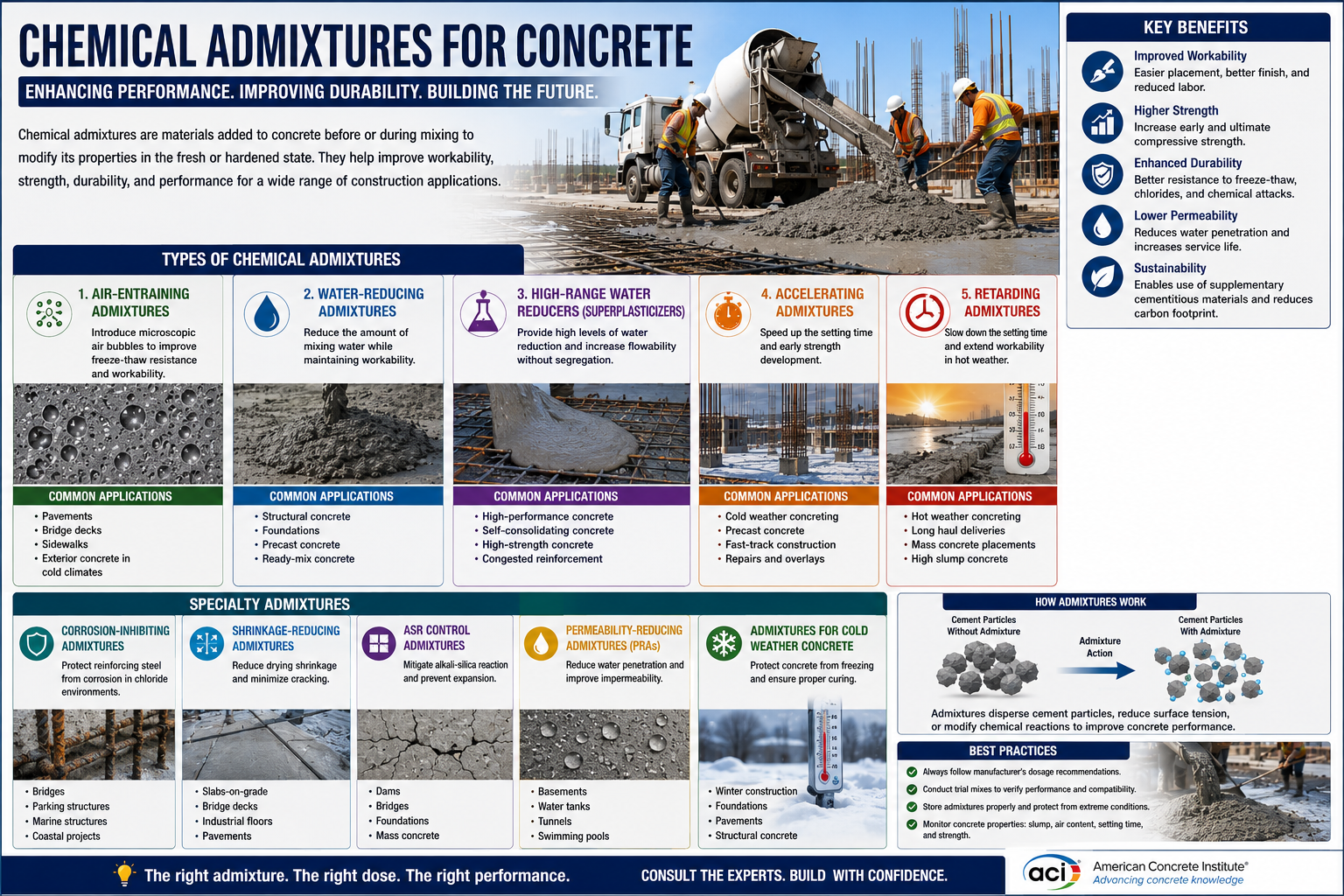
Chemical admixtures are specialized ingredients added to concrete before or during mixing to modify its fresh or hardened properties. These additives can improve workability, accelerate or retard setting time, reduce permeability, increase durability, and even enhance resistance to harsh environmental conditions.
According to the American Concrete Institute (ACI), chemical admixtures have become an essential component of modern concrete technology, helping producers meet increasingly demanding performance and sustainability requirements.
In this guide, we’ll explore the different types of chemical admixtures, how they work, their benefits, and how to choose the right admixture for your project.
What Are Chemical Admixtures for Concrete?
A chemical admixture is any material added to concrete, mortar, or grout during mixing that modifies its behavior in either the fresh or hardened state.
Unlike aggregates, cement, supplementary cementitious materials, and water, chemical admixtures are specifically designed to alter concrete performance.
Why Are Chemical Admixtures Used?
Chemical admixtures can:
- Improve workability without adding extra water
- Accelerate or delay setting time
- Reduce shrinkage and cracking
- Improve freeze-thaw resistance
- Increase strength development
- Reduce permeability
- Enhance durability
- Improve pumpability and finishing
- Control alkali-silica reaction (ASR)
- Protect reinforcing steel from corrosion
In many modern construction projects, achieving the desired concrete performance would be impossible without the use of admixtures.
Types of Chemical Admixtures for Concrete
The ASTM C494 standard classifies chemical admixtures into several categories based on their primary function.
1. Air-Entraining Admixtures
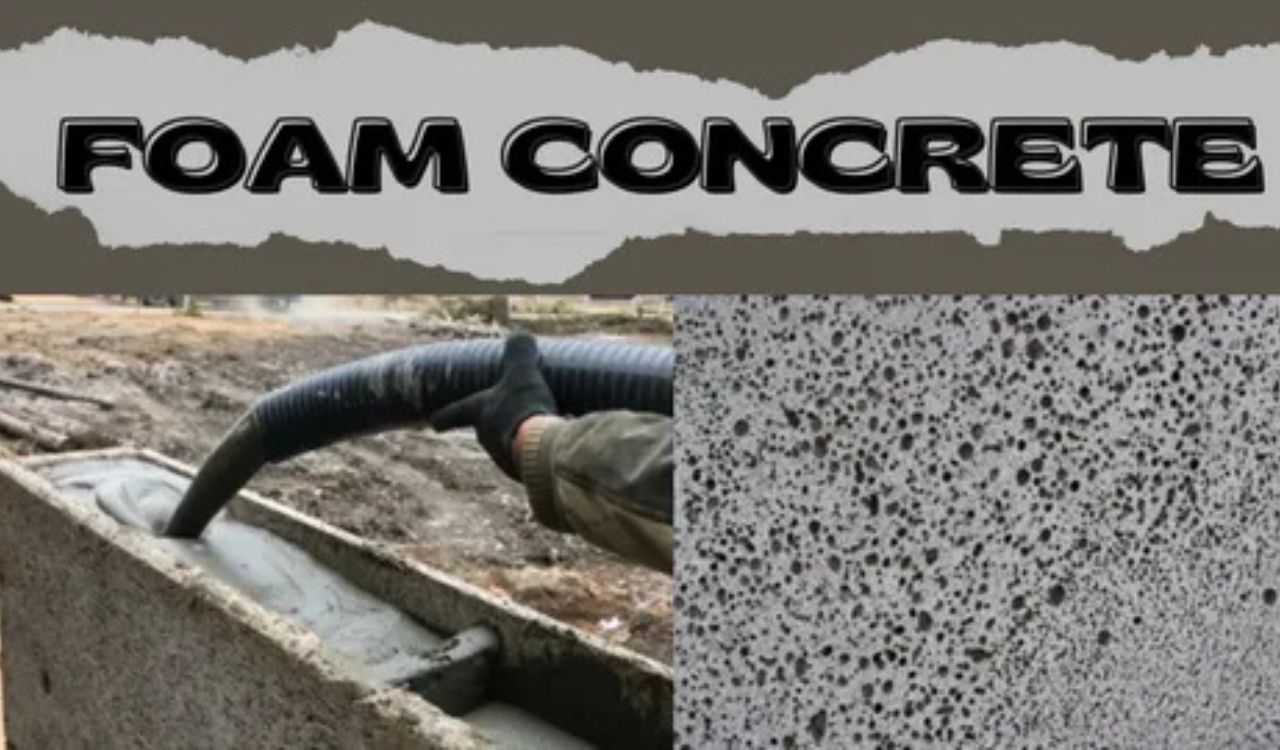
Air-entraining admixtures intentionally introduce millions of microscopic air bubbles into the concrete mixture.
These tiny bubbles are typically between 0.0004 and 0.04 inches (0.01–1 mm) in diameter and are evenly distributed throughout the concrete.
How Air Entrainment Works
Air-entraining agents are surfactants that:
- Reduce water surface tension
- Stabilize microscopic air bubbles
- Prevent bubbles from combining into larger voids
Contrary to common belief, air-entraining admixtures do not create bubbles. Instead, they stabilize bubbles naturally formed during mixing.
Benefits of Air-Entrained Concrete
Improved Freeze-Thaw Resistance
When water freezes, it expands by approximately 9%.
Without air voids, this expansion creates internal pressure that can crack concrete.
Entrained air provides tiny chambers where expanding water can move, relieving pressure and preventing freeze-thaw damage.
Better Resistance to Deicing Salts
Air-entrained concrete is significantly more resistant to scaling caused by deicing chemicals commonly used on roads, bridges, and sidewalks.
Improved Workability
Entrained air acts like tiny ball bearings inside the mix, improving:
- Pumpability
- Finishability
- Placement
- Consolidation
Reduced Segregation and Bleeding
The stable air void system helps maintain mixture uniformity and reduces excessive bleeding.
Important Consideration
While air entrainment improves durability, it reduces strength.
As a general rule:
Every 1% increase in air content reduces 28-day compressive strength by approximately 3% to 5%.
2. Water-Reducing Admixtures
Water-reducing admixtures are among the most widely used concrete additives.
They either:
- Reduce water content while maintaining workability, or
- Increase slump without adding water
Benefits of Water Reducers
Lower Water-Cement Ratio
Reducing water content leads to:
- Higher compressive strength
- Improved durability
- Lower permeability
- Better long-term performance
Improved Workability
Concrete remains easier to place and finish even with less mixing water.
Reduced Shrinkage
Lower water content means less drying shrinkage and reduced cracking potential.
Common Applications
- Structural concrete
- Commercial buildings
- Bridge construction
- High-performance concrete
3. High-Range Water Reducers (Superplasticizers)
High-range water reducers, commonly known as superplasticizers, are advanced admixtures capable of reducing water content by 30% or more.
They allow concrete to become highly flowable without segregation.
How Superplasticizers Work
Superplasticizers disperse cement particles more efficiently than conventional water reducers.
This creates:
- Higher slump
- Improved flowability
- Better consolidation
- Reduced water demand
Advantages
Self-Consolidating Concrete (SCC)
Superplasticizers are essential for self-consolidating concrete, which flows under its own weight without vibration.
Congested Reinforcement
They make it easier for concrete to flow around dense steel reinforcement.
Increased Strength
Lower water-cement ratios typically result in significantly higher compressive strengths.
Reduced Permeability
Dense concrete structures resist water and chemical penetration more effectively.
Common Superplasticizer Technologies
- Sulfonated melamine formaldehyde condensates
- Sulfonated naphthalene formaldehyde condensates
- Polycarboxylate ethers (PCEs)
Today, polycarboxylate-based admixtures dominate the market because of their superior performance and slump retention.
4. Accelerating Admixtures
Accelerating admixtures increase the rate of cement hydration.
They are particularly valuable in:
- Cold weather concreting
- Fast-track construction
- Precast concrete manufacturing
Benefits of Accelerators
Faster Setting Times
Concrete reaches initial and final set more quickly.
Higher Early Strength
Accelerators help concrete gain strength rapidly during the first few days after placement.
Cold Weather Protection
Low temperatures slow hydration significantly.
Accelerators help offset this slowdown and reduce the risk of early-age freezing damage.
Calcium Chloride Accelerators
Calcium chloride has historically been the most common accelerator.
However, because it can contribute to reinforcement corrosion, its use is generally limited in reinforced concrete structures.
Non-Chloride Accelerators
Modern chloride-free accelerators offer:
- Rapid strength gain
- Improved durability
- Reduced corrosion risk
These products are widely used in commercial and infrastructure projects.
5. Retarding Admixtures
Retarding admixtures slow down the hydration process and extend setting time.
They are particularly useful in hot weather and large concrete pours.
Why Use Retarders?
Hot Weather Concreting
High temperatures accelerate concrete setting.
Retarders help maintain workable concrete for longer periods.
Long Haul Deliveries
Concrete transported over long distances may begin setting before arrival.
Retarders preserve workability until placement.
Large Placements
Mass concrete projects often require extended placement times.
Retarding admixtures prevent cold joints and placement difficulties.
Benefits
- Extended workability
- Improved finishing time
- Reduced risk of cold joints
- Better quality concrete placement
Specialty Chemical Admixtures
Modern concrete often includes specialized admixtures designed to solve specific performance challenges.
Corrosion-Inhibiting Admixtures
Corrosion of reinforcing steel is one of the leading causes of concrete deterioration worldwide.
Corrosion inhibitors help protect embedded steel by:
- Delaying corrosion initiation
- Slowing corrosion rates
- Extending service life
Common Applications
- Bridges
- Parking garages
- Marine structures
- Coastal construction
Shrinkage-Reducing Admixtures (SRA)
Drying shrinkage can cause cracking and long-term durability issues.
Shrinkage-reducing admixtures work by lowering the surface tension of water within concrete pores.
Benefits
- Reduced drying shrinkage
- Less cracking
- Improved dimensional stability
- Better durability
Alkali-Silica Reaction (ASR) Control Admixtures
ASR is a damaging chemical reaction between cement alkalies and reactive aggregates.
Lithium-based admixtures can effectively control ASR.
Benefits
- Reduced expansion
- Prevention of cracking
- Increased structural longevity
Permeability-Reducing Admixtures
Water penetration is responsible for many concrete durability problems.
Permeability-reducing admixtures help create more watertight concrete.
Applications
- Basements
- Water tanks
- Tunnels
- Foundations
- Swimming pools
Advantages
- Reduced water infiltration
- Increased durability
- Better resistance to chemical attack
Choosing the Right Chemical Admixture
Selecting the proper admixture depends on project requirements.
| Project Need | Recommended Admixture |
|---|---|
| Freeze-thaw resistance | Air-entraining admixture |
| High strength | Water reducer or superplasticizer |
| Fast-track construction | Accelerating admixture |
| Hot weather placement | Retarding admixture |
| Corrosion protection | Corrosion inhibitor |
| Crack reduction | Shrinkage-reducing admixture |
| Waterproofing | Permeability-reducing admixture |
| Self-consolidating concrete | Superplasticizer |
Always conduct trial batches before full-scale production to verify compatibility and performance.
Best Practices When Using Chemical Admixtures
To maximize results:
- Follow manufacturer dosage recommendations
- Never pre-blend admixtures unless approved
- Test admixture compatibility before use
- Monitor slump, air content, and setting time
- Perform field trials under expected jobsite conditions
- Ensure proper curing practices
Remember that admixtures improve concrete performance but cannot compensate for poor materials, improper batching, or inadequate construction practices.
Frequently Asked Questions
What is the most commonly used chemical admixture in concrete?
Water-reducing admixtures are among the most commonly used because they improve workability while increasing strength and durability.
Do air-entraining admixtures weaken concrete?
Yes. Each 1% increase in air content typically reduces compressive strength by approximately 3% to 5%. However, the durability benefits often outweigh the strength reduction in freeze-thaw environments.
What is the difference between a water reducer and a superplasticizer?
A conventional water reducer provides moderate water reduction, while a superplasticizer can reduce water content by 30% or more and significantly increase flowability.
Are chemical admixtures required in all concrete?
No, but most modern concrete projects use at least one admixture to improve performance, durability, workability, or sustainability.
Which admixture is best for waterproof concrete?
Permeability-reducing admixtures (PRAs) are specifically designed to reduce water penetration and improve waterproofing performance.
Conclusion
Chemical admixtures have transformed modern concrete construction by making concrete stronger, more durable, more workable, and more sustainable. From air-entraining admixtures that protect against freeze-thaw damage to superplasticizers that create highly flowable, high-strength concrete, these additives play a critical role in today’s infrastructure and building projects.
By understanding the different types of chemical admixtures for concrete and selecting the right solution for your application, you can improve project performance, reduce maintenance costs, and extend the service life of concrete structures.
Whether you’re designing a bridge, pouring a foundation, or constructing a high-rise building, the right admixture can make all the difference.