Lignosulfonates are among the oldest and most widely used water-reducing agents in concrete. They are plant-derived, low in cost, and effective as a normal-range plasticizer and set retarder. But “lignosulfonate” is not one product. The cation attached to the sulfonated lignin, usually calcium or sodium, affects solubility, alkali content, handling, and how the product behaves in a formulation.
This guide compares calcium vs sodium lignosulfonate: how each is made, how they differ chemically, how they perform in concrete and in other industrial uses, and how to choose between them. It also explains why the counter-ion is often less important than other quality factors.
What Is Lignosulfonate?
Lignosulfonate is a water-soluble anionic polymer made from lignin, the natural binder that holds wood fibers together. It is recovered as a by-product of sulfite pulping, where wood chips are cooked with sulfite or bisulfite solutions. The process cleaves lignin from cellulose and adds sulfonate groups (-SO3⁻) to the lignin structure, which makes it soluble in water.
Lignin itself is built from phenylpropane units into a branched, three-dimensional network. After sulfonation, the polymer has:
- Sulfonate groups, which give water solubility and a strong negative charge
- Phenolic hydroxyl and carboxyl groups, which help it adsorb onto cement particles and chelate calcium
- A broad molecular weight range, from a few thousand to over 100,000 daltons
- Residual wood sugars (hemicellulose derivatives), which strongly influence set retardation
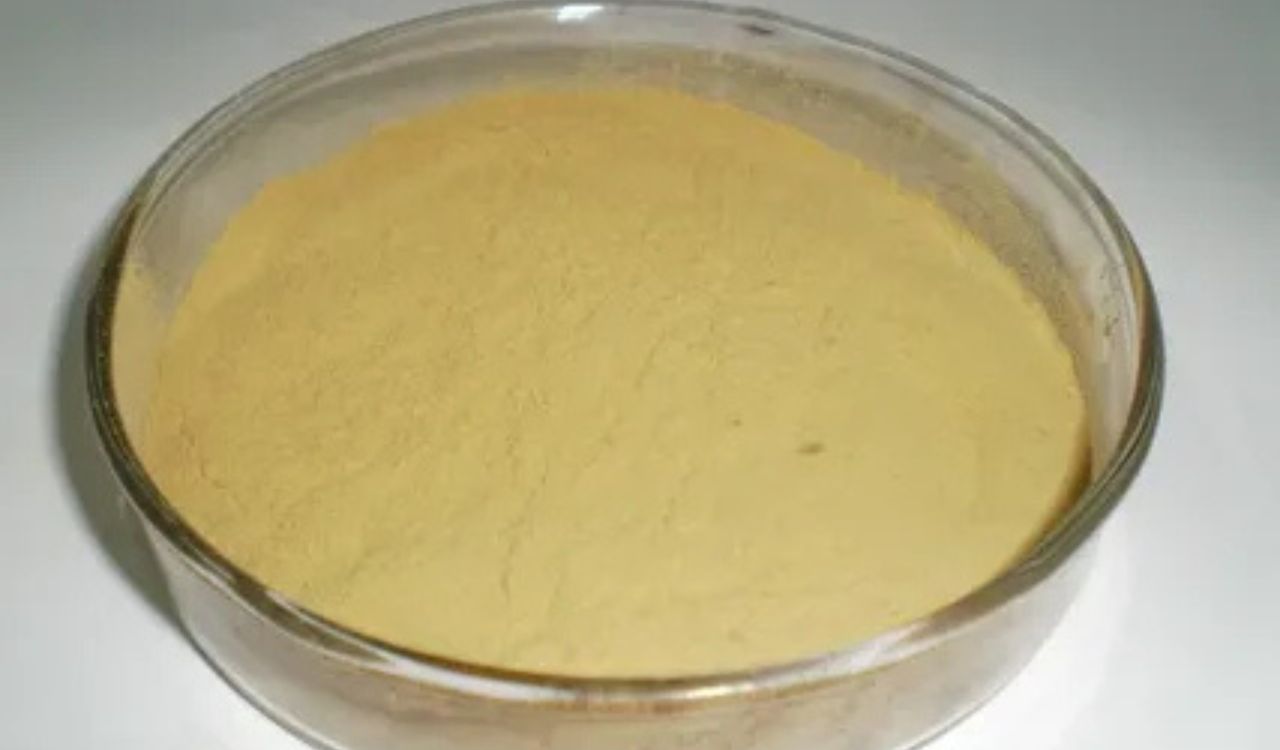
The material is sold as a brown liquid (typically 40–50% solids) or a spray-dried powder. In concrete, it is classified as a water reducer admixture of the normal-range type, and it is one of the most common chemical admixtures used in concrete worldwide.
How Are Calcium and Sodium Lignosulfonate Made?
Both forms start as spent sulfite liquor. The difference is the cation that balances the negative sulfonate charge.
Calcium lignosulfonate (CaLS)
- Produced directly from calcium-base sulfite pulping, or by treating other lignosulfonate liquors with lime or calcium salts
- The calcium forms ionic bridges between sulfonate groups
- Usually the lowest-cost grade, which is why it dominates general-purpose concrete water reducers
Sodium lignosulfonate (NaLS)
- Produced from sodium-base pulping, or by neutralizing and ion-exchanging the liquor with sodium hydroxide or sodium carbonate
- Typically refined further (for example, fermented or ultrafiltered) for applications that need higher purity or lower sugar content
- Usually spray-dried into a free-flowing powder
Many modern sulfite mills use magnesium or sodium bases rather than calcium, and available grades depend on the producer’s process. Always confirm the cation, solids, and sugar content in the technical data sheet rather than assuming from the product name. This matters even more if the lignosulfonate will be blended into a waterproofing admixture formulation, because the cation, sugar content, and sulfate level can affect setting time, solubility, and compatibility with the other waterproofing components.
Calcium vs Sodium Lignosulfonate: Chemistry Differences
The backbone polymer is chemically similar in both. The differences come from the counter-ion and from how each grade is processed.
| Property | Calcium lignosulfonate | Sodium lignosulfonate |
| Counter-ion | Ca²⁺ (divalent, bridges sulfonate groups) | Na⁺ (monovalent) |
| Water solubility | Good, but can be limited in some salt or sulfate-rich systems | Very high across a wide pH range |
| Solution viscosity | Often higher at equal solids | Often lower at equal solids |
| Typical form | Liquid or powder | Mostly spray-dried powder, also liquid |
| Alkali contribution (Na₂O eq.) | Negligible | Adds sodium; must be counted in the alkali budget |
| Calcium content | Contributes Ca²⁺ | Minimal |
| Sensitivity to sulfates and carbonates | Can form insoluble calcium salts in concentrated formulations | Less prone to precipitation |
| Relative cost | Generally lower | Generally higher |
| Typical industries | Concrete, dust control, binders | Concrete powders, dye dispersion, ceramics, battery expanders, oil well cement |
Cement pore solution is already rich in calcium from dissolving Ca(OH)₂ and clinker phases. Once dosed, the counter-ion matters less than it does in the storage tank or powder blend. Molecular weight distribution, sulfonation degree, and residual sugar content often have a bigger effect on how the product behaves in concrete than calcium vs sodium.
How Does Lignosulfonate Work as a Water Reducing Agent in Concrete?
Cement particles clump into flocs that trap mixing water. Lignosulfonate disperses them in three steps:
- Adsorption: The polymer attaches to cement grains, especially the reactive aluminate phases and early hydration products.
- Charge build-up: The sulfonate and carboxyl groups give particles a negative surface charge.
- Dispersion: The particles repel each other, release trapped water, and improve flow. The bulky branched structure adds a small steric effect, but the dominant mechanism is electrostatic repulsion.
This is why lignosulfonate reduces water demand by roughly 5–10% at normal dosage (typically 0.15–0.35% solids by cement weight), while PCE and naphthalene products reach much higher reductions. The adsorbed layer and the sugars also slow the early hydration reaction, which explains the retarding effect. For a closer look at the two dispersion mechanisms, see the comparison of electrostatic repulsion and steric hindrance.
Performance Differences in Concrete
Water reduction and workability
At equal active solids, calcium and sodium grades give similar water reduction in most mixes. Differences show up mainly when the cement chemistry, sulfate balance, or sugar content differs between products, so a trial mix should compare them side by side.
Set retardation
Retardation depends mostly on reducing sugar content and dosage rather than on the cation. Unrefined grades with high sugar levels retard strongly, and this can be an advantage in hot weather or on long hauls. Refined, low-sugar sodium grades usually retard less, which suits mixes where early strength matters. In ASTM C494 terms, lignosulfonate products are generally formulated as Type A (water reducing), Type B (retarding), or Type D (water reducing and retarding).
Air entrainment
Lignosulfonates entrain a modest amount of air by themselves. Air content can shift with the grade, the dosage, and the mixer, so check it in trials, especially when combined with an air-entraining agent.
Alkali and sulfate contribution
Sodium grades add soluble alkali to the mix. For specifications limiting total alkali or where alkali-silica reaction is a concern, calculate the contribution from the admixture. Calcium grades add essentially none. Some sodium lignosulfonate powders also carry sodium sulfate from the neutralization step, so check the sulfate content in the certificate of analysis.
Compatibility with other admixtures
Lignosulfonate is commonly blended with other chemicals:
- With accelerators: Pairing with an accelerator can produce a water-reducing and accelerating admixture (ASTM C494 Type E), useful in cold weather. A pure accelerator is Type C.
- With SNF or PCE: Lignosulfonate is often used as a cost-effective component in blended superplasticizers. Compatibility must be verified, as combinations can affect slump retention, setting time, and air content.
- With specific-performance products: ASTM C494 Type S covers admixtures whose function is defined by a specific performance claim rather than by the standard water-reducer categories. A plain lignosulfonate is not normally classified this way.
Is lignosulfonate a waterproofing admixture?
Not on its own. By lowering the water-cement ratio, a lignosulfonate concrete water reducer reduces capillary porosity and so supports lower permeability. It is not a concrete waterproof admix and does not block or crystallize pores. For strict water-tightness, combine it with a dedicated waterproofing admixture for concrete as part of the mix design.
Beyond Concrete: Where Each Grade Is Used
| Application | Typical preference | Reason |
| Ready-mix concrete water reducer | Calcium or sodium | Cost and availability |
| Dry-mix powders, bagged mortars | Sodium (powder) | High solubility and free-flowing powder |
| Dry mix sprayed concrete formulations | Powder grades, often sodium | Water is added at the nozzle, so the powder must dissolve quickly |
| Dust suppression on roads and mines | Calcium | Low cost, binding effect |
| Pellet and briquette binder, animal feed pelleting | Calcium or sodium | Binding and lubricating properties |
| Ceramics and refractories | Sodium or calcium | Dispersant and green-strength binder |
| Lead-acid battery expanders, dye dispersion | Sodium | Higher purity and solubility needed |
| Oil well cement | Sodium or calcium | Retarding and dispersing effect |
Lignosulfonate also appears in cement additives such as grinding aids and set modifiers, though dedicated products are more common for those functions.
Calcium vs Sodium Lignosulfonate: Which Should You Choose?
| If your priority is… | Consider |
| Lowest cost for standard ready-mix | Calcium lignosulfonate |
| No added alkali (ASR-sensitive mixes) | Calcium lignosulfonate |
| Free-flowing powder for dry-mix products | Sodium lignosulfonate |
| High solubility and low viscosity liquids | Sodium lignosulfonate |
| Less retardation | A refined, low-sugar grade of either form |
| Strong retardation for hot weather | A higher-sugar grade, tested for dosage |
| Blending with PCE or SNF | Either, verified by compatibility trials |
Limitations of Lignosulfonate Admixtures
- Modest water reduction: Typically 5–10%, far below PCE or SNF. It is a mid-range tool, not a high-range water reducer.
- Variable composition: Lignosulfonate comes from natural wood, so sugar content, molecular weight, and impurities vary between sources and batches.
- Retardation and overdose risk: Excess dosage can cause severe retardation, bleeding, or excessive air.
- Cement sensitivity: Response depends on C3A, sulfate balance, alkali content, and fineness. Always test with your own cement.
- Limited slump retention for high-flow mixes: It cannot match PCE in self-compacting concrete or long-haul high-slump mixes.
- Supply tied to pulping: Supply depends on sulfite pulp production, which makes availability and pricing sensitive to mill closures and regional wood-pulp markets.
Market Context
The lignosulfonate based concrete admixtures market remains steady because lignosulfonates are cheap and familiar to ready-mix producers, even as PCE takes a growing share of high-performance work. In the China concrete admixtures market and the wider China concrete superplasticizer market, PCE leads in volume growth, while lignosulfonate and naphthalene products remain common in cost-sensitive blends. The US concrete admixtures market uses lignosulfonate widely in Type A and D water reducers for everyday ready-mix. The Japan concrete admixtures market leans toward high-performance and air-entraining water reducers. In Russia and Brazil, infrastructure demand and cost sensitivity support normal-range water reducers, while the Canada concrete admixtures market is shaped by cold-climate practice, air entrainment, and winter concreting products. These are general patterns, so check current reports for exact shares and prices.
Quality Control and Procurement Checklist
When buying lignosulfonate as a chemical raw material, request:
- Cation type (calcium or sodium) and total solids or moisture content
- pH and viscosity (for liquids)
- Reducing sugar content, since it controls retardation
- Sodium, sulfate, and chloride levels, plus insoluble matter
- Molecular weight information, if available
- Test results against ASTM C494 or EN 934-2 for the target admixture class
- Batch-to-batch consistency data and a certificate of analysis with each shipment
Luke Chemicals supplies concrete admixture raw materials, including water reducing agents, and can help match a lignosulfonate grade to the cement type and application.
Storage and Handling Best Practices
- Powder: Keep it in sealed bags, in a dry area, off the floor. Lignosulfonate powder is hygroscopic and cakes with moisture.
- Liquid: Use clean, covered tanks. Settling, viscosity changes, and microbial growth can occur in stored liquids, and cold weather raises viscosity.
- Monitoring: Concrete additive storage sensors for level, temperature, and density help detect inventory shortfalls and dosing drift. Linking them to the batching system gives a traceable record for each load.
- Dosing: Add through a calibrated dispenser and follow the validated dosage window. Dosing errors matter more with retarding grades.
- Product checks: If you buy ready-formulated bagged water reducers (searches such as “Sakrete Pro Mix water reducer” show how often contractors look for these), read the safety data sheet to identify the active chemistry and compare it with this guide before assuming how it will behave.
Frequently Asked Questions
1. What is the main difference between calcium and sodium lignosulfonate?
The cation. Calcium lignosulfonate uses Ca²⁺ and is generally cheaper, while sodium lignosulfonate uses Na⁺, dissolves more readily, and is usually supplied as a purer, free-flowing powder. It also adds alkali to a mix.
2. Which one is better as a concrete water reducer?
Neither is better in every case. At equal active solids, water reduction is similar. The better choice depends on cost, alkali limits, form (liquid or powder), sugar content, and cement compatibility, which trial mixes will confirm.
3. Does sodium lignosulfonate increase the risk of alkali-silica reaction?
It adds soluble sodium, so it must be included in the total alkali calculation. The contribution at normal dosage is usually small, but projects with strict limits should verify it.
4. Why does lignosulfonate retard concrete setting?
Mainly because of residual sugars and the adsorption of the polymer onto cement particles, which slows early hydration. Higher sugar content and higher dosage mean more retardation.
5. Is lignosulfonate a waterproofing admixture?
No. It lowers permeability indirectly by reducing the water-cement ratio, but it does not seal pores. Use it alongside a dedicated waterproofing admixture when water-tightness is critical.
6. Can lignosulfonate be blended with PCE or naphthalene superplasticizers?
Often yes, and it is a common way to lower formulation cost. Verify compatibility in trial mixes, as slump retention, air content, and setting time can change.
7. Which ASTM C494 type does lignosulfonate fall under?
Typically Type A (water reducing), Type B (retarding), or Type D (water reducing and retarding), depending on the formulation. With an accelerator, it can reach Type E.