Metal structures, pipelines, and machinery are constantly exposed to moisture, oxygen, and chemicals that trigger rust and material breakdown over time. To fight this, industries rely on a class of chemical substances known as corrosion inhibitors. This guide explains what a corrosion inhibitor is, how it functions, the main categories available, and where each type is used.
What Is a Corrosion Inhibitor?
A corrosion inhibitor is a chemical compound that, when added in small concentrations to a metal surface or its surrounding environment, slows down or prevents the electrochemical reactions that cause corrosion. These substances work by interfering with the anodic reaction, the cathodic reaction, or both, which are the two halves of the corrosion process.
Corrosion itself happens when a metal reacts with oxygen, water, or other elements in its environment, gradually degrading its structure and strength. Left untreated, this process can lead to equipment failure, safety hazards, and significant financial losses across industries such as oil and gas, manufacturing, and construction. Corrosion inhibitors are actually a cost-effective way to extend the service life of metal assets without replacing the material itself.
The Most Important: How Do Corrosion Inhibitors Work?
Corrosion is fundamentally an electrochemical reaction involving an anode, where metal atoms lose electrons and dissolve, and a cathode, where a reduction reaction such as oxygen consumption takes place. Inhibitors for corrosion disrupt this cycle through a 4 key mechanisms.
Adsorption
Many organic inhibitors form a thin molecular layer on the metal surface through physisorption or chemisorption. This layer acts as a barrier, blocking corrosive ions and molecules from reaching the metal.
Passivation and film formation
Some inhibitors trigger the formation of a protective oxide or salt film directly on the metal surface. This film physically separates the metal from its environment, reducing the rate of metal dissolution.
Scavenging
Certain inhibitors work by removing corrosive agents, such as dissolved oxygen, from the surrounding environment before they can react with the metal at all.
Precipitation
Other inhibitors react with ions in the solution to form insoluble compounds that deposit on the metal surface, creating a protective coating.
What are the Types of Corrosion Inhibitors
Corrosion inhibitors are generally classified by the part of the electrochemical reaction they target, or by their chemical composition.
Anodic Inhibitors
Anodic inhibitors work by forming a passive oxide film over the anodic sites of a metal surface. This shifts the corrosion potential and pushes the metal into a passive state, slowing metal dissolution significantly. Common examples include chromates, nitrites, molybdates, and phosphates. Because they concentrate protection at the anode, these inhibitors must be applied at sufficient dosage, since an inadequate concentration can actually accelerate localized corrosion in unprotected spots.
Cathodic Inhibitors
Cathodic inhibitors slow the reduction reaction at the cathode, either by limiting oxygen diffusion to the metal surface or by precipitating a protective film over cathodic areas. Zinc, calcium, and magnesium salts are typical examples, along with oxygen scavengers like sulfites and bisulfites. Cathodic inhibitors tend to be safer than anodic types since they do not carry the same risk of localized attack at low concentrations.
Mixed Inhibitors
Mixed inhibitors act on both the anodic and cathodic reactions simultaneously, usually by adsorbing across the entire metal surface rather than targeting one specific site. Many organic compounds containing nitrogen, sulfur, or oxygen atoms, such as amines and imidazolines, fall into this category. Their broad coverage makes them a popular choice in oil and gas pipelines and acidizing operations.
Volatile Corrosion Inhibitors (VCI)
Volatile corrosion inhibitors, also called vapor phase inhibitors, release protective vapors that condense on metal surfaces and form a thin defensive layer. These are widely used for packaging, shipping, and storing metal parts, since they protect enclosed spaces without needing direct contact with the metal.
Inorganic Inhibitors
Inorganic inhibitors include metal-based, metal oxide-based, phosphate-based, and silicate-based compounds. They typically work through adsorption, film formation, and electrochemical polarization. While effective, some traditional inorganic inhibitors, particularly chromate-based ones, raise environmental and toxicity concerns, pushing research toward safer alternatives.
Organic Inhibitors
Organic inhibitors rely on adsorption through physisorption or chemisorption to form a protective molecular layer on the metal. They are especially effective on materials like iron, copper, and aluminum alloys, and are commonly used in petrochemical and marine industries.
Green and Eco-Friendly Inhibitors
A growing category of corrosion inhibitors comes from natural sources, including plant extracts, oils, and biopolymers. These green inhibitors offer biodegradable and non-toxic alternatives to traditional chromate and phosphate-based chemicals, aligning with stricter environmental regulations while still delivering measurable corrosion protection.
Applications of Corrosion Inhibitors
Corrosion inhibitors are used across a wide range of industries wherever metal assets are exposed to corrosive environments.
Oil and gas
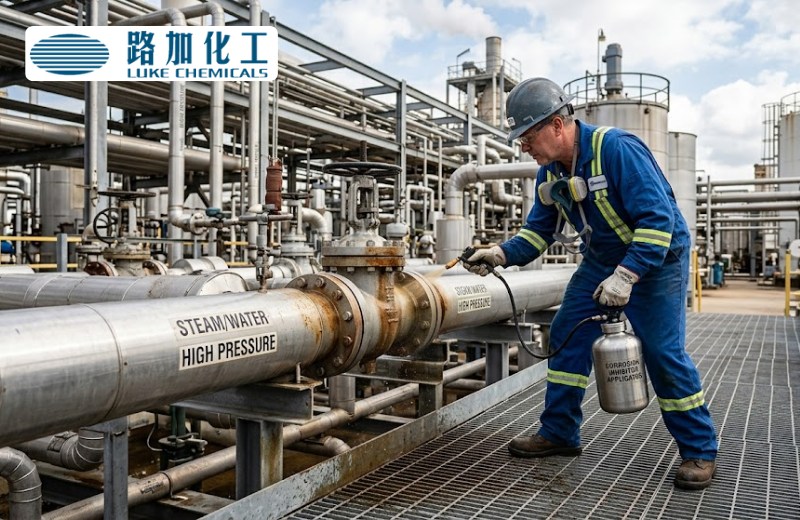
Pipelines, drilling equipment, and storage tanks are treated with corrosion inhibitors to withstand exposure to brine, acidic gases, and moisture during extraction and transport.
Automotive
Coatings and fluids formulated with corrosion inhibitors protect vehicle components, engine parts, and cooling systems from rust and degradation.
Marine
Ships, offshore platforms, and marine hardware rely on corrosion inhibitors to resist the highly corrosive effects of saltwater and humid conditions.
Aerospace
Chromate-based and other anodic inhibitors are applied in aerospace coatings to prevent oxidation of aluminum components under demanding operating conditions.
Construction and infrastructure
Reinforced concrete structures use corrosion inhibitors to protect embedded steel bars from chloride-induced corrosion, extending the lifespan of bridges and buildings.
Water treatment systems
Cooling towers, boilers, and pipelines in water treatment facilities use inhibitors to prevent scale formation and metal degradation caused by dissolved minerals and oxygen.
Packaging and storage
Volatile corrosion inhibitors protect metal parts and machinery during shipping and long-term storage by forming a vapor-based barrier inside sealed packaging.
How Corrosion Inhibitor Efficiency Is Measured?
The effectiveness of a corrosion inhibitor is typically measured by comparing the corrosion rate of a metal with and without the inhibitor present. This is expressed as inhibitor efficiency, calculated using weight loss or electrochemical testing methods. Higher efficiency percentages indicate stronger protection, and this value helps engineers select the right inhibitor type and dosage for a specific metal and environment.
Choosing the Right Corrosion Inhibitor
Selecting an inhibitor depends on several factors, including the type of metal being protected, the corrosive environment involved, temperature, exposure duration, and environmental or regulatory requirements. Oil and gas operations may prioritize mixed organic inhibitors for broad protection, while packaging applications might rely on volatile inhibitors for convenience. As environmental standards tighten, many industries are shifting toward green inhibitors that balance performance with sustainability.
If you need a reliable, ready-to-use solution, Luke Chemical’s BY-1005 Corrosion Inhibitor is formulated to protect metal surfaces across demanding industrial environments. It offers strong film-forming protection while supporting long-term equipment durability
Summary
Corrosion inhibitors play a critical role in protecting metal infrastructure, machinery, and components across countless industries. By understanding the different types of corrosion inhibitors and how each mechanism works, whether through adsorption, passivation, scavenging, or precipitation, engineers and manufacturers can select the right solution to extend equipment life, reduce maintenance costs, and improve overall safety.