Chemical raw materials play an essential role in manufacturing, construction, pharmaceuticals, agriculture, coatings, plastics, water treatment, and many other industries. The quality of the materials used at the beginning of the production process can directly influence the performance, consistency, safety, and reliability of the final product.
For manufacturers and industrial buyers, selecting high-quality chemical raw materials is not simply about finding the lowest price. Factors such as purity, composition, consistency, storage conditions, supplier reliability, and regulatory compliance can all affect whether a material is suitable for a specific application.
This guide explains the key factors that influence the quality of chemical raw materials and what businesses should consider when working with a chemical raw material distributor or supplier.
Why Chemical Raw Material Quality Matters
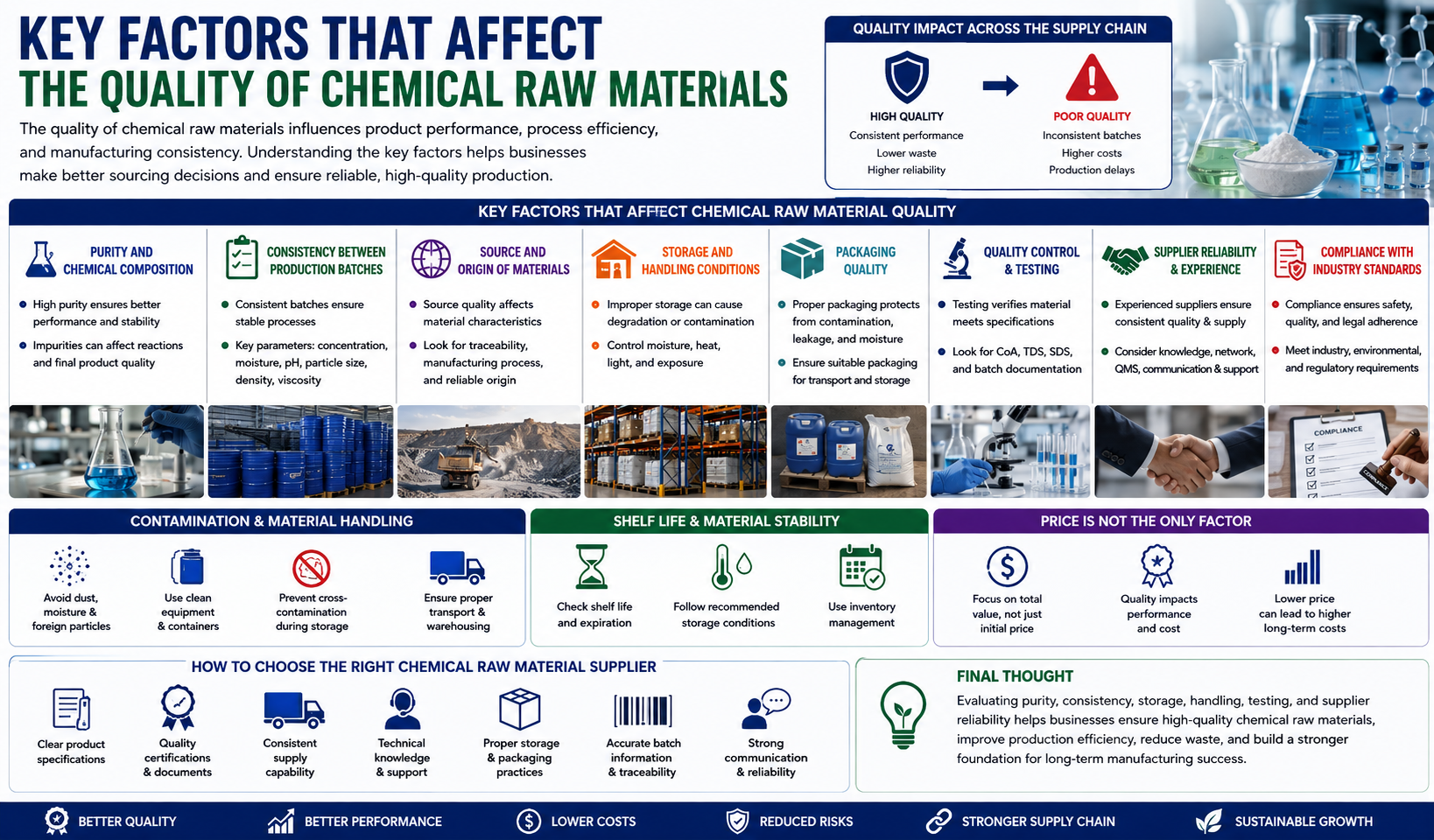
The quality of a chemical raw material can affect nearly every stage of the manufacturing process. Even small variations in purity or composition may influence product performance, processing efficiency, and production consistency. High-quality materials can help manufacturers maintain reliable product performance, reduce production defects and material waste, improve operational efficiency, and support compliance with relevant industry standards.
In contrast, poor-quality materials may lead to inconsistent production batches, additional testing, delays, and higher operational costs. For this reason, manufacturers should carefully evaluate both the quality of the material and the reliability of the chemical raw material distributor supplying it.
Purity and Chemical Composition
Purity is one of the most important factors affecting the quality of chemical raw materials. It refers to the concentration of the intended chemical substance compared with the presence of impurities or unwanted components.
Different industries require different levels of purity depending on the intended application. For example, a chemical used in a highly controlled manufacturing process may require stricter specifications than one used in a general industrial application.
The chemical composition should remain within the required specification range. Variations in composition can affect:
- Chemical reactions
- Product stability
- Processing performance
- Physical properties
- Final product quality
Manufacturers should review product specifications and technical documentation to ensure that the material meets the requirements of the intended application.
Consistency Between Production Batches
Consistency is another critical factor when evaluating chemical raw materials. A material may perform well in one batch but create problems if its properties change significantly in the next shipment.
Reliable suppliers use quality control processes to maintain consistency between batches. Important characteristics may include:
- Chemical concentration
- Moisture content
- Particle size
- Density
- pH level
- Viscosity
- Color or appearance
Consistent chemical raw materials allow manufacturers to maintain stable production processes and reduce the need for frequent adjustments.
When sourcing materials regularly, businesses should consider whether the supplier can provide reliable batch-to-batch consistency over the long term.
Storage and Handling Conditions
Even high-quality chemical raw materials can lose their intended properties if they are stored or handled incorrectly.
Some materials may be sensitive to:
- Moisture
- Heat
- Direct sunlight
- Oxygen exposure
- Contamination
- Improper packaging
For example, certain powdered materials may absorb moisture during storage, while other chemicals may degrade when exposed to excessive temperatures.
Proper storage conditions should be maintained throughout transportation, warehousing, and handling. Businesses should also review the recommended storage requirements and shelf life provided by the supplier.
A dependable chemical raw material distributor should ensure that materials are stored and transported under appropriate conditions to help maintain product quality.
Packaging Quality
Packaging plays an important role in protecting chemical raw materials from environmental exposure and contamination.
The right packaging depends on the physical and chemical properties of the material. Common packaging options may include:
- Drums
- Bags
- Bulk containers
- Sealed containers
- Specialized industrial packaging
Poor packaging can increase the risk of leakage, moisture exposure, contamination, or material degradation.
When evaluating a supplier, businesses should consider whether the packaging is appropriate for the product, transportation method, storage period, and intended application.
Clear product labeling is also important. Packaging should provide relevant information such as product identification, batch details, handling requirements, and storage recommendations where applicable.
Quality Control and Testing Procedures
A strong quality control system helps ensure that chemical raw materials meet established specifications before they reach the customer.
Manufacturers and suppliers may use laboratory testing and inspection procedures to evaluate important properties. Depending on the material, testing may involve chemical analysis, physical testing, moisture measurement, particle analysis, or other quality checks.
Businesses sourcing chemical raw materials should consider whether the supplier can provide relevant quality documentation, such as:
- Certificates of Analysis
- Technical Data Sheets
- Safety Data Sheets
- Batch information
- Product specifications
These documents can help buyers verify that the material meets the required standards and specifications.
Supplier Reliability and Industry Experience
The quality and reliability of chemical raw materials are closely connected to the supplier or distributor providing them. A supplier with strong sourcing practices, industry experience, and effective quality management procedures can help businesses maintain a stable and consistent supply of materials. When selecting a chemical raw material distributor, factors such as product knowledge, supplier networks, quality control, technical information, supply consistency, and customer support should be carefully evaluated.
A reliable distributor should understand the properties and applications of the materials they provide while offering accurate product information. Building a long-term relationship with a dependable supplier can also improve supply chain stability and reduce sourcing challenges.
Contamination and Material Handling
Contamination can significantly affect the quality and performance of chemical raw materials. It may occur at different stages, including manufacturing, transportation, storage, and handling. Common sources include dust, moisture, foreign particles, residues from other materials, damaged packaging, and cross-contamination during storage.
Proper handling procedures, clean equipment, suitable packaging, and controlled storage conditions can help reduce these risks. Suppliers and distributors should also follow appropriate warehousing and transportation practices to protect the integrity and consistency of the materials.
Shelf Life and Material Stability
Many chemical raw materials have a recommended shelf life. Over time, certain materials may experience changes in their physical or chemical properties.
Factors that can affect material stability include temperature, humidity, packaging conditions, and exposure to air or light.
Before purchasing large quantities, businesses should consider:
- Manufacturing date
- Expiration or recommended use period
- Storage requirements
- Expected production schedule
Purchasing more material than can be used within its recommended storage period may increase the risk of waste.
Effective inventory management can help manufacturers maintain material quality while reducing unnecessary losses.
Compliance With Industry Standards
Depending on the application, chemical raw materials may need to meet specific industry, safety, environmental, or regulatory requirements.
Compliance requirements can vary depending on the product and market. Buyers should verify that the selected material is suitable for its intended use and supported by the necessary documentation.
A reliable chemical raw material distributor should be able to provide relevant information about product specifications and available documentation.
Compliance should be evaluated before materials are introduced into the production process rather than after a manufacturing issue occurs.
How to Choose the Right Chemical Raw Material Distributor
Selecting the right distributor can make a significant difference in supply reliability and product quality.
Before choosing a chemical raw material distributor, businesses should evaluate the distributor’s experience, sourcing capabilities, quality processes, and ability to provide accurate product information.
A good supplier relationship should provide more than access to chemical raw materials. It should also support consistent supply, reliable documentation, effective communication, and better purchasing decisions.
Key questions to consider include:
- Does the distributor provide clear product specifications?
- Are quality documents available when needed?
- Can they maintain consistent supply?
- Do they understand the intended application?
- Are materials properly packaged and stored?
- Can they provide reliable batch information?
- Do they have experience supplying industrial customers?
Taking time to evaluate these factors can help businesses reduce supply chain risks and maintain better production consistency.
Conclusion
The quality of chemical raw materials depends on a combination of factors, including purity, chemical composition, batch consistency, storage, packaging, quality control, supplier reliability, and material stability.
For manufacturers, choosing the right materials is an important part of maintaining efficient production and consistent product performance. Working with a reliable supplier or chemical raw material distributor can help improve supply chain stability while reducing the risks associated with inconsistent or unsuitable materials.
By carefully evaluating chemical raw materials before purchasing and establishing strong quality standards, businesses can make better sourcing decisions and build a stronger foundation for long-term manufacturing success.
Frequently Asked Questions
What are chemical raw materials?
Chemical raw materials are substances used as inputs in manufacturing or industrial processes to create finished products, formulations, compounds, or other materials.
Why is purity important in chemical raw materials?
Purity can affect chemical reactions, product performance, consistency, and the quality of the final product. The required purity level depends on the intended application.
How can businesses check the quality of chemical raw materials?
Businesses can review product specifications, technical data, batch information, quality testing results, and available Certificates of Analysis before using materials in production.
What should I look for in a chemical raw material distributor?
Look for factors such as product knowledge, reliable sourcing, quality control procedures, documentation availability, consistent supply, proper storage, and industry experience.
Can storage conditions affect chemical raw material quality?
Yes. Exposure to moisture, heat, sunlight, air, or contamination can affect certain materials. Following recommended storage and handling conditions helps maintain material quality.
Why is batch consistency important?
Consistent batches help manufacturers maintain stable production processes and reduce the risk of changes in product quality or performance.