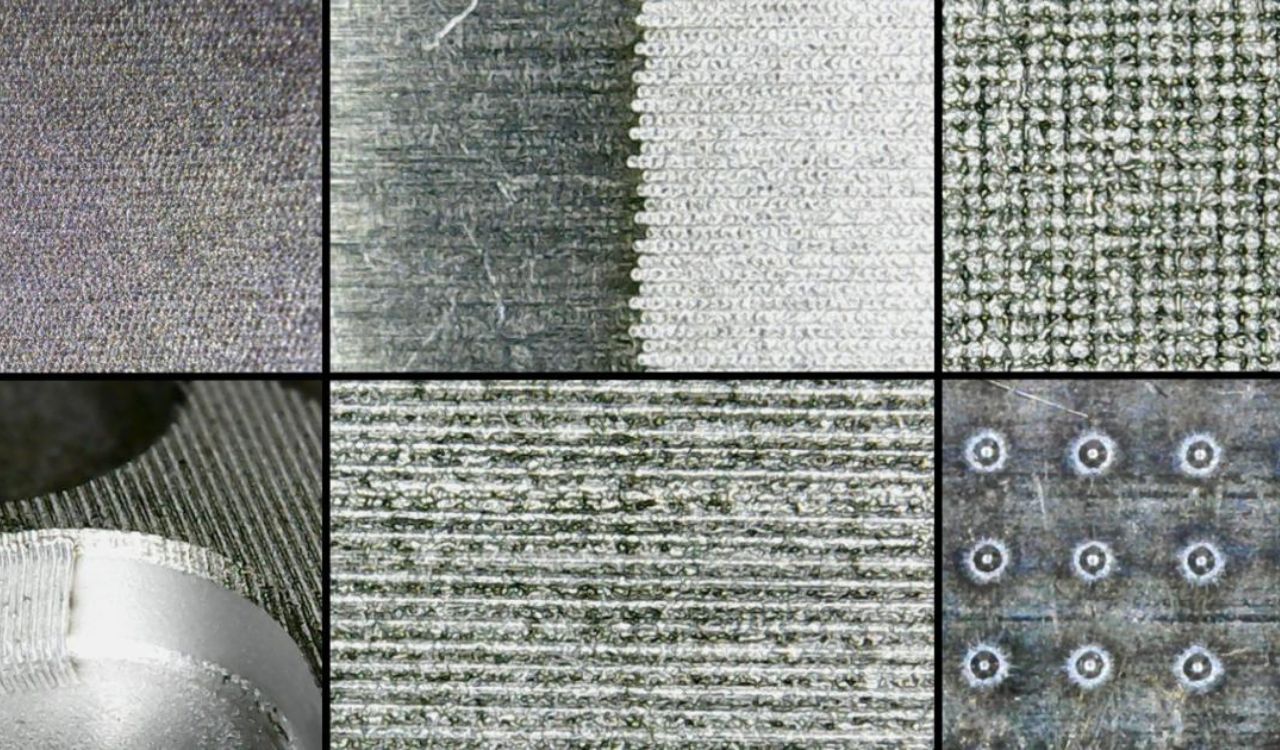
Architectural concrete is judged by eye. Specifiers and owners don’t ask for a compressive strength figure when they walk up to a facade. They ask why one panel looks darker than its neighbor, why a wall is pitted with bugholes, or why white bloom appeared after the first rain. Strength can pass every test while the surface fails the project.
That gap between “passes the test” and “looks right” is one reason the concrete admixtures market keeps moving beyond basic water reducers toward finish-focused solutions such as low-air PCEs, blowhole-reducing admixtures, waterproofing systems, and pigment-ready mixes. Buyers are no longer asking only what an admixture does to strength. They are asking what it does to the surface.
The good news is that most finish and color problems trace back to a short list of causes: water content that drifts, bleeding and segregation, entrapped air, set-time differences between pours, and inconsistent pigment or admixture dosing. A well-selected admixture package, controlled at the batching plant and verified on a mock-up, addresses all of them. This guide explains how to choose admixtures for uniform surface finish and color, which products do what, and how to keep results repeatable from the first panel to the last.
What Makes Architectural Concrete Different
Architectural concrete (also called fair-faced or exposed concrete) is placed to be seen. The formed or finished surface is the final surface, with no plaster, paint, or cladding to hide it. That changes the mix design priorities:
- Appearance is a performance requirement. Color, texture, and void content are specified and inspected.
- Variation is the enemy. A slightly different water content, cement lot, or set time that would be irrelevant in a foundation becomes visible across a 30-meter wall.
- Durability protects appearance. A surface that absorbs water unevenly will stain, streak, and effloresce over time, even if the initial finish was perfect.
Under standards such as EN 934-2 and ASTM C494, concrete admixtures are defined by function: water reducing, high-range water reducing, retarding, accelerating, air entraining, viscosity modifying, and water resisting, among others. For architectural work, the task is to combine only the functions you need and keep every one of them stable from batch to batch.
What Causes Uneven Finish and Color
Before selecting any product, match the defect to its likely cause. Admixtures solve some of these problems directly, while others need changes to formwork, placing, or curing.
| Defect | Typical causes | Where admixtures help |
| Color variation between pours (mottling, cloudiness) | Water-cement ratio drift, different cement or SCM lots, varying set times, uneven pigment dispersion | PCE for stable low water content, controlled retarder, well-dispersed pigment |
| Bugholes / blowholes | Entrapped air, sticky mix, poor consolidation, impermeable formwork, excess release agent | Blowhole-reducing (surface-improving) admixtures, defoamers, low-air PCE |
| Sand streaking, bleed water marks | Bleeding, segregation, leaking formwork | VMA / stabilizer, optimized water reduction |
| Efflorescence | Soluble salts carried to the surface by water through a permeable matrix | Water-resisting admixture, lower w/c ratio, silica fume |
| Dark or light patches near joints | Different setting or curing rate, form absorbency differences | Consistent retarder dosing, compatible form release strategy |
| Surface cracking / crazing | Plastic and drying shrinkage | Shrinkage-reducing admixture, proper curing |
| Rust or blotchy stains | Chloride-containing products, corrosion near the surface | Chloride-free admixtures, corrosion inhibitor where exposure demands |
The Core Admixtures for Uniform Surface Finish
PCE superplasticizers: the foundation
Water content is the single most influential variable for surface color. More water gives a lighter, more porous, more variable surface, and less water gives a darker, denser one. Polycarboxylate ether (PCE) superplasticizers are the standard tool for holding a low, consistent water-cement ratio while keeping the concrete workable enough to fill formwork.
PCE molecules adsorb onto cement grains and disperse them through electrostatic repulsion and steric hindrance. Different polymer designs trade off initial water reduction against slump retention, so selection matters:
- Choose a water-reducing PCE for precast plants where concrete is cast right after mixing.
- Choose a slump-retaining or hybrid PCE for ready-mix delivered over a distance or time, so workability at the pour matches workability at the plant.
- Prioritize PCEs with low air-entraining tendency and low stickiness, since sticky mixes trap air against the form face.
Check ASTM C494 Type F/G or EN 934-2 conformity, and verify compatibility with your specific cement and SCMs. Cement chemistry (alkali, sulfate, and C₃A content), fly ash carbon content, and slag fineness all change how PCEs perform.
Viscosity-modifying admixtures and stabilizers
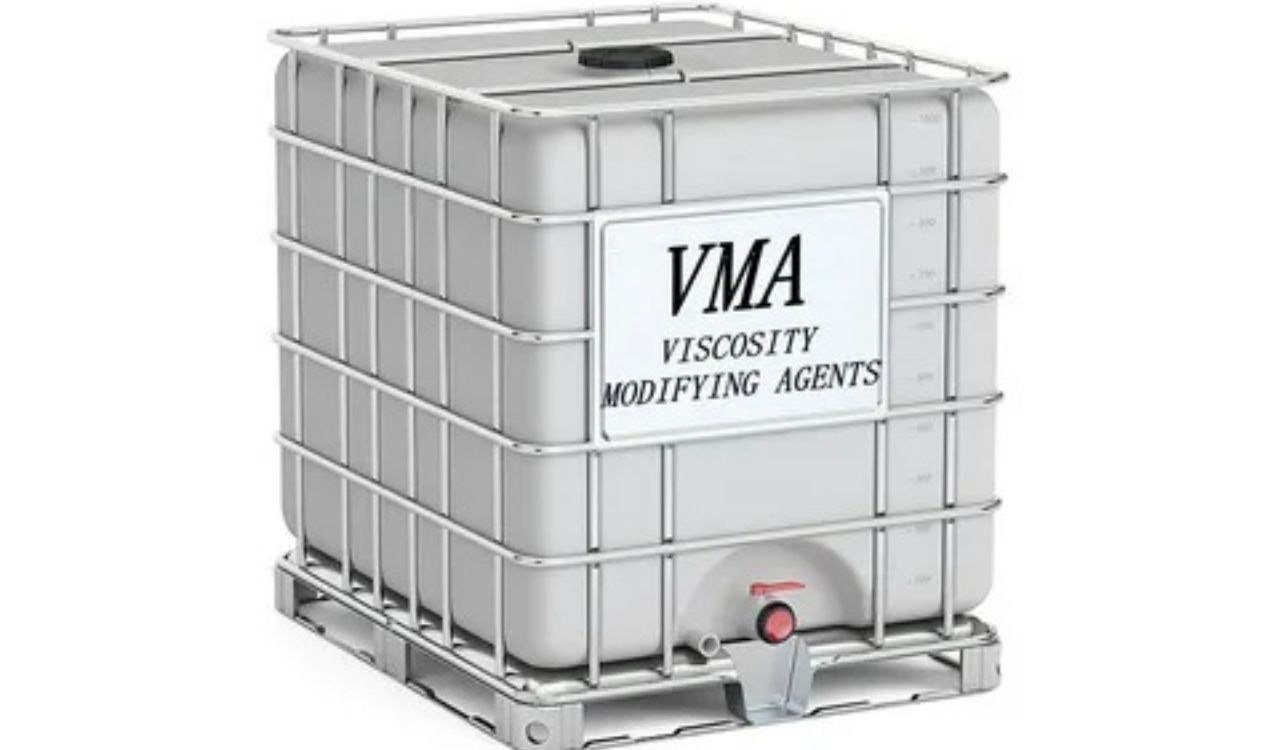
Bleeding and segregation produce streaks, water-gain marks, and sand-rich patches. A viscosity-modifying admixture (VMA) improves cohesion so the paste stays uniformly distributed during placing and vibration. It matters most in:
- Self-consolidating concrete (SCC) for congested reinforcement or complex forms
- Tall wall pours with high drop heights
- Mixes with poorly graded aggregates
Dose carefully. Too much VMA can make a mix sticky and slow to release air, which works against bugholes.
Blowhole-reducing (surface-improving) admixtures and defoamers
Bugholes are the most common complaint on exposed concrete. Surface-improving admixtures reduce the number and size of voids at the form face by modifying air-bubble behavior and mix rheology. Defoamers (air-detraining agents) can also bring down total air content in mixes that tend to entrain air unintentionally.
Two cautions apply. Where freeze-thaw resistance is required, don’t remove the intentional air system. And always confirm the air content target with the engineer before adding a defoamer.
Retarders: controlled, not casual
In hot weather or for large pours, retarders keep the concrete workable until it is fully consolidated. They also reduce the risk of cold joints between lifts. The finish-related risk is variation: if one panel is retarded more than the next, surface density and color can differ. Use a fixed, documented dose adjusted by temperature band rather than ad hoc field additions.
For textured or exposed-aggregate finishes, surface retarders applied to the formwork allow the cement paste at the face to be washed away to a uniform depth.
Accelerators: use with restraint
Accelerating admixtures shorten setting time and speed early strength gain, which is valuable in cold weather and fast-cycle precast production. For architectural surfaces, use non-chloride types, because chloride can cause staining and corrosion risk in reinforced elements. Also keep dosing and temperature consistent across the series, because early-age differences can show up as color differences. Interest in the accelerating admixtures market is growing mostly around cold-weather, precast, and sprayed concrete applications, but for exposed surfaces the practical priority is predictability rather than speed.
Pigments and integral color
Integral color is usually achieved with synthetic iron oxide (reds, yellows, browns, blacks), chromium oxide (greens), or carbon black, selected according to ASTM C979 for pigments in integrally colored concrete. Key points:
- Dose by weight of cement, and keep it constant. Pigment loading is typically in the low single-digit percent of cement weight, and returns diminish at higher dosages.
- Disperse thoroughly. Liquid or granulated pigments disperse more evenly than loose powders, and mixing time should be fixed and documented.
- Control the base color. Gray cement shifts every pigment toward gray. Use the same cement source throughout, or use white cement for clean, bright colors.
- Watch carbon black. It can interact with air-entraining admixtures and needs its own trial dosing.
- Pigment cannot fix a bad mix. If water content, cement, or curing vary, the color will vary regardless of pigment quality.
Water-resisting and waterproofing admixtures
A surface that takes up water unevenly will weather unevenly. Waterproofing admixture for concrete reduces capillary absorption and permeability, which protects the surface from staining, algae growth, and efflorescence. The main families are:
| Type | How it works | Finish-related considerations |
| Hydrophobic/water-repellent (stearates, fatty acids, silanes in some systems) | Lines pores to repel water | May affect air content and later coating adhesion; test on a mock-up |
| Integral crystalline | Reacts with moisture and cement by-products to form insoluble crystals in pores | Reduces permeability; confirm no color shift at the chosen dose |
| Pore-blocking / densifying (silica fume, fine fillers) | Fills capillary pores | Silica fume darkens color slightly and needs high-range water reduction |
| Combined PCE + water-resisting systems | Lowers w/c ratio and absorption together | Often the simplest approach for precast |
A concrete waterproof admix is worth specifying on façades, sculptural elements, and horizontal surfaces exposed to ponding. The wider cementitious waterproofing market reflects this shift toward integral protection instead of surface-applied membranes alone. Check compatibility with your PCE and any pigment before committing.
Shrinkage-reducing admixtures
Plastic and drying shrinkage cracks mar a finished surface and let water in. Shrinkage-reducing admixtures lower the surface tension of pore water and reduce drying shrinkage, which helps on large panels, slender walls, and slabs with exposed finishes.
How to Choose Admixtures: A Step-by-Step Selection Process
- Define the finish and exposure. Is it board-formed, smooth, sandblasted, acid-etched, or exposed aggregate? Is it interior or exterior, and does it face freeze-thaw or marine exposure?
- Set the color benchmark. Approve a physical mock-up under real lighting, because samples viewed under shop lighting often mislead.
- Lock the cementitious system. Fix the cement source and SCM type and proportion early. Changes mid-project are a leading cause of color shift.
- Choose the base water reducer. Pick a PCE suited to transport time and temperature, with low air-entraining tendency.
- Add only the functional extras. Add VMA for stability, a surface-improving admixture for voids, a water-resisting admixture for staining risk, and a retarder or accelerator only if the schedule requires one.
- Check admixture-to-admixture compatibility. Where more than one admixture is used, compatibility should be verified by testing, and EN 206 also limits total admixture content (generally up to 5% of cement mass) and requires counting the water in large liquid doses.
- Run trial mixes and a full-size mock-up. Cast at the temperature, slump, and mixing time expected on site, and use the same formwork material and release agent.
- Document the mix and lock it. Record the cement lot, w/c ratio, admixture products and doses, mixing time, and curing method.
Consistency Matters More Than the Product Choice
Even the best admixture package fails visually if its dosing varies. Three habits keep results repeatable:
- Accurate dosing. Admixtures are dosed in small quantities relative to cement, so small metering errors are proportionally large. Calibrate dispensers regularly and avoid manual dosing for finish-critical mixes.
- Storage monitoring. Concrete additive storage sensors, such as tank level sensors, temperature sensors, and flow meters on the dosing line, help batching plants detect low stock, freezing risk, or dosing deviations before they reach a panel. Many admixtures can stratify or lose performance if overheated, frozen, or stored too long, so first-in, first-out rotation and agitation per the datasheet help.
- Material discipline. Keep the same aggregate source and moisture control, and measure moisture in sand continuously, because water that sneaks in through wet sand shifts color as surely as adding water at the truck.
Formwork, Placing, and Curing: What Admixtures Can’t Fix
Admixtures work inside a system. Weak links elsewhere will show:
- Formwork: Use consistent face material and clean forms. Absorbent and non-absorbent forms give different colors, and excess release agent leaves bugholes and stains.
- Placing and consolidation: Place in controlled lifts and vibrate systematically with attention to the form face.
- Curing: Cure all panels the same way, and protect from rapid drying, because uneven curing causes patchy color and surface cracking.
- Weather: Hot, windy, or cold conditions change set and moisture loss, so adjust retarder or accelerator doses by documented temperature bands.
Special Case: Architectural Sprayed Concrete
Architectural shotcrete, used for sculpted forms, curved walls, and facade repair, brings extra challenges. In dry-mix processes, water is added at the nozzle, so the operator controls the w/c ratio, which makes uniform color harder. Wet-mix sprayed concrete gives better control over water content and admixture dosing. Accelerators for shotcrete (preferably alkali-free types) affect early set and surface texture, and rebound changes the in-place mix. The dry mix sprayed concrete market is mostly driven by tunneling, mining, and repair, so finish-critical architectural work is a niche that needs trial panels and experienced nozzlemen.
Market and Sourcing Considerations
The concrete admixtures market continues to be shaped by urbanization, infrastructure spending, and demand for durable, lower-carbon concrete. In the APAC concrete admixtures market, rapid construction activity pushes demand for PCE superplasticizers, waterproofing systems, and specialty additives. For buyers, the practical implications are:
- Ask for technical data, not only price. Request datasheets, ASTM/EN conformity statements, chloride and alkali content, and recommended dose ranges.
- Verify batch-to-batch consistency. Ask about quality control, density and solids-content tolerances, and shelf life.
- Insist on local compatibility testing with your cement and SCMs before the order is placed.
- Look for environmental documentation such as EPDs where green-building credits matter.
The broader concrete admixtures additive market is competitive, so the supplier’s willingness to provide technical support and trial data is often the real differentiator.
Limitations and Common Mistakes
- Overdosing PCE or VMA can cause stickiness, excessive air, retardation, or segregation.
- Switching cement or SCM source mid-project changes color regardless of admixtures.
- Using admixtures that haven’t been tested together can cause unexpected air, set, or color effects.
- Skipping the mock-up. The most expensive mistake is discovering a color problem on the 40th panel.
- Chloride-containing accelerators near reinforcement risk staining and corrosion.
- Assuming waterproofing admixtures replace good detailing. They reduce absorption but don’t replace proper drainage, joints, and curing.
- Expecting uniformity from variable inputs. Admixtures reduce sensitivity to variation but can’t eliminate it.
Best-Practice Checklist
- Fix cement, SCM, and aggregate sources before the mock-up
- Use a low-air, low-sticky PCE sized to transport time
- Add VMA only where stability demands it
- Use blowhole-reducing admixtures for bugholes, verified on a full-size panel
- Choose non-chloride accelerators and fixed-dose retarders
- Use a water-resisting admixture for exposed, wet-prone surfaces
- Dose pigments by weight of cement with fixed mixing times
- Monitor dosing and storage (level, temperature, flow)
- Control formwork, release agent, vibration, and curing
- Record everything, then freeze the mix design
Getting Technical Support
Selecting an admixture package for a visible surface is a mix-design exercise, not a catalog pick. Luke Chemicals supplies concrete admixtures and can support compatibility checks and dosage guidance for finish-critical projects when you share your cement type, SCMs, exposure, and target finish.
Frequently Asked Questions
1. Which admixture is best for a uniform surface finish in architectural concrete?
There isn’t a single best product. A low-air, low-stickiness PCE superplasticizer is usually the base, because it holds a consistent low water-cement ratio. A VMA, blowhole-reducing admixture, or water-resisting admixture is added only where the specific defect risk calls for it.
2. How do admixtures help reduce bugholes?
Blowhole-reducing (surface-improving) admixtures and defoamers lower the volume and size of air voids at the form face, and low-air PCEs reduce stickiness that traps bubbles. Consolidation, form-release dosage, and form permeability still matter.
3. Can admixtures prevent color variation between pours?
They reduce it by stabilizing water content, workability, and set time, but they can’t compensate for changes in cement, SCM, aggregate, pigment dosage, or curing. Keeping those inputs constant is just as important.
4. Does a waterproofing admixture change concrete color?
It can, depending on type and dose. Silica fume darkens the matrix slightly, and hydrophobic systems may affect air content or later coatings. Always evaluate on a mock-up with the actual cement and pigment.
5. How much pigment should I use for integral color?
Pigment is dosed by weight of cement, typically in the low single-digit percentages, and the manufacturer’s range should be followed. Beyond a certain loading, color gain flattens while cost and potential strength effects rise.
6. Are accelerators safe for exposed architectural concrete?
Yes, if they are chloride-free and dosed consistently. Variable set times can create visible differences, so keep temperature and dose controlled across the series.
7. Why do storage and dosing systems matter for finish quality?
Because small metering errors and degraded or stratified product change the effective dose in every batch. Level, temperature, and flow monitoring on admixture tanks helps catch those drifts before they become visible on the surface.